Introduction
The clock says midnight, then 1:17 a.m., then 2:42 a.m.
The body is tired, yet the mind keeps replaying emails, deadlines, and tomorrow’s meetings. The room is dark, but sleep will not arrive. For many of us, this scene is all too familiar.
More and more people are looking for the Best Natural Sleep Aid for 2026 with SLP1 Protocol not because they want a quick knockout pill, but because they want real rest that feels clean, calm, and sustainable. There is a clear shift toward natural, science-backed sleep support that works with the body instead of forcing it. At the same time, walking into a supplement aisle or scrolling online can feel confusing. Every bottle claims to be gentle, effective, and “natural,” yet not all of them earn that trust.
The hard truth is that “natural” does not always mean safe, well-dosed, or even honest on the label. Some products underdose key ingredients, some overdose them, and many ignore how the body’s sleep systems actually work. That is why this Best Natural Sleep Aid for 2026 SLP1 Protocol focuses on ingredients and formulas with real research behind them, not just marketing language.
At SLP1, we believe deep sleep comes from working with the body’s own rhythms. Our in-house formulations are built for synergy, absorption, and steady use, not just a single “knockout” night. In this guide, we walk through the top natural sleep ingredients for 2026, how they work, what the research says, and why formulation quality matters so much. By the end, the goal is for every reader to feel calmer, better informed, and ready to choose a path toward steady, restorative sleep.
“Sleep is the golden chain that ties health and our bodies together.” — Thomas Dekker
Key Takeaways
Before we explore the details, it helps to have a quick map of the main points.
-
The Best Natural Sleep Aid for 2026 SLP1 Protocol centers on four core ingredients with strong scientific support: melatonin, magnesium, L-theanine, and glycine. Each supports a different part of the sleep process, from circadian timing to nervous system calm.
-
Quality matters as much as the ingredient list. Third-party testing, clear dosing, and full transparency help protect against mislabeling and give real confidence that what we see on the label matches what is in the capsule.
-
Natural sleep support works best as part of a broader pattern of care. Consistent bedtimes, a cool and dark bedroom, less evening screen use, and simple wind-down habits make supplements far more effective than using pills alone.
-
SLP1 uses proprietary in-house formulations to bring these ingredients together in thoughtful combinations that support both short-term and long-term sleep health. As with any supplement, we encourage readers to speak with a healthcare professional before starting a new routine.
Understanding Natural Sleep Aids: What Makes Them "Natural" (And What Doesn't)
When people hear the phrase natural sleep aid, they often picture gentle herbs, minerals from food, or hormones the body already produces. In many cases that picture is accurate. Most natural products use plant extracts, vitamins, minerals, or compounds such as melatonin that mirror what the body makes on its own. That is part of their appeal.
The word natural, however, is not a legal guarantee. In the United States, these products fall under the category of dietary supplements. The Food and Drug Administration does not review them for safety or effectiveness before they reach store shelves. Many ingredients called natural, including melatonin, are actually produced in a lab but are chemically identical to what the body makes.
Because oversight is limited, studies have found that some sleep supplements contain far more or far less of an ingredient than the label claims. This is why independent testing from groups such as USP or NSF is so important. At SLP1, we build our formulas around clear labeling, science-based dosing, and third-party testing, so that natural means more than a friendly word on the front of a bottle. Once that foundation is in place, it becomes worth asking which specific ingredients truly help people sleep.
The Science Of Sleep: Why Your Body Needs Help (And How Natural Aids Work)
Sleep is guided by two main forces:
-
the circadian rhythm, the internal clock that tells the body when it is time to feel alert and when it is time to wind down
-
sleep pressure, the gradual build-up of signals in the brain that say, “You have been awake long enough.”
Hormones and brain messengers such as melatonin, serotonin, and GABA help carry these signals.
Sleep and modern life: a population-based study has shown how contemporary lifestyles push hard against these natural systems. Bright screens late at night tell the brain it is still daytime. Stress keeps cortisol levels raised when they should be tapering off. Irregular bedtimes confuse the internal clock so it no longer knows when to send the “sleep” message. Over time, many people end up tired and wired, exhausted yet unable to drift off.
Natural sleep aids work by supporting the body’s own chemistry instead of forcing sedation. Melatonin can steady the timing signal that darkness used to provide. Magnesium and L-theanine help calm a busy nervous system. Glycine gently helps the body cool down, which is one of the brain’s signals that it is safe to sleep. This approach contrasts with many prescription drugs, which tend to push the brain into sleep-like states even when its timing is off.
As sleep researcher Matthew Walker has written, “Sleep is the single most effective thing we can do to reset our brain and body health each day.” Thoughtful use of natural aids aims to support that reset rather than override it.
The Top 5 Science-Backed Natural Sleep Ingredients For 2026
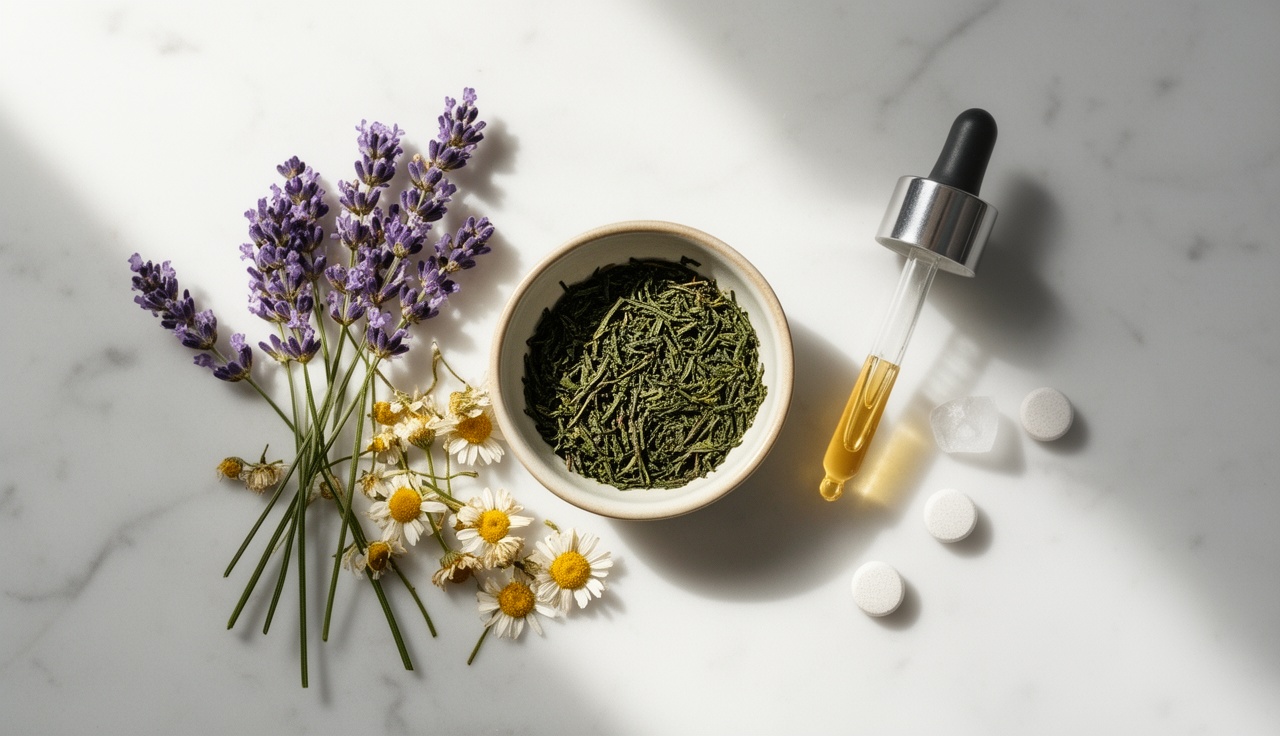
Not every plant extract or trendy powder deserves a place in a serious routine. For this Best Natural Sleep Aid for 2026 SLP1 Protocol, we focus on ingredients with human research, clear mechanisms, and a reasonable safety record. Together, they touch different parts of the sleep process, from timing and relaxation to recovery.
1. SLP1 – Your Partner In Science-Backed, Natural Sleep
We created SLP1 for people who want more than a single-ingredient capsule. Our proprietary formulas are built in-house so we can shape every detail, from ingredient sourcing to how well each component is absorbed. We design each blend to support the body’s own timing and calming systems rather than chase an instant knockout effect.
SLP1 brings together magnesium, L-theanine, glycine, and other carefully chosen compounds in combinations that research suggests work better together than alone:
-
Magnesium helps relax muscles and support melatonin production.
-
L-theanine quiets mental noise without causing grogginess.
-
Glycine helps the body cool slightly as it moves toward sleep.
Every ingredient and dose is listed clearly, along with the scientific reasoning behind it.
We also commit to third-party testing so that professionals and health-conscious users can trust what they are taking. For stressed professionals, wellness enthusiasts, and anyone seeking a steady, natural rhythm of sleep, we see SLP1 Protocol not just as a product but as a calm partner at the bedside.
2. Melatonin – The Body's Natural Sleep Signal
Melatonin is the hormone the brain uses to say, “Night has arrived.” Levels rise after sunset, peak in the middle of the night, and fall again toward morning. Bright light at night, aging, travel across time zones, and shift work can all blunt or confuse that rhythm.
Supplemental melatonin can be especially helpful for people who cannot fall asleep at a normal hour, such as those with delayed sleep phase, jet lag, or night-shift schedules. Many studies show that doses in the range of 3 to 10 milligrams, taken about 30 to 60 minutes before bed, can shorten the time it takes to fall asleep. Short-term use appears safe for most adults, with possible side effects such as headache or dizziness.
People with seizure disorders, depression, bleeding disorders, or a history of organ transplant should speak with a doctor first. The melatonin used in supplements is usually made in a lab, but it is chemically the same as the hormone the pineal gland produces.
3. Magnesium – The Relaxation Mineral
Magnesium takes part in hundreds of reactions in the body, many of them tied to nerve signaling and muscle relaxation. When levels are low, people are more likely to report trouble falling or staying asleep. Older adults and those with diets low in whole grains, nuts, and leafy greens often sit on the lower side of the magnesium range.
The Role of Magnesium in sleep health has been examined through systematic reviews, finding that magnesium can shorten the time it takes to fall asleep and improve sleep quality, especially in older adults. Forms such as magnesium glycinate are often preferred for sleep because they are well absorbed and gentler on the stomach. For most adults, 200 to 350 milligrams per day is a common range, and going above 350 milligrams without medical guidance is not recommended.
At higher doses, loose stools or mild stomach upset can occur. People with kidney disease should talk with a healthcare provider before taking magnesium. When combined with B vitamins or melatonin, magnesium can form a solid foundation for a calm, steady night.
4. L-Theanine – Calm Without Drowsiness
L-theanine is an amino acid found in tea leaves that many people already “test” each time they enjoy a warm cup of green tea. Instead of making people sleepy, L-theanine smooths out stress and tension. Brain-wave studies suggest it nudges the brain toward a relaxed yet alert state, similar to meditation.
For sleep, this often shows up as:
-
fewer nighttime awakenings
-
less mind racing when the head hits the pillow
-
a smoother slide into deeper sleep after a stressful day
It is especially well suited to professionals whose bodies feel tired but whose thoughts keep looping through to-do lists. Doses in the range of 100 to 200 milligrams taken in the evening are common in research.
A major advantage is the lack of morning fog. People usually feel rested rather than dulled the next day. L-theanine combines well with magnesium or GABA and has shown a good safety record, even in children with ADHD under medical supervision. In SLP1 formulas, we rely on L-theanine to calm the mind without shutting it down.
5. Glycine – The Temperature Regulator
Glycine is another amino acid, and it plays several roles in the body, including acting as a neurotransmitter. For sleep, its most interesting effect is on body temperature. Taken before bed, glycine helps trigger a small drop in core temperature, which the brain reads as a sign that night has arrived and it is time to sleep.
Research has found that around 3 grams of glycine before bed can improve subjective sleep quality and reduce next-day fatigue, even in people with insomnia symptoms or temporary sleep loss. Many people also report feeling more refreshed upon waking, as if the sleep they did get was “deeper.”
Glycine has an excellent safety profile, with studies using much higher doses in other contexts with few side effects, sometimes mild digestive changes. It is available as a powder or capsule and also appears naturally in foods such as meat, beans, dairy, spinach, and kale. We include glycine in SLP1 as a gentle, body-friendly nudge toward that cool, quiet state where true rest begins.
Emerging And Complementary Sleep Ingredients Worth Knowing

Beyond the core ingredients above, several others show promising early research and may play a supporting role in the best natural sleep strategies for 2026. They are not always the main stars, but they can round out a thoughtful formula.
-
Valerian root has been used for centuries as a calming herb. Modern studies show mixed results, yet some people do fall asleep faster or report better sleep when they take 300 to 600 milligrams before bed. A small portion of users feel groggy or even more alert instead, so responses can differ and testing it on a quiet night first makes sense.
-
Passionflower appears helpful for both anxiety and sleep. Extracts have been linked with longer total sleep time and better sleep efficiency, especially when used for a couple of weeks. It often appears in blends with lemon balm or valerian to create a gentle, calming base.
-
Lavender is best known for its scent. Inhaled as an essential oil before bed, it has been shown to improve sleep quality, including in older adults. Oral lavender is more likely to cause digestive issues, so most people stick with aromatherapy.
-
On the nutrient side, tryptophan and its next step, 5-HTP, feed into the serotonin and melatonin pathway. Doses around 1 gram of tryptophan daily have been linked to better sleep in research. CBD, a non-intoxicating component of cannabis, is gaining attention for anxiety-related insomnia based on a randomized controlled pilot study showing promise for sleep improvements, although legal rules and product quality vary a lot.
At SLP1, we treat these ingredients as supporting players and pay careful attention to how they interact with our primary sleep nutrients.
Safety First: What You Must Know Before Taking Any Natural Sleep Aid

Even gentle ingredients can cause problems in the wrong context. Natural is not the same as risk-free, so we always place safety at the center of our approach. This article is for education and does not replace medical advice from a qualified professional.
-
Medication interactions are one of the biggest concerns, because many sleep ingredients influence the brain, blood clotting, or hormone levels. Melatonin, CBD, and certain herbs can change how blood thinners, antidepressants, sedatives, or blood pressure drugs work. Anyone taking regular medication should talk with a healthcare provider or pharmacist before adding a new sleep supplement.
-
Medical conditions also matter when choosing a natural sleep aid, since kidney or liver disease can change how the body clears minerals and herbs. Bleeding disorders, seizure disorders, pregnancy, and breastfeeding all require extra care. In these settings, even mild ingredients like magnesium or herbs should be reviewed with a clinician rather than guessed at alone.
-
Side effects to watch for include morning drowsiness, dizziness, digestive upset, or a heavy “hangover” feeling that can impair driving or work performance. Some people are more sensitive to sedative herbs or higher doses of melatonin, so starting with a low dose and increasing only if needed is a safer path.
-
Overdose and mislabeling remain real risks in this market, especially for children who might mistake sweet gummies for candy. All supplements should be stored out of reach, and products with third-party testing help reduce the chance of hidden extra doses. At SLP1, we focus on transparent labels, careful dosing, and formulas built with steady, long-term use in mind. If sleep problems last longer than two weeks, it is wise to see a healthcare provider to explore deeper causes.
Maximizing Results: How To Use Natural Sleep Aids Effectively

Even the best ingredients cannot do all the work alone. Natural sleep aids are at their best when they sit inside a simple, steady routine that tells the body, “Night is coming, you are safe, you can let go now.”
-
Timing plays a large role in how well these aids work, because the body’s clock expects certain signals at certain hours. Most supplements work best when taken 30 to 60 minutes before the intended bedtime, and they respond well to consistency. Going to bed and waking up at roughly the same time every day, weekends included, helps the internal clock sync with the support we are giving it.
-
Basic sleep hygiene may sound boring, yet it quietly supports every capsule we take. A bedroom that is dark, quiet, and cool in the mid-60s Fahrenheit tells the nervous system that it is safe to power down. Keeping phones and laptops out of bed, or at least using blue-light filters in the last one to two hours before sleep, makes it easier for melatonin to rise on its own.
-
What we consume matters too, since caffeine and alcohol can undo much of the progress. Stopping caffeine by early afternoon, avoiding heavy meals and strong drinks close to bedtime, and choosing a light snack instead can make a big difference. Foods rich in tryptophan, such as a small serving of cottage cheese or a banana, can quietly support the body’s own melatonin production.
-
Tracking and patience help people notice real patterns instead of guessing based on a single night. A simple sleep journal that notes bedtimes, wake times, supplements used, and how rested one feels can reveal what works. Natural aids such as those in SLP1 work with the body’s rhythms, which means improvements often grow over several nights rather than appearing in a single dramatic shift.
“Sleep is the best meditation.” — Dalai Lama
Conclusion
Good sleep is not a luxury; it is a basic rhythm that shapes every part of health, mood, and thought. The encouraging news from this Best Natural Sleep Aid for 2026 SLP1 Protocol is that science now supports several gentle tools that help restore that rhythm instead of fighting against it.
Melatonin, magnesium, L-theanine, and glycine each bring something different to the table, and carefully crafted combinations such as SLP1 can offer even wider support. Quality, transparency, and respectful dosing matter as much as the ingredient list. When those elements are in place, natural sleep aids can fit well into a long-term plan for better rest.
Still, no capsule can replace regular bedtimes, a quiet bedroom, and simple ways of easing stress. The strongest results come when supplements, daily habits, and self-awareness work together. We invite readers to speak with their healthcare providers, consider whether SLP1 aligns with their needs, and treat restful sleep as a gentle practice rather than another task. In doing so, they reclaim something that has always belonged to them – the right to close their eyes at night and wake with a clear, steady mind in 2026.
FAQs
Question: How Long Does It Take For Natural Sleep Aids To Start Working?
Response times differ from person to person and from ingredient to ingredient. Melatonin often starts to act within 30 to 60 minutes on the very first night, especially for people whose sleep timing is off. Minerals and amino acids, such as magnesium, L-theanine, and glycine, may feel subtle at first and grow stronger over several nights of steady use. Because these aids support the body’s own rhythms rather than forcing sedation, change can be gradual. We suggest giving a new product such as SLP1 at least five to seven nights of consistent use before deciding how well it fits.
Question: Can I Become Dependent On Natural Sleep Aids Like Melatonin?
Most natural sleep aids, including melatonin, do not create the type of physical dependence seen with many prescription sleeping pills. The brain continues to produce its own melatonin, and the supplement acts more like a timing cue than a crutch. That said, people can get used to the idea of needing something at bedtime, which is more of a psychological habit. Taking short breaks now and then can help reduce that pattern. SLP1 is formulated with long-term safety in mind, yet we still encourage thoughtful, mindful use and regular check-ins with a healthcare provider.
Question: Are Natural Sleep Aids Safe To Take Every Night?
For many people, nightly use of certain ingredients is reasonable, especially minerals like magnesium and amino acids such as glycine and L-theanine. These have strong safety records when taken within standard dose ranges. Melatonin appears safe for short to medium spans, though researchers are still studying very long-term nightly use. Health conditions and medications can change the picture, so medical guidance is important for anyone with ongoing illnesses or prescribed drugs. SLP1 formulas are designed for regular use, but we still recommend periodic reviews with a clinician to make sure the plan remains a good fit.
Question: What's The Difference Between Natural Sleep Aids And Prescription Sleep Medications?
Natural sleep aids aim to support and reinforce processes the body already uses, such as melatonin release, nervous system calm, and temperature shifts before sleep. Prescription medications tend to act more forcefully on brain receptors and can push the brain into a sleep-like state even when its timing is off. This can mean stronger effects but also more frequent side effects, heavier morning grogginess, and a higher chance of physical dependence or tolerance. Natural aids such as those discussed in this Best Natural Sleep Aid for 2026 (Science-Backed Review) | SLP1 often suit long-term use better, while severe or complex sleep disorders may still require prescription care under close medical supervision.
Question: Can I Combine Multiple Natural Sleep Aids, Or Should I Use Just One?
Many natural ingredients work better in thoughtful combinations than on their own. Pairings such as magnesium with L-theanine, or 5-HTP with vitamin B6 and magnesium, can support several parts of the sleep process at once. This is the thinking behind SLP1 proprietary formulations, which are built to use these natural synergies without pushing doses too high. Randomly mixing many separate products can raise the risk of overlap, side effects, or interactions, so we do not recommend that approach. Starting with one well-designed blend and discussing it with a healthcare provider is usually a safer and more effective path.



Leave a comment
This site is protected by hCaptcha and the hCaptcha Privacy Policy and Terms of Service apply.