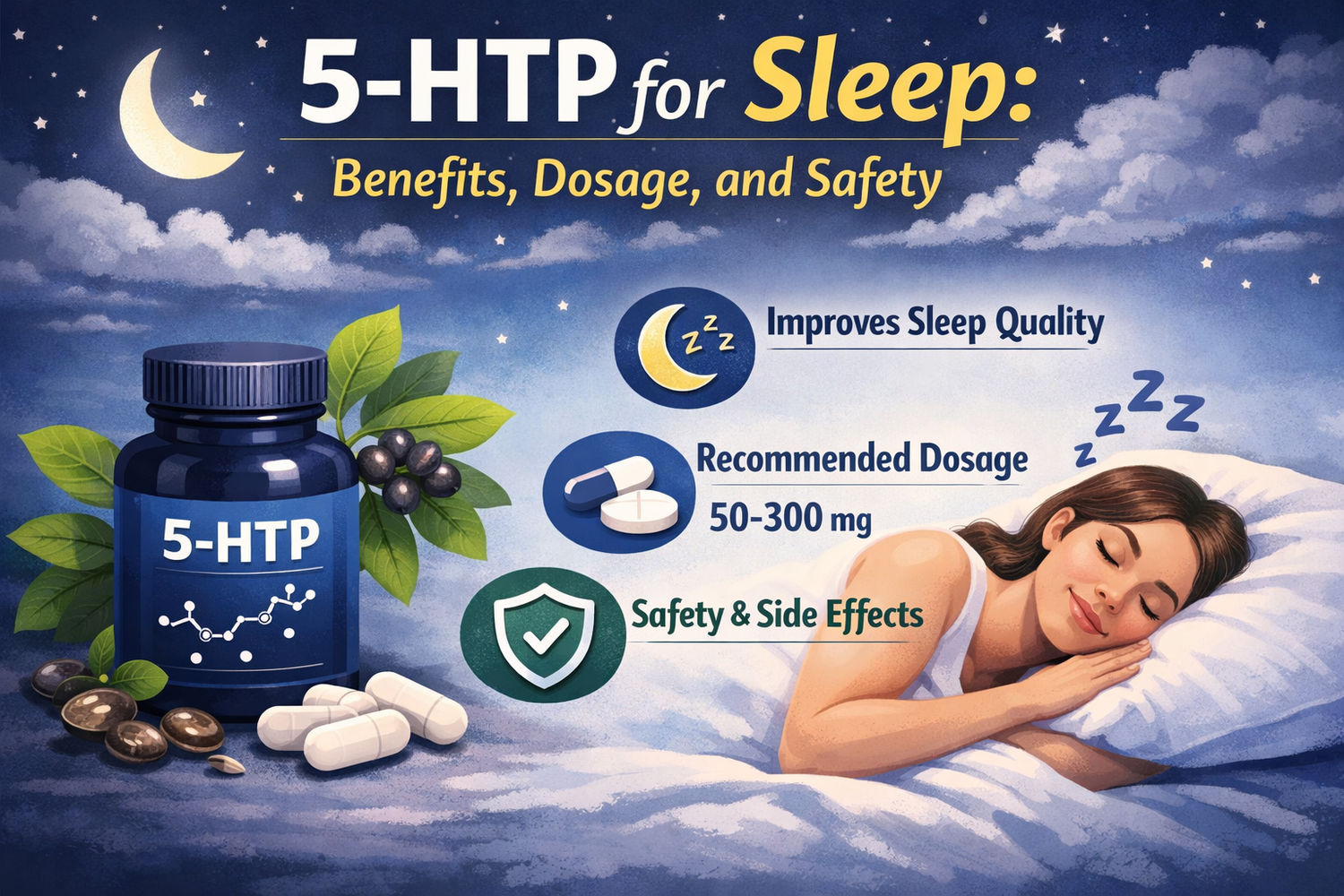
For many busy professionals, the quiet hours of the night are no longer a refuge but another source of stress. You might fall into bed exhausted, only to lie awake with a racing mind or wake too early, unrefreshed. If you’ve been searching for gentle, research-backed support, 5-HTP for Sleep has likely crossed your radar.
This natural compound sits at the crossroads of brain chemistry, mood, and the body’s internal clock. Understanding how it works can help you decide whether 5-HTP for Sleep belongs in your routine—and how to use it in a thoughtful, safe way.
“Sleep is the single most effective thing we can do to reset our brain and body health each day.”
— Matthew Walker, PhD
What Is 5-HTP And How Does It Relate To Sleep?
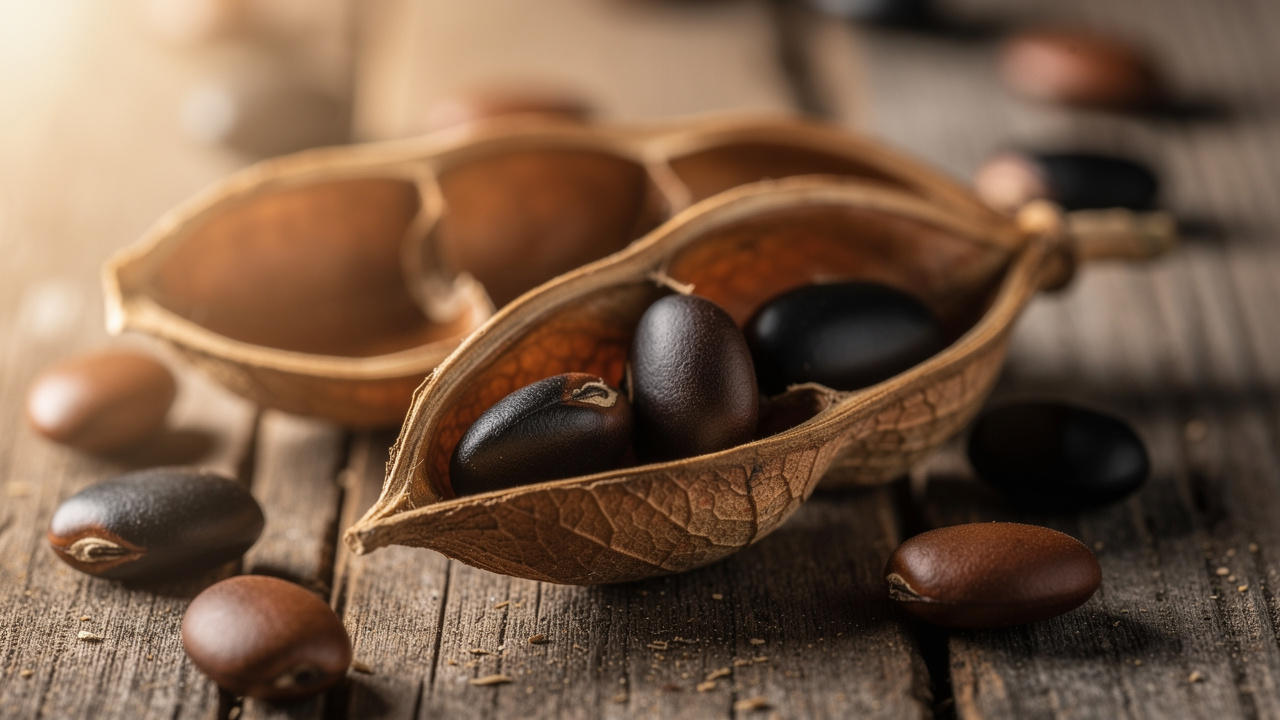
5-HTP stands for 5-hydroxytryptophan. It is an amino acid your body makes from L-tryptophan, an essential amino acid found in foods like turkey, eggs, and dairy. In supplement form, 5-HTP is usually extracted from the seeds of the African plant Griffonia simplicifolia.
5-HTP is the direct precursor to serotonin, a neurotransmitter that influences:
-
Sleep–wake cycles
-
Mood and emotional balance
-
Appetite and satiety
-
Pain perception
Serotonin, in turn, is the raw material your body uses to make melatonin, the hormone that signals “nighttime” to your brain. This simple pathway—tryptophan → 5-HTP → serotonin → melatonin—is at the heart of why 5-HTP for Sleep is so interesting to researchers.
When serotonin and melatonin levels are well supported, your body is better able to:
-
Wind down in the evening
-
Transition into sleep
-
Maintain more stable sleep throughout the night
Over time, supporting this pathway can help your sleep feel more predictable feel more predictable and less fragile.
The Biochemistry Of 5-HTP For Sleep
From Tryptophan To Serotonin To Melatonin

The process that leads from your dinner plate to restful sleep looks roughly like this:
-
Dietary L-tryptophan enters your bloodstream after you eat.
-
A portion of that tryptophan makes its way into the brain by crossing the blood-brain barrier (BBB).
-
In the brain, an enzyme called tryptophan hydroxylase (TPH) converts tryptophan into 5-HTP.
-
Another enzyme quickly converts 5-HTP into serotonin.
-
After dark, in the pineal gland, serotonin is transformed into melatonin.
The limiting factor in this chain is often step 3. TPH is a slow, heavily regulated enzyme, and its activity can be influenced by:
-
Stress and high cortisol
-
Inflammation
-
Nutrient status (iron, vitamin B6, magnesium)
-
Aging
When TPH is sluggish, serotonin output drops, and melatonin production can follow. This is where 5-HTP for Sleep becomes appealing: supplementing with 5-HTP provides the body with the compound that comes after this bottleneck.
It is also worth noting that vitamin B6 is a cofactor in the conversion of 5-HTP to serotonin. If B6 is low, that conversion may not be as effective, which is one reason a nutrient-rich diet can support how well 5-HTP works.
5-HTP Vs. Tryptophan For Sleep Support
Both L-tryptophan and 5-HTP can support serotonin production, but they are not equivalent.
|
Aspect |
5-HTP |
L-Tryptophan |
|---|---|---|
|
Position In Pathway |
Direct precursor to serotonin |
One step before 5-HTP |
|
Rate-Limiting TPH Step |
Bypasses it |
Dependent on it |
|
Crossing The Blood-Brain Barrier |
Crosses relatively freely |
Competes with other amino acids |
|
Sensitivity To Recent Protein Intake |
Less sensitive |
More sensitive |
Two advantages often discussed with 5-HTP for Sleep:
-
Bypasses the rate-limiting step
5-HTP does not need TPH. It can be converted into serotonin relatively quickly, even when TPH activity is reduced by stress, age, or nutrient issues. -
Crosses the blood-brain barrier more easily
Tryptophan must compete with other large neutral amino acids for shared transporters to enter the brain. A high-protein meal can reduce its access. 5-HTP, in contrast, moves into the brain without this competition.
Because of these differences, 5-HTP for Sleep is often seen as a more direct way to raise brain serotonin and, downstream, support melatonin rhythms and more settled sleep.
What The Research Says About 5-HTP For Sleep
Human research on 5-HTP for Sleep is still emerging, but one modern randomized controlled trial offers meaningful insight, especially for older adults.
A 12-Week Trial In Older Adults

A single-blinded, 12-week parallel randomized controlled trial in Singapore investigated 5-HTP’s effect on sleep and gut health in adults around 66 years of age. Key design points:
-
Participants: 30 older adults
-
Intervention: 100 mg of 5-HTP taken daily
-
Duration: 12 weeks
-
Sleep Measures:
-
Subjective: Pittsburgh Sleep Quality Index (PSQI)
-
Objective: actigraphy watch (movement-based sleep tracking)
-
-
Biomarkers: Serum serotonin, urinary melatonin, gut microbiota composition, short-chain fatty acids in stool
Improvements In Sleep Quality
Overall, the study found that 5-HTP for Sleep improved specific aspects of sleep quality, and those benefits appeared to last for several weeks. Key observations:
-
Blood serotonin levels increased in the 5-HTP group.
-
Participants who started with poor sleep quality saw the most meaningful improvements in their PSQI scores.
-
Changes were more pronounced in subjective ratings than in movement-based tracking, which is common in sleep research.
Earlier work, including older human and animal studies, suggests that higher doses of 5-HTP can increase slow-wave (deeper sleep), the stage associated with physical restoration and feeling truly rested.
At the same time, it is important to remember:
-
The sample size was small (30 people).
-
Participants were older adults, so results may differ in younger groups.
-
More independent trials are needed to confirm long-term safety and effectiveness.
As many sleep scientists point out, early trials can be promising, but they are just a starting point for understanding how a supplement behaves in everyday life.
Taken together, current findings suggest that 5-HTP for Sleep may be especially relevant for people who are already struggling with rest, rather than those who sleep reasonably well.
Why Poor Sleepers May Benefit More
One of the more intriguing findings about 5-HTP for Sleep is that it does not seem to help everyone equally.
Good Sleepers Vs. Poor Sleepers
In the trial, participants were divided into:
-
Good sleepers: Global Sleep Score (GSS) of 5 or less
-
Poor sleepers: GSS greater than 5
By week 12, the group of poor sleepers taking 5-HTP showed a statistically significant improvement in their subjective sleep quality. Good sleepers did not change much—likely because their sleep was already relatively stable.
Researchers often call this a “ceiling effect”:
-
When sleep is already adequate, there is little room for measurable improvement.
-
When sleep is fragmented, short, or unsatisfying, there is more space for a supportive intervention like 5-HTP to make a noticeable difference.
For stressed professionals, wellness enthusiasts, and those with long-standing long-standing sleep difficulties, this is encouraging. It suggests that 5-HTP for Sleep may be most meaningful where the need is greatest, especially when combined with patient, realistic expectations.
The Gut-Brain Connection And 5-HTP For Sleep
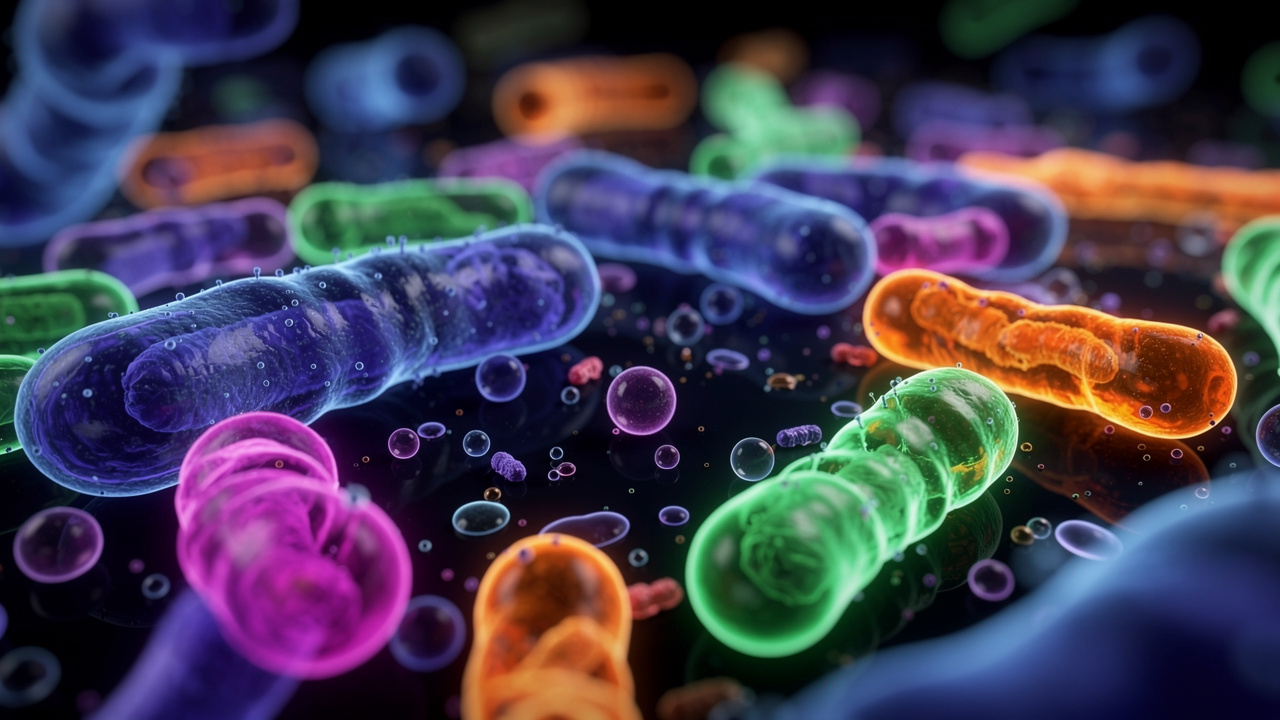
Sleep is not only a story of the brain. The gut—home to trillions of microbes—shares a constant conversation with the conversation with the nervous system. This gut-brain axis is a key part of the new science surrounding 5-HTP for Sleep.
Microbiota, Sleep, And Mood
Research investigating bidirectional causal relationships has linked poor sleep with:
-
Lower gut microbial variety
-
Imbalances in certain bacterial groups
-
Higher inflammation
Gut microbes can:
-
Produce neurotransmitters and related compounds
-
Influence immune activity
-
Generate short-chain fatty acids (SCFAs) that support gut barrier integrity and immune balance
How 5-HTP May Influence The Gut
In the 12-week trial:
-
Poor sleepers taking 5-HTP showed increased gut microbiota diversity.
-
They also had a higher abundance of SCFA-producing bacteria.
SCFAs such as butyrate, acetate, and propionate can:
-
Support a healthy gut lining
-
Help regulate inflammation
-
Influence brain function and mood
This suggests that 5-HTP for Sleep may work through two intertwined pathways:
-
Directly, by serving as a precursor for serotonin and melatonin in the brain.
-
Indirectly, by helping shape a gut environment associated with calmer physiology and more stable sleep.
While researchers are still teasing apart the details, the link between better sleep, healthier gut, healthier gut microbes, and improved mood is gaining more attention in clinical practice.
Practical Guidance: Using 5-HTP For Sleep

If you are considering 5-HTP for Sleep, it helps to approach it as one part of a thoughtful, long-term sleep strategy rather than a quick fix.
Suggested Dosage And Timing
Research and clinical practice often use the following ranges:
-
Starting point: 50 mg per day
-
Common researched dose: 100 mg per day
-
Typical timing: 30–60 minutes before bedtime
Many people begin with 50 mg for several nights and increase to 100 mg if needed, paying close attention to how they feel. Some practitioners may suggest higher doses, but this should always be done under medical supervision.
A simple way to think about dosing:
|
Dose (mg) |
When To Consider It |
Notes |
|---|---|---|
|
50 mg |
First-time use, sensitive individuals |
Monitor for digestive changes and vivid dreams |
|
100 mg |
Common maintenance dose in research |
Often used once daily in the evening |
Because 5-HTP can affect serotonin, it is wise to start low and move gradually, noting effects on:
-
Time to get to sleep
-
Nighttime awakenings
-
Morning alertness
-
Mood and digestion
Keeping a brief sleep log for a few weeks can make patterns easier to spot.
Potential Side Effects
Most people tolerate 5-HTP for Sleep reasonably well, but side effects can occur, especially at higher doses or when starting out. Common ones include:
-
Nausea or queasiness
-
Heartburn or mild stomach discomfort
-
Gas or bloating
-
Diarrhea
-
Decreased appetite
Taking 5-HTP with a small, carbohydrate-containing snack (rather than on a completely empty stomach) may help reduce digestive discomfort for some.
If you notice:
-
Persistent digestive upset
-
Marked changes in mood
-
Unusual headaches or restlessness
it is wise to pause the supplement and check in with a healthcare professional.
Important Precautions And Interactions
Because 5-HTP influences serotonin, combining it with other serotonin-boosting substances can be risky.
You should not use 5-HTP for Sleep without medical guidance if you are taking:
-
Antidepressants, especially:
-
SSRIs (e.g., fluoxetine, sertraline)
-
SNRIs
-
Tricyclic antidepressants
-
MAO inhibitors
-
-
Triptans for migraines (e.g., sumatriptan)
-
Certain prescription pain medications (e.g., tramadol)
-
St. John’s wort or other serotonin-active supplements
Mixing multiple serotonin-raising substances can, in rare cases, lead to serotonin syndrome, a potentially serious condition marked by agitation, rapid heart rate, sweating, and changes in blood pressure and mental status.
Other groups that should use particular caution and seek medical advice before considering 5-HTP for Sleep include:
-
Pregnant or breastfeeding individuals
-
People with significant liver or kidney disease
-
Those with a history of bipolar disorder or certain psychiatric conditions
A conversation with a healthcare professional who knows your history is essential before adding 5-HTP or any new supplement.
Supporting 5-HTP For Sleep With Better Habits
Supplements tend to work best when they rest on a solid foundation. If you decide to use 5-HTP for Sleep, reinforcing it with supportive routines can make a meaningful difference.
Consider:
-
Regular sleep and wake times
Going to bed and rising at consistent hours stabilizes circadian rhythms and supports melatonin patterns. -
Light exposure
-
Morning: Bright light outdoors or near a window to reinforce wakefulness.
-
Evening: Dimmer, warmer light and reduced screen exposure to help help melatonin rise rise.
-
-
Wind-Down Routine
Gentle stretching, reading, breathing practices, or meditation can signal the nervous system that it is safe to let go of the day. -
Caffeine And Alcohol Awareness
-
Limit caffeine after midday if you are sensitive.
-
Be cautious with alcohol; it may help you stay asleep longer but can fragment sleep later in the night.
-
-
Nutritional Support
A varied diet with adequate protein, fiber, and micronutrients supports both serotonin pathways and a healthy gut microbiome.
Some people also pair 5-HTP for Sleep with other gentle supports—such as magnesium, valerian root, or chamomile—under the guidance of a practitioner who can watch for interactions and overall balance.
“Your day starts the night before. What you do in the evening sets up how your brain will function tomorrow.”
— Common advice in behavioral sleep medicine
Is 5-HTP For Sleep Right For You?
Sleep is more than a nightly pause; it is the quiet ground on which attention, creativity, emotional stability, and emotional stability, and physical health are built. When that ground feels unsteady, it is natural to look for safe, natural tools that might help.
The research so far suggests that:
-
5-HTP for Sleep can raise serotonin levels and support melatonin production.
-
Benefits seem most notable in people with poor baseline sleep quality, especially older adults.
-
5-HTP may also support healthier gut microbiota, offering another pathway toward pathway toward calmer nights nights.
At the same time, it is not a universal remedy, and its effects are shaped by your overall health, medications, daily habits, and stress levels.
If your nights feel restless, consider this approach:
-
Reflect: Notice your patterns—bedtime, wake time, caffeine, evening screen use, stress load.
-
Restore Foundations: Make gentle adjustments to routines that you can sustain.
-
Consult: Talk with a trusted healthcare professional about whether 5-HTP for Sleep fits your situation, especially if you take any medications.
-
Experiment Carefully: If cleared to try it, start low, increase slowly, and track your sleep and mood over several weeks rather than a few nights.
From a thoughtful perspective, 5-HTP for Sleep is not about forcing the body to shut down. Instead, it offers raw material to pathways that already exist within you—pathways designed to move you from wakefulness into rest, and from rest back into a new day with more clarity and steadiness.

Leave a comment
This site is protected by hCaptcha and the hCaptcha Privacy Policy and Terms of Service apply.