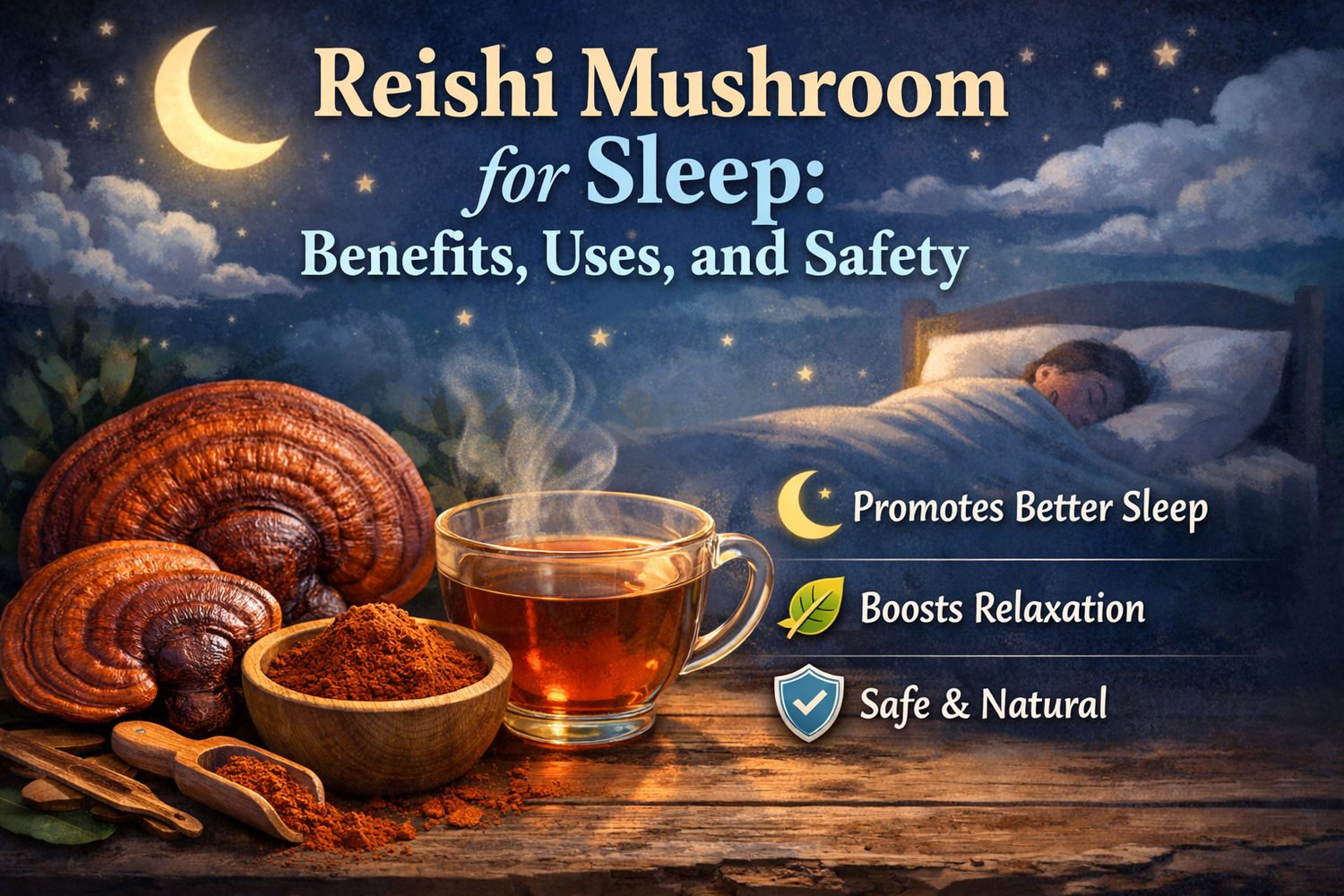
Sleep is one of the simplest human needs, yet for many busy professionals it has become strangely out of reach. Long after the workday ends, thoughts keep circling, the nervous system refuses to settle, and the body lies awake, waiting for rest that never quite comes.
Amid the noise of supplements and sleep hacks, Reishi Mushroom stands out as something older and quieter—a traditional remedy that has been part of evening rituals for centuries. Modern research is beginning to explore what healers have long observed: this mushroom may gently support the mind and body in moving toward deeper, more restorative sleep.
“Sleep is that golden chain that ties health and our bodies together.”
— Thomas Dekker
This guide looks at how Reishi Mushroom may influence sleep, what the science currently shows, how to use it wisely, and when it may not be a good fit.
What Is Reishi Mushroom?
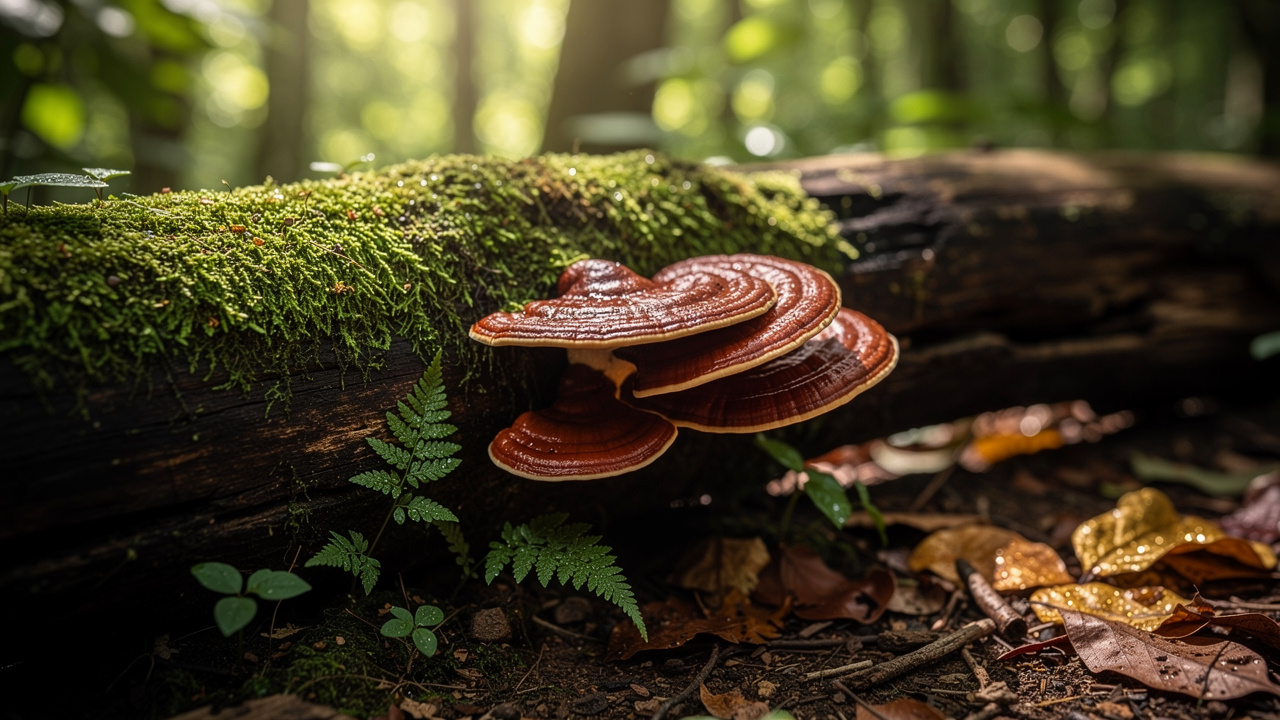
Reishi Mushroom, known scientifically as Ganoderma lucidum, is a glossy, reddish-brown fungus with a fan-shaped cap that has been the subject of extensive phytochemical analysis and antimicrobial research. It grows mainly on hardwood trees in warm, humid regions of Asia and has been used for hundreds of years in traditional Chinese, Japanese, and Korean medicine, with Himalayan mushrooms as a particularly valuable source for medicinal applications.
Often called the “mushroom of immortality,” Reishi was historically reserved for royalty and spiritual practitioners. It was valued not just for supporting longevity, but also for calming the mind, easing tension, and helping with sleep.
You may see Reishi Mushroom sold under several names:
-
Reishi
-
Lingzhi
-
Lin zi
-
Ganoderma lucidum (scientific name)
Because its texture is tough and its taste quite bitter, Reishi is rarely eaten like culinary mushrooms. Instead, it is dried and prepared as:
-
Powders
-
Hot-water or alcohol extracts
-
Capsules and tablets
-
Teas and tinctures
These preparations concentrate the mushroom’s key compounds—such as polysaccharides, triterpenes, and beta-glucans—which are thought to underlie many of its effects, including those related to sleep quality and relaxation.
How Reishi Mushroom May Support Deeper Sleep

The appeal of Reishi Mushroom for sleep is not that it knocks you out, but that it may help shift the body toward a calmer, more balanced state where sleep can arise more naturally. Several mechanisms are being studied.
Calming The Nervous System
Reishi contains polysaccharides and triterpenes that appear to interact with neurotransmitter systems involved in relaxation and sleep.
One area of interest is its influence on GABA (gamma-aminobutyric acid), the main inhibitory neurotransmitter in the brain. GABA helps quiet overactive neural circuits and prepares the brain for rest. Early laboratory work suggests that compounds from Reishi Mushroom may affect GABA-related pathways, which could partly explain the sense of relaxation many people report.
While this research is still developing, it aligns with Reishi’s long-standing traditional use to “settle the spirit” and ease a racing mind at night. For people whose thoughts stay stuck in work mode long after office hours, this gentle calming effect can matter a great deal.
Easing Stress Hormones
For many stressed professionals, the real barrier to sleep is not the absence of tiredness, but the presence of stress.
Reishi is often described as an adaptogen—a plant or fungus believed to help the body respond more evenly to physical and emotional stress. Some early studies suggest that Reishi Mushroom extracts may influence the stress response, including cortisol levels, which tend to be elevated or poorly regulated in chronic stress and insomnia.
By nudging the stress system toward balance, Reishi may:
-
Make it easier to “come down” at the end of the day
-
Reduce nighttime restlessness
-
Support a smoother transition into sleep
-
Help reduce the sense of “wired but tired” at bedtime
Supporting Immune And Inflammatory Balance
Sleep quality and immune function are closely linked, with edible mushrooms for improved human health offering promise for both food security and holistic wellness approaches. Inflammation, infections, or immune overactivity can fragment sleep and contribute to feeling unrefreshed.
Polysaccharides in Reishi Mushroom—especially beta-glucans—have been shown to modulate immune activity in both laboratory and animal studies. Rather than simply stimulating the immune system, Reishi appears to help regulate it, which may indirectly support more stable sleep in people whose rest is disturbed by ongoing stress or low-grade inflammation.
This does not make Reishi a treatment for any specific disease, but it does hint at why it has been used in traditions that view sleep, immunity, and overall vitality as closely connected.
What The Science Says About Reishi Mushroom And Sleep
Compared with pharmaceuticals, research on Reishi Mushroom and sleep is still in early stages, but the findings so far are encouraging.
Human Studies
Small human trials and observational studies suggest that Reishi may:
-
Improve overall sleep quality
-
Shorten the time it takes to get to sleep
-
Reduce fatigue, especially in people dealing with chronic illness
-
Ease associated anxiety and low mood in some cases
For example, studies in cancer patients—who often struggle with poor sleep, exhaustion, and emotional stress—have reported better quality of life, reduced fatigue, and improvements in sleep after taking Reishi-based products alongside standard care.
These studies are limited by:
-
Small sample sizes
-
Varied dosing schedules
-
Different product types and extraction methods
Larger, well-controlled trials focused specifically on insomnia or stress-related sleep problems are still needed. Still, the pattern is consistent with Reishi’s traditional use as a calming, restorative mushroom.
Animal And Laboratory Research
Animal models provide some additional clues:
-
Reishi extracts have shown sedative and sleep-promoting effects in rodents
-
Polysaccharides from Reishi Mushroom have been linked with reduced fatigue after exertion
-
Compounds in Reishi appear to interact with brain receptors involved in relaxation and stress responses
While animal data cannot be directly translated to human dosage or effects, it supports the idea that Reishi may influence pathways relevant to sleep, stress, and recovery.
“Sleep is the best meditation.”
— The 14th Dalai Lama
Choosing A Reishi Mushroom Product For Sleep
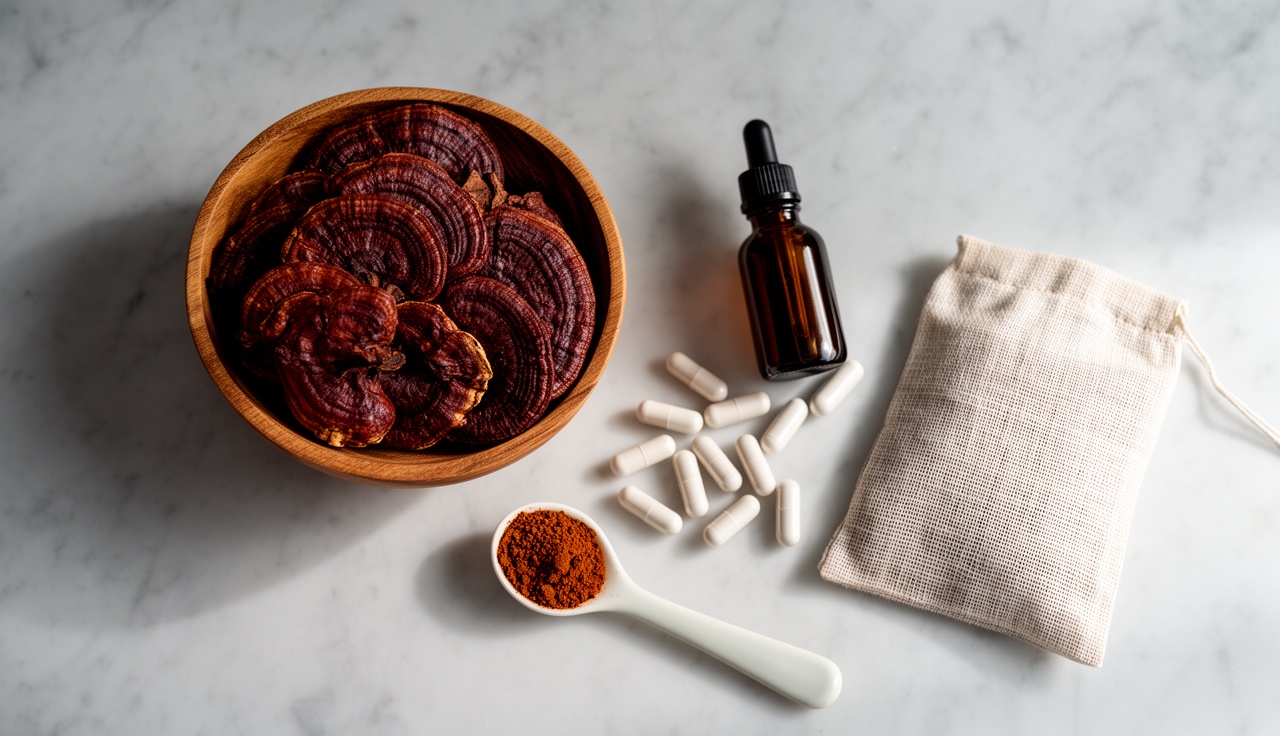
Not all Reishi products are the same. The form you choose affects both potency and how you might fold Reishi Mushroom into your evening routine.
Common Forms
-
Powder (Whole Mushroom Or Extract)
-
Can be stirred into warm water, tea, or evening smoothies
-
Often used in “nighttime latte” blends with herbs and spices
-
Extract powders are more concentrated than whole-mushroom powders
-
-
Capsules And Tablets
-
Convenient for consistent dosing
-
Helpful if you dislike the bitter flavor
-
Usually contain powdered extract, whole mushroom powder, or a combination
-
-
Liquid Extracts And Tinctures
-
Taken directly or mixed into a small amount of water or tea
-
Absorbed relatively quickly
-
Often standardized to specific levels of polysaccharides or triterpenes
-
-
Tea
-
Made by simmering dried Reishi Mushroom slices or using prepared tea bags
-
The bitterness can be softened with cinnamon, ginger, or a bit of honey (if appropriate for you)
-
Doubles as a relaxing evening ritual
-
For a quick comparison:
|
Form |
Main Advantage |
Often Chosen By |
|---|---|---|
|
Powder |
Flexible, easy to mix into drinks |
People who like warm evening beverages |
|
Capsules/Tablets |
Precise, simple dosing |
Busy professionals and travelers |
|
Liquid Extracts |
Fast, easy to adjust drops |
Those wanting quick use without preparation |
|
Tea |
Soothing ritual plus hydration |
People who enjoy a slow, calming wind-down |
Typical Dosage Ranges
There is no single, universally agreed-upon dose of Reishi Mushroom for sleep, but reviews of clinical and traditional use suggest:
-
Rough range: about 1.5–9 grams per day of dried mushroom or its equivalent
-
Extracts: are significantly more concentrated; roughly 5 grams of a dried extract can correspond to about 50 grams of the whole mushroom
Because products vary widely in strength, it is important to:
-
Follow the dosage instructions on your specific product
-
Start at the lower end of the suggested range
-
Increase slowly only if needed and well tolerated
-
Discuss your plan with a healthcare professional, especially if you take medications or have health conditions
For sleep support, many people take Reishi Mushroom once in the evening, approximately 30–60 minutes before bed, sometimes along with a smaller dose earlier in the day for stress balance. Your clinician can help you decide what makes sense for your situation and how Reishi might fit with other parts of your sleep routine.
Building A Reishi Mushroom Evening Ritual

The real power of Reishi Mushroom often comes when it is woven into a broader pattern of evening care, rather than used as a stand-alone fix.
Consider pairing Reishi with simple, repeatable steps that signal safety and rest to your nervous system:
-
Set A Consistent Wind-Down Time
Choose a 30–60 minute window each night when work and stimulating tasks end. Take your Reishi during this time. -
Create A Quiet Beverage Ritual
-
Prepare a warm Reishi tea or mix a Reishi extract powder into a caffeine-free drink
-
Sit, sip slowly, and breathe deeply rather than drinking it on the run
-
Use this time to mentally set the day down
-
-
Dim The Environment
Lower lights, silence nonessential notifications, and step away from work devices. This reinforces the internal message that it is safe to rest. -
Add Gentle Practices
Light stretching, reading something calming, or brief journaling can help clear mental clutter. Reishi Mushroom may make it easier for the body to follow that cue into sleep. -
Stay Patient And Observant
Reishi is not usually a “take once and everything changes overnight” supplement. Many people notice gradual shifts over several weeks—less tension at night, fewer awakenings, or feeling more restored in the morning.
Combining Reishi Mushroom with solid sleep hygiene—such as regular bedtimes, a cool dark room, and limited late-night caffeine or alcohol—often produces more reliable results than either step on its own.
Safety, Side Effects, And Who Should Avoid Reishi Mushroom
Even natural substances carry risks. Understanding the safety profile of Reishi Mushroom is essential before making it part of your nightly routine.
Common, Mild Side Effects
Many people tolerate Reishi without difficulty, but reported side effects include:
-
Digestive upset (nausea, stomach discomfort, indigestion, diarrhea)
-
Dryness of the mouth, throat, or nasal passages
-
Dizziness or headache
-
Itchiness, rash, or other skin reactions
-
Nosebleeds or darker stools in some cases
-
Occasionally, difficulty sleeping (paradoxically) in sensitive individuals
If you notice new or worsening symptoms after starting Reishi Mushroom, stop taking it and speak with your healthcare provider.
More Serious Concerns And At-Risk Groups
Rare but serious reactions have been reported, particularly with long-term use of powdered Reishi products:
-
Liver injury (hepatotoxicity): Case reports describe significant liver damage, including one fatal event, possibly linked to powdered Reishi products.
-
Increased bleeding risk: Higher doses may interfere with normal blood clotting, especially in those with low platelets or blood disorders.
Because of these concerns, the following groups should avoid Reishi or use it only with close medical supervision:
-
Pregnant or breastfeeding individuals (safety data are lacking)
-
People with bleeding disorders or very low platelet counts
-
Anyone with low blood pressure or on medications to raise blood pressure
-
Individuals with known liver or kidney disease
-
Those scheduled for surgery (Reishi is usually stopped at least 2 weeks beforehand)
-
People with autoimmune or immune system disorders, or those on immunosuppressant drugs
-
Children, especially those with serious illnesses, unless a specialist is closely involved
If you fall into any of these categories, talk with a qualified clinician before using Reishi Mushroom in any form.
Medication, Supplement, And Lab Test Interactions
Reishi Mushroom can interact with a range of medications and even affect some lab results.
Medications and supplements that may interact include:
-
Blood thinners and antiplatelet drugs
-
Warfarin, heparin, aspirin, clopidogrel
-
NSAIDs such as ibuprofen and naproxen
-
Supplements like ginkgo or high-dose fish oil
-
-
Blood pressure medications
-
Reishi may add to the blood pressure–lowering effects of these drugs
-
-
Diabetes medications
-
Animal studies suggest possible blood sugar effects, which could, in theory, interact with diabetes treatments
-
-
Immunosuppressant drugs
-
Used for autoimmune diseases or after organ transplantation
-
Reishi’s immune-modulating effects may work against these medications
-
-
Certain chemotherapy agents
-
Because Reishi can increase antioxidant capacity, it may in theory interfere with treatments that rely on oxidative stress to affect cancer cells
-
Reishi may also interfere with liver enzymes (CYP2E1, CYP1A2, CYP3A) involved in drug metabolism, although the real-world impact is not yet clear.
Potential lab test effects:
-
Prolonged clotting times on tests such as INR, PT, and aPTT
-
Elevated levels of the tumor marker CA72-4 when using Reishi spore powder, which can complicate cancer monitoring
For anyone taking medication or being followed for a serious condition, discussing Reishi Mushroom with your physician and pharmacist before starting is essential. Bring the exact product label with you so they can review ingredients and dosing.
When Reishi Mushroom May Not Be Enough
While Reishi Mushroom can be a meaningful part of a sleep-support plan, it is not a substitute for medical evaluation or comprehensive care.
You should seek professional help—rather than relying on any supplement alone—if you:
-
Snore heavily, gasp, or stop breathing during sleep
-
Feel excessively sleepy during the day despite enough time in bed
-
Have long-standing insomnia (difficulty falling or staying asleep for months)
-
Notice your mood, work performance, or relationships declining due to poor sleep
-
Live with conditions like depression, anxiety, PTSD, or chronic pain that strongly affect sleep
Evidence-based approaches such as cognitive behavioral therapy for insomnia (CBT‑I), evaluation for sleep apnea, and careful management of mental health often make a dramatic difference. If you and your clinician decide to include Reishi Mushroom, it should be as one piece in a thoughtful, coordinated plan.
Bringing It All Together
Sleep is not a luxury reserved for those with light schedules; it is the quiet foundation on which clarity, resilience, and health rest. For many people whose nights have become a battleground of stress and wakefulness, Reishi Mushroom offers an older, slower rhythm—a way of gently nudging body and mind back toward rest.
Modern research is beginning to validate aspects of what traditional healers observed: Reishi may calm the nervous system, soften the stress response, and support more restorative sleep, particularly when combined with consistent sleep habits and a mindful evening routine.
Used carefully, with awareness of its risks and interactions, Reishi Mushroom can become part of a deliberate practice of caring for your nights—so your days can feel more grounded, clear, and fully awake. Before you begin, speak with a trusted healthcare professional about whether Reishi is appropriate for you, and approach it not as a quick fix, but as a steady companion in the long work of restoring deep, nourishing rest.


Leave a comment
This site is protected by hCaptcha and the hCaptcha Privacy Policy and Terms of Service apply.