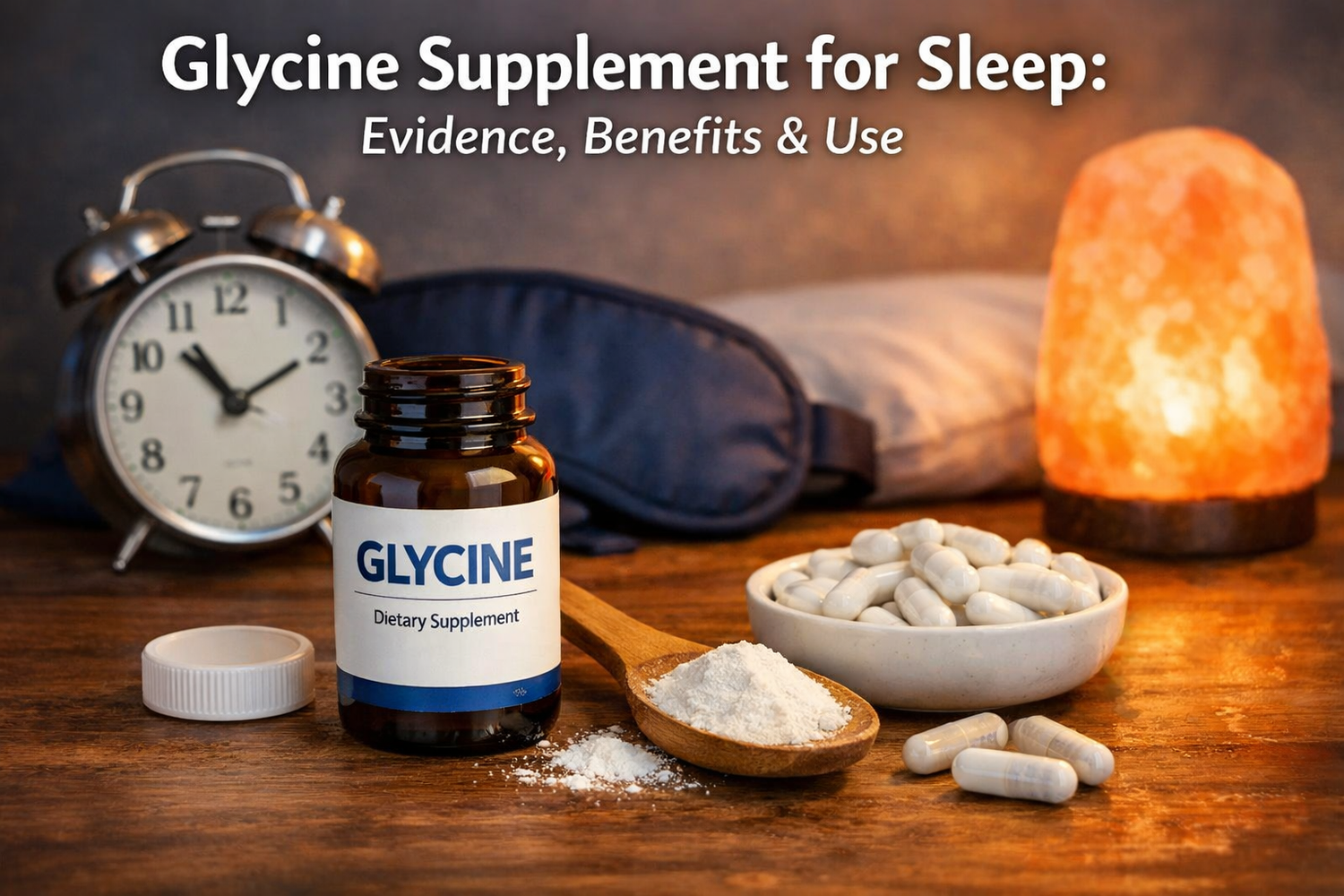
Introduction
The scene is familiar: the clock edges past midnight, you have an early meeting, and your mind keeps replaying the day. Sleep comes late, feels shallow, and the next morning you run on caffeine and willpower. For many professionals, this is no longer an exception; it has become routine.
Standard sleep aids promise a quick knockout. High‑dose melatonin, antihistamines, and prescription sedatives can put you to sleep, but often by forcing the brain into a drugged state. That can mean grogginess, vivid dreams, or the sense that the body slept while the mind did not truly rest. This is where a different idea stands out: a glycine supplement for sleep that works with built‑in biology instead of pushing against it.
Glycine is a simple amino acid, not a hormone or sedative. Human and animal research suggest it can improve sleep quality, shorten the time it takes to fall asleep, and support better next‑day performance. It does this by supporting the natural drop in core body temperature and the signaling inside the brain’s master clock that tells the body it is time to sleep.
“Sleep is the single most effective thing we can do to reset our brain and body health each day.”
— Matthew Walker, PhD, author of Why We Sleep
This guide walks through what glycine is, how it works in the nervous system, what clinical studies show, and how to use a glycine supplement for sleep in a structured, sustainable way. You will also see how SLP1 builds glycine into melatonin‑free formulas that respect circadian rhythms instead of overriding them.
Key Takeaways
-
Glycine supports sleep by helping thermoregulation and NMDA receptor activity rather than sedating the nervous system, so it works best when taken near natural bedtime.
-
Most human studies use 3 grams of glycine taken 30–60 minutes before bed, improving subjective sleep quality, sleep onset, and next‑day fatigue.
-
Glycine helps the body move into non‑REM and slow‑wave sleep more smoothly while keeping REM sleep intact, unlike many sedatives.
-
At researched doses, glycine is non‑habit forming with an excellent safety record; mild digestive discomfort appears only at much higher intakes.
-
Glycine differs from melatonin: melatonin adds a hormone signal, while glycine supports the body’s own timing and temperature rhythms from the ground up.
Understanding Glycine – The Foundational Amino Acid Behind Better Sleep
Glycine is one of the simplest amino acids, yet it sits at the center of several essential processes. It is labeled “non‑essential” because the body can make it, not because it is unimportant. A large share of body glycine lives in collagen, the framework for skin, tendons, ligaments, cartilage, and bone. Without enough glycine, collagen cannot form correctly, which affects tissue repair and resilience.
Glycine also supports metabolism. It helps build DNA and RNA, contributes to creatine synthesis for muscle energy, and aids the liver in processing fats and fat‑soluble vitamins. Most people take in roughly 3–5 grams per day from meat, fish, gelatin, dairy, and legumes, but research suggests that under stress, injury, or poor diet, internal production plus food may not cover all demands.
In these cases, glycine becomes conditionally essential. The 3‑gram dose used in a glycine supplement for sleep creates a temporary surplus in blood and brain. That extra pool can act not just as a building block, but as a neuromodulator, influencing receptors that regulate neural activity and body temperature—right where sleep physiology lives.
The Neuroscience Of Glycine – How One Amino Acid Performs Dual Functions

Inside the nervous system, glycine plays two very different roles.
-
Inhibitory neurotransmitter:
In the spinal cord and brainstem, glycine binds to dedicated glycine receptors, making neurons less likely to fire. This helps control motor activity and contributes to muscle atonia during REM sleep, so you do not physically act out dreams. -
Co‑signal for NMDA receptors:
In the brain, glycine also binds to a special site on NMDA receptors, which are central to learning, memory, and synaptic plasticity. Many NMDA receptors require both glutamate and glycine to open properly. At sleep‑supportive doses, glycine mainly modulates these receptors instead of strongly activating inhibitory glycine receptors.
The outcome is very concrete: by shaping NMDA receptor activity in key brain regions, glycine can influence blood flow, body temperature, and sleep networks, while its spinal role keeps muscle tone in check during REM. One small molecule, two jobs—supporting both motion and rest.
The Clinical Evidence On Glycine Supplement For Sleep Quality
Several controlled human trials provide a useful picture of what a glycine supplement for deeper sleep can do.
-
Adults with mild insomnia who took 3 grams of glycine before bed reported:
-
Better subjective sleep quality
-
Easier wake‑ups
-
Less daytime fatigue compared with placebo
-
-
In a partial sleep‑restriction study, participants who slept less than usual but took 3 grams of glycine:
-
Reported better self‑rated performance
-
Felt less sleepy and less irritable during the day
-
-
Polysomnography showed that glycine:
-
Shortened sleep latency
-
Shortened the delay before slow‑wave sleep
-
Did not disturb total sleep time or the overall pattern of sleep stages
-
Sample sizes are modest and more large‑scale trials would help, but findings are consistent: for mild to moderate sleep difficulties—especially trouble falling asleep and next‑day fatigue—glycine provides modest yet meaningful support when paired with good sleep habits.
“With sleep, small improvements night after night add up to big changes in how you feel during the day.”
— Common teaching in behavioral sleep medicine
Core Mechanism 1 – Thermoregulation And The Temperature Sleep Connection

Human sleep closely tracks the daily rhythm of core body temperature. In the evening, core temperature starts to fall; this drop helps sleep begin and stay stable. When it does not fall well, many people feel “tired but wired” and struggle to settle.
Research in both animals and humans shows that pre‑bed glycine deepens this physiological cooling:
-
Core body temperature dips more than with placebo.
-
The timing of this dip lines up with faster entry into non‑REM and slow‑wave sleep.
-
Under conditions of sleep disturbance, glycine supports a quicker return to stable sleep.
Metabolic rate does not collapse; instead, glycine improves the body’s ability to move heat from core to surface, where it can dissipate. That shift depends on peripheral blood flow, which connects directly to the second mechanism.
Core Mechanism 2 – Peripheral Vasodilation And Heat Dissipation

To cool the core, the body must send warm blood toward the skin. Glycine supports this process by promoting peripheral vasodilation: the widening of blood vessels in the hands, feet, and face.
Animal work using laser‑Doppler imaging shows:
-
After oral glycine, blood flow in the paws increases markedly.
-
This rise in cutaneous blood flow appears just before the drop in core temperature and onset of non‑REM sleep.
-
The effect is dose‑dependent up to a plateau.
In humans, the overall pattern is similar: increased heat loss and a stronger nighttime temperature decline. Timing matters; taking glycine near bedtime, when the brain expects cooling, aligns with this mechanism. For people who “sleep hot” and often wake sweaty or restless, this thermoregulatory push can be especially helpful.
The Master Clock And Glycine Action On The Suprachiasmatic Nucleus SCN
Deep above the optic chiasm lies the suprachiasmatic nucleus (SCN), the tiny master clock that coordinates circadian rhythms. It receives light signals from the eyes and sets daily patterns for hormones, temperature, and sleep‑wake timing.
Rodent studies indicate that glycine acts directly on the SCN:
-
Glycine increases c‑Fos expression (a marker of neuronal activation) in the SCN.
-
Microinjections of glycine into the SCN, but not other areas, boost peripheral blood flow and reduce core temperature.
-
When the SCN is lesioned, glycine no longer lowers temperature or promotes non‑REM sleep.
The working model: oral glycine reaches the brain, helps activate NMDA receptors on SCN neurons, and those neurons send signals that widen peripheral blood vessels and deepen the nighttime temperature drop. This clock‑based action differs sharply from drugs that broadly sedate large brain regions.
NMDA Receptors As The Molecular Target Behind Sleep Improvement
At the molecular level, glycine’s sleep support centers on NMDA receptors in the SCN.
-
Glycine binds to a distinct “co‑agonist” site on NMDA receptors.
-
Without enough glycine at this site, glutamate alone may not fully open the channel.
-
Sleep‑supportive doses raise brain glycine to levels that modulate NMDA function without strongly stimulating inhibitory glycine receptors.
Pharmacology experiments back this up:
-
NMDA blockers blunt glycine’s usual rise in cutaneous blood flow and drop in core temperature.
-
Blocking inhibitory glycine receptors with strychnine does not remove these effects.
-
D‑serine, another NMDA co‑agonist, produces similar changes when applied to the SCN.
By nudging NMDA receptors rather than shutting the brain down, glycine can improve sleep quality while preserving next‑day clarity—exactly what many high‑performers want.
Secondary Pathways – Glycine Effect On Serotonin And Sleep Architecture
Thermoregulation is central, but not the whole story. Animal research suggests glycine can also influence serotonin in the prefrontal cortex. Serotonin helps regulate mood, appetite, and the sleep‑wake cycle, and it serves as the immediate precursor for melatonin.
Rising extracellular serotonin after oral glycine may:
-
Support a steadier mood
-
Reduce mental over‑arousal before bed
-
Contribute indirectly to healthier nighttime melatonin patterns
Glycine also shapes sleep architecture: it increases non‑REM sleep and speeds entry into slow‑wave sleep without drastically shifting REM duration. Its traditional role in REM muscle atonia remains, but oral doses used for sleep do not appear to distort REM quantity. The result is deeper non‑REM sleep, preserved REM, and mornings that feel clearer instead of groggy.
Sleep Architecture Impact And How Glycine Affects Sleep Stages
Healthy nights cycle through light non‑REM, deep slow‑wave, and REM sleep several times. Disrupt this pattern and you can feel drained even if total hours look fine.
Polysomnographic data after glycine intake consistently show:
-
Shorter sleep latency
-
Faster onset of slow‑wave sleep
-
Slightly more non‑REM time and more stable non‑REM episodes
-
REM sleep preserved, with a near‑normal REM/non‑REM ratio
Many sedatives increase time in bed but fragment architecture, suppress REM, or blunt deep sleep. Glycine tends to do the opposite: it helps the brain run its own program more efficiently, which explains why many people describe clearer mornings rather than a drugged hangover.
Optimal Dosing Protocol For Glycine Supplementation
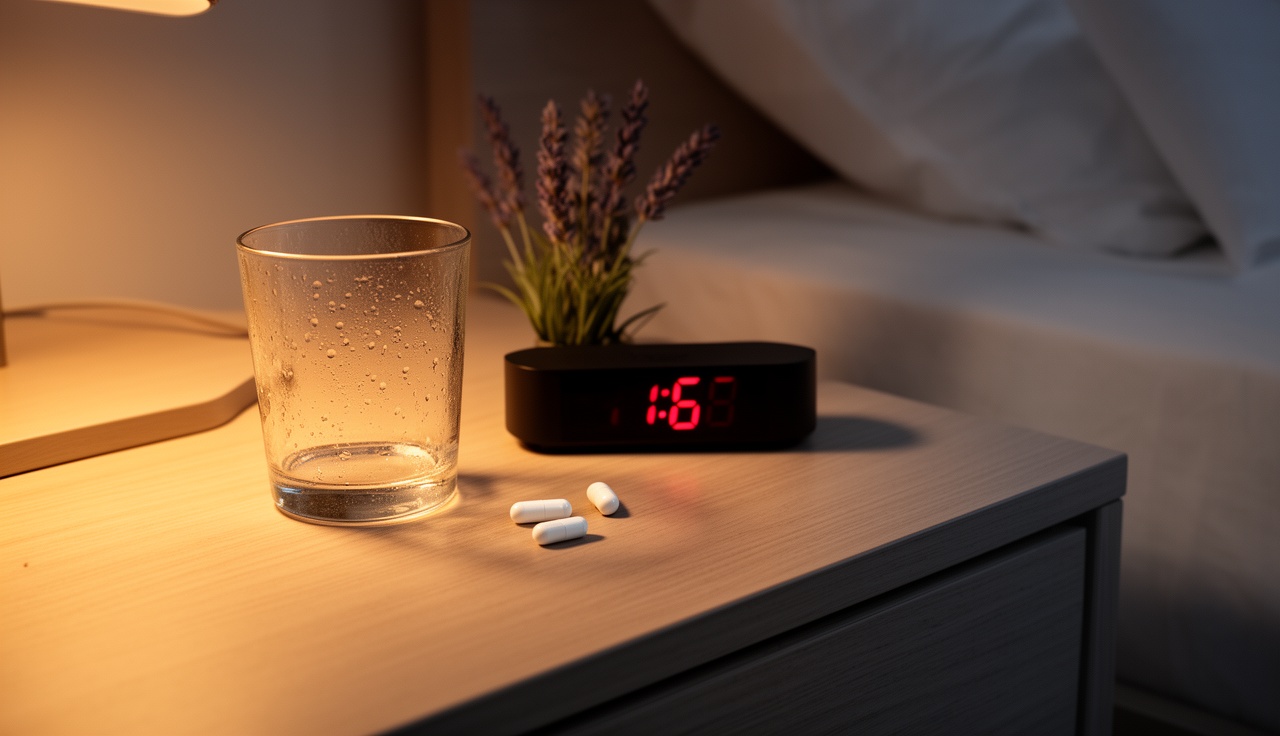
Most sleep research converges on a simple pattern:
-
Dose: 3 grams of pure glycine
-
Timing: 30–60 minutes before planned bedtime
-
Frequency: Nightly, for at least 2–4 weeks to fairly assess results
Form options:
-
Powder: Easy to mix with water; flexible dosing
-
Capsules: Convenient and portable
A practical starter plan:
-
Begin with 3 grams about 45 minutes before bed for several nights.
-
If very cautious, start at 1.5 grams for a few nights, then move to 3 grams.
-
Avoid introducing multiple new supplements at the same time so you can read the signal.
Higher doses do not appear to add sleep benefits and may raise the risk of digestive upset. Consistency, not escalating dose, tends to matter most.
Safety Profile And Side Effects From Current Research
Safety is one of glycine’s strongest points. At the standard 3‑gram bedtime dose:
-
Clinical trials in healthy adults report no serious adverse events.
-
Participants do not show withdrawal, rebound insomnia, or morning grogginess.
-
Glycine is already present in large amounts in the body and diet.
Even in trials using much higher daily intakes (over 30 grams) for other conditions, reported side effects are mostly mild gastrointestinal complaints such as nausea or loose stool.
Cautions still apply:
-
People with kidney disease, certain metabolic issues, or on central nervous system medications should speak with a clinician first.
-
As a dietary supplement, product quality varies; contamination and mislabeling are real risks with poor‑quality brands.
SLP1 addresses this by focusing on third‑party testing, accurate labeling, and clean formulations without unnecessary fillers. For most healthy adults, glycine at sleep‑research doses is a low‑risk option when used thoughtfully.
Glycine Versus Melatonin As Two Different Sleep Approaches
Glycine and melatonin often sit side by side on shelves, yet they represent very different strategies.
-
Melatonin is a hormone made by the pineal gland at night. Supplemental melatonin adds extra hormone into the system. Low, well‑timed doses can help with jet lag or short‑term schedule shifts, but chronic high doses may:
-
Blunt natural production
-
Cause morning grogginess or vivid dreams
-
Create a sense of reliance
-
-
Glycine is an amino acid that:
-
Supports the SCN and temperature drop
-
Does not replace hormone signals
-
Works best as a long‑term nightly foundation rather than a one‑off reset tool
-
Some people may use both briefly—very low‑dose melatonin during time‑zone shifts, plus glycine and light management—but for ongoing sleep quality, glycine offers a gentler, non‑hormonal base.
SLP1 leans toward this physiology‑first approach, building melatonin‑free formulas that center on glycine and related nutrients.
Integrating Glycine Into A Comprehensive Sleep Optimization Protocol
Glycine works best inside a larger, realistic routine. A simple framework:
-
Consistent schedule:
Go to bed and wake up at similar times, even on weekends. -
Light management:
-
Bright natural light within the first few hours after waking
-
Dim, warmer light for 1–2 hours before bed; limit blue‑heavy screens
-
-
Environment:
-
Cool, dark, quiet bedroom
-
Comfortable mattress and breathable bedding
-
-
Evening routine with glycine:
-
Stop caffeine by early afternoon
-
Finish the last full meal ~3 hours before bed
-
Take 3 grams of glycine about 45 minutes before sleep
-
Wind down with low‑stimulation activities: reading, light stretching, or quiet conversation
-
Pairing glycine with a brief relaxation practice—slow breathing, a body scan, or a short journal entry—helps calm the mind while glycine supports the physical cooling and sleep architecture inside the brain.
The SLP1 Approach Where Clean Formulation Meets Clinical Science
Many supplement brands rely on generic white‑label formulas. SLP1 follows a different path, designing in‑house protocols grounded in research and long‑term use.
Key principles:
-
Glycine as a foundation:
SLP1 uses glycine as a core calming ingredient that supports both the nervous system and temperature rhythm. The goal is a “quieting, not sedating” effect: easier sleep onset without feeling drugged. -
Research‑aligned dosing:
Formulas aim for clinically relevant amounts, not sprinkling tiny quantities just for marketing claims. -
Thoughtful combinations:
Glycine pairs with carefully chosen minerals and botanicals—such as gentle magnesium forms or relaxing plant extracts—that act through complementary pathways. SLP1 keeps formulas melatonin‑free. -
Quality and transparency:
The company focuses on third‑party testing, clean ingredient lists, and avoidance of unnecessary additives.
“Great sleep products respect the body’s biology instead of fighting it.”
— Internal SLP1 formulation principle
Customer stories often describe smoother sleep onset, fewer night awakenings, and clearer mornings—changes that arise from coherent system design, not from a single flashy ingredient.
Who Benefits Most From Glycine Supplementation
A glycine supplement to stay asleep will not address every sleep issue, but several groups often see strong value:
-
Stressed professionals:
They carry unfinished mental overstimulation and stare at screens late into the evening. Glycine can help once they create even a modest wind‑down window. -
People who “sleep hot”:
They wake sweaty or restless and kick off covers. Glycine’s support for peripheral vasodilation and heat loss makes it a natural fit. -
Those avoiding melatonin or sedatives:
Some have tried melatonin and dislike side effects; others want to avoid prescription drugs when possible. Glycine offers a non‑hormonal, non‑sedative path. -
Shift workers and frequent travelers:
While glycine will not erase circadian disruption, it can support deeper sleep once a new schedule is set.
Severe insomnia, sleep apnea, restless legs, or other significant disorders require medical evaluation. Glycine can complement treatment plans but should not replace proper diagnosis or therapy when safety is at stake.
Quality Considerations When You Choose A Glycine Supplement
Because glycine is sold as a dietary supplement, product quality depends heavily on the brand. Look for:
-
Third‑party testing:
Certifications such as USP, NSF, or Informed Sport—or clear statements about independent lab analysis—indicate that potency and purity are being checked. -
Purity and manufacturing standards:
Products should be made under Good Manufacturing Practice conditions, with screening for heavy metals, microbes, and other contaminants. -
Clear labeling:
-
Exact grams of glycine per serving
-
No confusing proprietary blends for core active ingredients
-
Simple ingredient lists without unnecessary dyes or fillers
-
One common confusion: magnesium glycinate is mainly a magnesium source. A typical dose often contains less than 1 gram of glycine, far below the 3‑gram level used in sleep studies. For sleep purposes, a dedicated glycine supplement is usually needed.
Brands like SLP1 that explain their sourcing and testing approach—and price products reasonably rather than suspiciously low—tend to be safer picks.
Common Misconceptions About Glycine And Sleep
Several myths surround glycine:
-
“More glycine is always better.”
Research centers around 3 grams before bed. Higher doses do not show clear extra sleep benefits and increase the chance of digestive upset. -
“Glycine works like a sleeping pill.”
It does not knock you out. Its main role is supporting temperature regulation and SCN signaling. Many users feel nothing dramatic; they just notice easier sleep and better mornings. -
“If it doesn’t work night one, it’s useless.”
Some notice change quickly; others need 1–4 weeks of consistent use plus better habits. -
“Magnesium glycinate covers my glycine needs.”
It contributes some glycine but rarely reaches the 3‑gram research dose on its own. -
“Good dietary protein makes glycine unnecessary.”
Food meets structural needs, but the 3‑gram pre‑bed dose used for sleep functions as a neuromodulator, not just as another building block.
Clearing up these points helps set realistic expectations and prevents frustration.
Potential Synergies When You Combine Glycine With Other Compounds
Glycine can be used alone or as part of a thoughtful stack. Helpful pairings include:
-
Magnesium (often as magnesium glycinate):
Supports muscle relaxation and nerve function. Combine a standard magnesium dose earlier in the evening with 3 grams of glycine closer to bedtime. -
L‑theanine:
Promotes a relaxed, focused state without sedation. Taken in the early evening, it can ease mental transition from work; glycine then supports the physical sleep transition. -
Apigenin or other gentle botanicals:
Certain plant compounds interact with GABA receptors and may ease pre‑sleep anxiety. -
B vitamins and taurine:
Support broader nervous system and metabolic health.
SLP1 designs its protocols so each ingredient has a clear, non‑overlapping role. If you build your own stack, add one compound at a time and wait several weeks before making another change. This helps you read what actually works for your body.
The Broader Health Benefits Of Glycine Beyond Sleep
While a glycine supplement for sleep is the focus here, glycine touches many other aspects of health:
-
Collagen and connective tissue:
Glycine is central to collagen synthesis, supporting joints, tendons, ligaments, skin, and overall structural resilience. -
Glutathione and antioxidant defenses:
Glycine helps build glutathione, a key intracellular antioxidant that protects cells and supports detoxification in the liver. -
Metabolic health:
It participates in bile acid conjugation and fat metabolism and may support better insulin sensitivity in some groups. -
Cardiovascular function:
Glycine can influence nitric oxide and vascular tone, contributing to healthy blood pressure and circulation. -
Cognitive performance:
Because NMDA receptors underlie learning and memory, there is interest in glycine’s role in cognitive resilience, especially when paired with solid sleep, diet, and movement.
Better sleep, tissue repair, metabolic balance, and brain health reinforce one another. Glycine sits at this intersection, which is why many people feel benefits that extend well beyond the night.
Setting Realistic Expectations For Glycine Benefits
Managing expectations keeps motivation steady.
Typical patterns:
-
First few nights:
-
Some people fall asleep a bit faster.
-
Hot sleepers may notice less tossing and turning.
-
Mornings can feel slightly less cloudy.
-
-
One to two weeks:
-
Sleep onset and night awakenings often become more predictable.
-
Daytime energy and mood start to feel steadier.
-
-
Two to eight weeks:
-
Wearables may show more deep sleep and more stable patterns.
-
The sleep system feels more “locked in” to a reliable rhythm.
-
Response varies with baseline health, stress levels, caffeine use, light exposure, and coexisting conditions. The constant theme: consistency. Irregular bedtimes, late‑night scrolling, and heavy evening meals will blunt glycine’s impact, no matter how ideal the dose.
Tracking Your Results And Measuring Sleep Improvement
You do not need a lab to tell whether glycine is helping. Simple tracking works well:
-
Subjective notes:
Each morning, rate:-
How long it felt like it took to fall asleep
-
How often you woke up
-
How refreshed you feel
-
Energy and mood through the day
-
-
Basic sleep diary:
Record bedtime, estimated sleep onset, wake time, and any notable behaviors (late caffeine, screens in bed, alcohol). -
Wearables (optional):
Devices that estimate sleep stages, heart rate, and skin temperature can reveal trends—especially changes in deep sleep and nightly variability.
“What gets measured gets managed.”
— Often attributed to Peter Drucker
Gather at least a week of baseline data, then add glycine and improved sleep hygiene for 2–4 weeks. Look for direction rather than perfection: easier sleep onset, fewer awakenings, better mornings. If nothing changes after a fair trial, other factors may be driving your sleep issues.
Frequently Asked Questions FAQs
Can I Take Glycine Every Night Long‑Term?
Current research suggests that healthy adults can use glycine nightly at 3‑gram doses with low risk. Trials, including those using much higher daily intakes for other indications, do not show tolerance, withdrawal, or dependence patterns. Because glycine supports natural physiology instead of sedating, stopping does not appear to “break” sleep.
That said, it is wise to review use periodically with a healthcare professional—especially if you have chronic conditions, take multiple medications, or are making other significant health changes.
How Does Glycine Compare To Prescription Sleep Medications?
Prescription sleep drugs often work by directly increasing GABA activity or otherwise suppressing central nervous system activity. They can be effective for short‑term severe insomnia but may:
-
Impair memory and coordination
-
Alter sleep architecture
-
Carry risk of tolerance or dependence
Glycine, by contrast, supports temperature regulation and SCN signaling. It is better suited for mild to moderate sleep issues, trouble falling asleep, and general optimization. For serious, persistent insomnia or conditions like sleep apnea, sleep aids fail and structured therapies guided by a clinician may be necessary, with glycine as a supportive tool rather than the main treatment.
Will Glycine Make Me Drowsy During The Day?
Used at bedtime, glycine rarely causes daytime drowsiness. Its main actions rely on nighttime physiology: cooler core temperature and circadian signals aligned with “night mode.” During the day, those same doses usually have little reason to promote sleepiness.
In several studies, participants taking glycine at night actually reported better next‑day alertness, even during partial sleep restriction. If you ever feel unusually sluggish after starting glycine, consider moving the dose a bit earlier, lowering the amount, or checking with a clinician to rule out other causes.
Can I Take Glycine With Magnesium?
Yes. For most people, glycine and magnesium complement each other well:
-
Magnesium supports muscle relaxation and nerve function.
-
Glycine supports thermoregulation and sleep architecture.
A common pattern is to take magnesium glycerophosphate (often as magnesium glycinate) earlier in the evening and 3 grams of pure glycine 30–60 minutes before bed. People with kidney issues or on medications that affect magnesium should speak with a healthcare provider before adjusting intake.
What Is The Difference Between Glycine And Magnesium Glycinate?
-
Glycine (pure):
Just the amino acid, typically dosed at 3 grams for sleep research. -
Magnesium glycinate:
A compound where magnesium binds to glycine. It is primarily a magnesium supplement; the glycine content per serving is usually under 1 gram.
If your goal is to reach the research‑backed glycine dose for sleep, magnesium glycinate alone is not enough. It is useful for magnesium status, but you will usually need a separate glycine product to hit the 3‑gram range.
Is Glycine Safe During Pregnancy Or Breastfeeding?
Glycine from food is a normal part of human nutrition during pregnancy and breastfeeding. However, there is very little data on concentrated glycine supplements in these periods. Because of that gap, pregnant or breastfeeding women should talk with their obstetrician or healthcare provider before using glycine for sleep.
Most providers will start with non‑supplement strategies—sleep routines, light management, and stress reduction—and only consider supplements after a careful discussion of risks and benefits.
How Quickly Will I Notice Results From Glycine?
Timelines differ:
-
Some people notice easier sleep onset or less “hot” restlessness within a few nights.
-
Many see clearer improvements between weeks 1 and 2: more predictable sleep, better morning mood, and fewer daytime energy crashes.
-
Full benefits, particularly changes visible on wearables, often solidify over 4–8 weeks of consistent use plus better sleep hygiene.
A fair trial usually means at least 2–4 weeks of nightly glycine with stable routines before deciding whether it helps.
Can Children Take Glycine For Sleep?
Data on glycine supplementation for sleep in children are very limited. While glycine in food is normal, that does not automatically make concentrated supplements appropriate. Childhood sleep issues often respond best to behavior changes, consistent routines, and medical evaluation when needed.
Parents should not give glycine supplements for sleep without guidance from a pediatrician or pediatric sleep specialist. A clinician can assess underlying causes and decide whether any supplement, including glycine, belongs in the plan.
Conclusion
Glycine sits at a rare intersection of nutrition and neuroscience. As an amino acid, it supports collagen, metabolism, and detox pathways. As a neuromodulator, it interacts with NMDA receptors in the SCN, promotes peripheral vasodilation, and helps the body achieve the nightly drop in core body temperature that makes sleep possible.
A glycine supplement for sleep at around 3 grams before bed does not try to sedate or replace hormones. Instead, it supports natural timing systems. science-backed benefits points to shorter sleep latency, smoother transitions into slow‑wave sleep, preserved REM patterns, and better next‑day alertness, all with a strong safety record at typical doses.
The best results appear when glycine is woven into a broader plan: consistent bed and wake times, smart light exposure, a cool bedroom, and sane caffeine and screen habits. Within that framework, glycine acts as a precise nudge that helps your biology do what it is already wired to do.
SLP1 builds on this science with melatonin‑free, research‑aligned natural sleep aid that put glycine at the core and pair it with complementary nutrients. The aim is not a quick knockout, but steady, sustainable sleep that supports long‑term health and performance.
By understanding how glycine works, setting realistic expectations, and tracking your own results, you can decide whether this simple amino acid deserves a place in your nightly routine—and, if it does, use it with clarity and confidence.


Leave a comment
This site is protected by hCaptcha and the hCaptcha Privacy Policy and Terms of Service apply.