Introduction
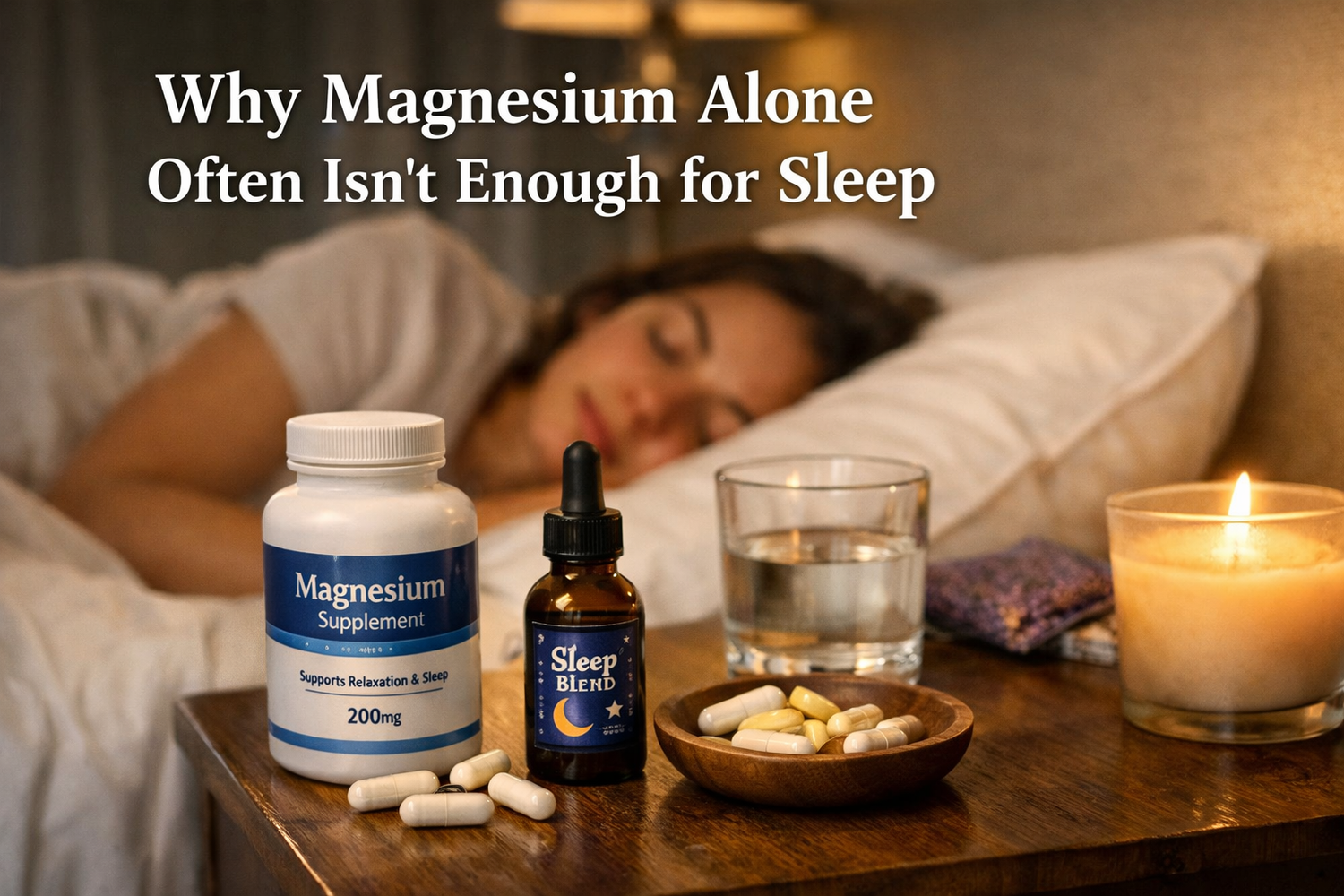
A lot of people add one simple step to their night routine and hope everything will change. They buy a bottle of magnesium for sleep, take a scoop or a capsule at night, and wait for deep rest to appear. For some, it helps a bit. For many others, the mind still spins, the 3 a.m. wakeups keep happening, and mornings still feel heavy.
That can be confusing, because magnesium has solid research behind it. This mineral helps calm the nervous system, supports GABA activity, and plays a part in melatonin production. It relaxes muscles and can ease twitching legs or tight shoulders that make it hard to drift off. So when “magnesium for sleep” does not fix the problem, it is easy to think nothing natural will.
What is often missed is that how sleep actually works by a single switch or a single nutrient. It is closer to a full orchestra. Magnesium is a key player, but it does not direct the whole performance. Stress hormones, neurotransmitters, circadian rhythm, body temperature, and blood sugar all need to work together for someone to fall asleep, stay asleep, and wake up clear.
This article walks through why magnesium alone often gives only partial relief, where it shines, and where it falls short. It also explains how a multi-pathway, science-backed approach like SLP1’s can work with the body rather than forcing it. By the end, it should be clear how to use magnesium wisely, what else matters if staying asleep is the main issue, and how to build a sleep plan that actually holds night after night.
“Sleep is the single most effective thing we can do to reset our brain and body each day.”
— Matthew Walker, PhD, neuroscientist and sleep researcher
Key Takeaways
-
Magnesium supports relaxation, GABA activity, and melatonin production, so it is a solid base for better sleep. At the same time, it does not address every cause of poor sleep, especially when stress or circadian issues are involved. This is why many people feel only small changes from magnesium alone.
-
Sleep depends on several systems working together, including neurotransmitters, body temperature, circadian rhythm, and stress hormones. A single nutrient cannot support all of these at once in a meaningful way. Multi-ingredient formulas that work on several pathways at the same time tend to give more complete results.
-
The form and absorption of magnesium matter as much as the dose, and some cheap forms mainly act in the gut instead of the brain. Gentle, well absorbed forms such as magnesium glycinate and magnesium glycerophosphate are better choices for regular use. SLP1 focuses on these types so the mineral actually reaches the tissues that affect sleep.
-
Magnesium works best when paired with other targeted ingredients like L-theanine, glycine, and B vitamins, plus solid sleep habits. A steady routine, a cool dark bedroom, and morning light exposure help supplements do their job. Think of magnesium and synergistic blends as support for a full sleep strategy, not a stand-alone fix.
What Magnesium Does for Sleep—and What It Doesn't

Magnesium earns its place in many night routines for good reasons. It helps muscles relax by acting as a natural counterbalance to calcium in muscle cells. When magnesium levels are steady, twitching, cramps, and general tension often ease, which makes it physically easier to settle into bed.
In the brain, magnesium supports a calmer signal pattern. It sits on NMDA receptors so they are not overactivated by glutamate, one of the main excitatory chemicals. It also supports the function of GABA, the main calming neurotransmitter. On top of that, magnesium acts as a helper for enzymes that move serotonin along the pathway that leads to melatonin, the hormone that signals that it is time to sleep.
Research on magnesium bisglycinate supplementation in healthy adults has shown these effects are especially noticeable in people who do not get enough magnesium from food. Older adults, frequent users of proton pump inhibitors or certain diuretics, and those who rely heavily on processed foods are more likely to have low levels. In those cases, adding magnesium for sleep can bring an obvious shift in relaxation and make it easier to drift off.
Yet even when deficiency is corrected, many people still cannot fall asleep easily, stay asleep, or wake rested. Magnesium does not directly calm an overactive stress system when evening cortisol is high. It does not regulate blood sugar swings that can wake someone at two or three in the morning. It does not guide body temperature down by the one to two degrees that support sleep onset, and it does not reset a circadian rhythm that is out of sync from late screens or inconsistent bedtimes.
So magnesium is a strong foundation, but it is not the whole structure. It supports parts of the sleep process but leaves other weak spots untouched. For deep, reliable rest, those missing pieces need attention as well.
The Science of Sleep: Why One Nutrient Can't Do It All

Sleep is not an on or off button. It is a carefully timed series of events that involve the brain, hormones, body temperature, and light signals from the outside world. When someone lies awake even after taking magnesium for sleep, it often means another piece of this system is not lining up.
Research points to several core pillars that have to be in place for sleep to feel natural and steady. Magnesium connects with some of these, but not all, and that is where a single-ingredient plan runs into limits.
-
Neurotransmitter Balance
The mechanisms of magnesium in sleep disorders show that for the brain to fall asleep, stimulating chemicals such as glutamate and norepinephrine need to quiet down. At the same time, calming signals from GABA, serotonin, and adenosine need to rise. Magnesium helps by understanding its importance for better sleep and keeping NMDA receptors in check. But it does not supply the building blocks for GABA and serotonin themselves, which come from amino acids like glycine and nutrients like vitamin B6. -
Circadian Rhythm Regulation
The body has an circadian rhythm that runs on roughly twenty four hours. Light exposure in the morning and darkness at night keep this timing on track. Magnesium helps the body make melatonin, but it cannot fix a schedule that shifts every night or late night screen use that keeps melatonin low. Without morning light and consistent sleep times, melatonin signals stay messy no matter how much magnesium is taken. -
Body Temperature Decline
To fall asleep, core body temperature needs to drop by about one to two degrees Fahrenheit. This shift helps the brain move into deeper stages of sleep. Glycine has been shown to help this cooling process, which makes sleep onset smoother and sleep depth better. Magnesium, while helpful in many ways, does not strongly change this temperature pattern. -
Stress Hormone Suppression
High evening cortisol is one of the most common sleep blockers. Magnesium has mild stress buffering effects, yet it does not fully calm an overactive stress axis, especially in people with chronic stress or worry. Calming amino acids such as L-theanine and plant compounds such as apigenin work on different points in the same system, giving broader support than magnesium on its own.
When only one of these pillars is supported, the others can still pull sleep off balance. This is why “single hero” thinking so often falls short. The research supports a different view, where ingredients are combined in ways that address several parts of sleep physiology at once. SLP1 follows that approach by pairing magnesium with other nutrients that fill in the missing pieces.
“Sleep is the foundation of mental and physical health, not an optional luxury.”
— Andrew Huberman, PhD, neuroscientist
Why Magnesium Alone Struggles with Common Sleep Problems

Many people do not just want to fall asleep. They want to stay asleep, wake less often, and feel clear in the morning. These goals touch different biological pathways that magnesium alone does not fully reach.
Problem 1 – Racing Mind And Anxiety At Bedtime
For someone whose racing thoughts as soon as the lights go off, the main issue is often an overactive stress response. Cortisol is higher than it should be, the sympathetic nervous system is switched on, and there may be low levels of calming neurotransmitters. Magnesium can help GABA work better, which is useful, but it does not add more GABA or serotonin into the system. That is where ingredients like how theanine can improve your sleep, which influences GABA, serotonin, and dopamine, and apigenin from chamomile, which binds to GABA receptors, become important. Together with magnesium, they give the brain both better receptors and more calming signals.
Problem 2 – Difficulty Staying Asleep And Middle-Of-The-Night Awakenings
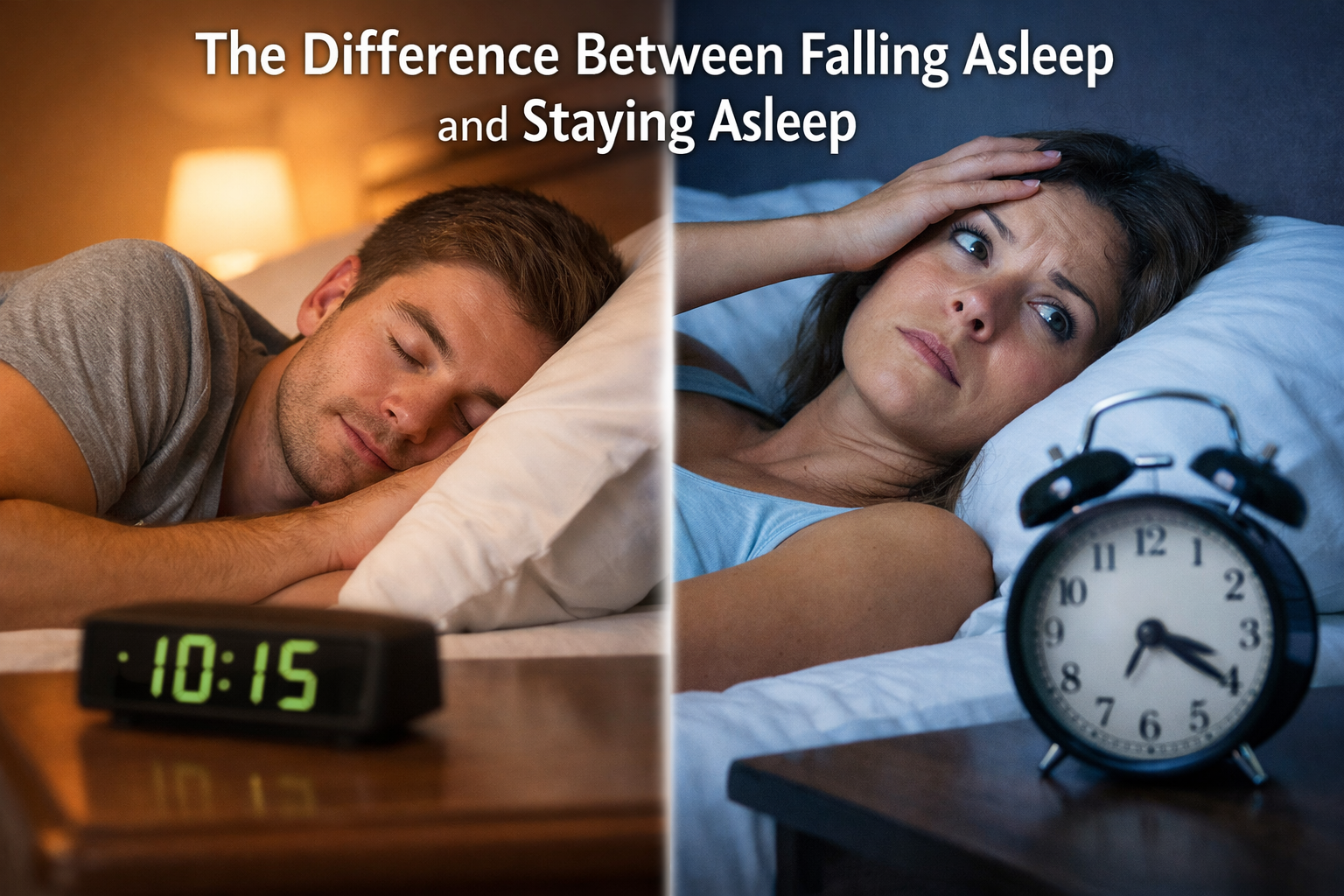
Many people can fall asleep but cannot stay asleep, which makes “stay asleep” support just as important as help at bedtime. These awakenings can be linked to shallow sleep depth, dips or spikes in blood sugar, or a drop in calming neurotransmitters during the night. Magnesium helps set the stage at the start of the night, yet it does not strongly support the deep slow wave sleep that keeps someone out of light, fragile stages. glycine for sleep is helpful here because it supports deeper sleep architecture and assists that helpful drop in body temperature. In addition, a well designed formula can use delivery systems that spread the effect of ingredients through the night, something plain magnesium capsules simply do not do.
Problem 3 – Early Morning Waking Or Unrefreshing Sleep
Waking at four or five in the morning and being unable to return to sleep, or sleeping eight hours but still feeling drained, often points to circadian rhythm issues and poor quality REM and deep sleep. Magnesium helps the body make melatonin but does not control when melatonin rises and falls. It also does not provide the vitamin B6 needed to convert tryptophan to serotonin and then to melatonin in a smooth way. Support from B6 in its active P5P form, vitamin B12 for clock regulation, and a consistent evening routine helps re-time this pattern. Without that extra support, magnesium can only improve part of the story while the rest of the sleep cycle stays off track.
Seen this way, magnesium is not failing. It is simply doing the job it is built to do while other jobs remain open. That is why a more complete, synergistic approach is often needed for people with complex or long standing sleep problems.
Summary Of Common Sleep Problems And Support Needs
|
Sleep Issue |
What Magnesium Helps With |
What Else Often Needs Support |
|---|---|---|
|
Racing mind and anxiety at bedtime |
Muscle relaxation, GABA receptor function |
L-theanine, apigenin, stress management habits |
|
Waking in the middle of the night |
Initial relaxation and sleep onset |
Glycine, blood sugar stability, steady calming neurotransmitters |
|
Early morning waking or unrefreshing sleep |
Melatonin production support |
B6 and B12, light timing, consistent sleep and wake schedule |
The Bioavailability Problem: Not All Magnesium Supplements Are Equal

The role of magnesium in sleep health has been systematically reviewed, revealing that the form often matters as much as the dose in why magnesium for sleep does not always deliver. When a supplement uses a type of magnesium the body absorbs poorly, much of it stays in the intestines. That can lead to loose stools or cramping without much benefit for the brain or nervous system.
Bioavailability describes how much of a nutrient actually reaches the bloodstream and tissues. Some forms of magnesium have absorption rates that stay in the single digits. Others, especially chelated forms that are bound to amino acids, move across the gut wall far more easily. People often blame magnesium in general when the real problem is that they are using a form that does not get where it needs to go.
-
Magnesium glycinate pairs magnesium with the amino acid glycine. This form is gentle on the stomach and offers good absorption, which means more of the mineral reaches the nervous system. The glycine itself also supports deeper, more stable sleep.
-
Magnesium glycerophosphate is an advanced form used in premium formulations. It offers strong absorption without the laxative effect common with cheaper forms. It also supports brain and nerve function in a steady, predictable way that suits nightly use.
-
Magnesium citrate is better absorbed than oxide and is widely available. It pulls water into the intestines, which can help people with constipation yet can push others into bathroom trips during the night. For many users focused on sleep, that tradeoff is not ideal.
-
Magnesium oxide is inexpensive and packs a lot of elemental magnesium by weight. The problem is that only a small fraction is absorbed, and the rest acts mainly as a laxative. For sleep support, it usually gives more bathroom urgency than calm.
-
Magnesium threonate has been studied for its ability to raise magnesium levels inside brain cells. It can be helpful for cognitive support but is more costly and is not designed first and foremost for muscle relaxation or whole body calm.
SLP1 formulas avoid the low value forms and rely on highly bioavailable options such as glycinate and glycerophosphate. That way the magnesium in the product is doing work where it matters instead of sitting in the gut. Good form choice turns magnesium from a leaky bucket into a steady, reliable source of nightly support.
What A Complete Sleep Formula Looks Like: The Synergistic Approach
When researchers compare single nutrients with synergistic sleep formulas, the pattern is clear. Formulas that combine several targeted compounds tend to produce better sleep outcomes than one ingredient alone. This is the basic idea of synergy, where several small pushes in the right places add up to a much bigger effect.
A strong sleep formula aims at all the major levers of rest at the same time. It calms mental chatter, supports deeper stages of sleep, keeps the body clock on schedule, and lets muscles unclench. Magnesium is a key part of this picture, but it works far better when paired with ingredients that cover its blind spots.
Here are some of the core ingredients that go beyond magnesium and create this kind of stack:
-
theanine promotes relaxation at about one to two hundred milligrams crosses the blood brain barrier and gently shifts brain chemistry. It influences levels of GABA, serotonin, and dopamine while lowering signals tied to stress. People often feel more relaxed yet still clear, which makes it ideal for quieting a racing mind without making someone feel drugged.
-
science-backed benefits of glycine in the range of one to three grams acts both as an amino acid and as an inhibitory neurotransmitter. It helps the body drop core temperature, which improves sleep onset and sleep depth. Studies show that glycine before bed can improve next day alertness even if total sleep time does not change.
-
Vitamin B6 (P5P) plays a central role in the pathway that converts tryptophan to serotonin and then to melatonin. Without enough B6, the body may not make a steady stream of melatonin even if magnesium is present. Including this vitamin means the system has both the raw materials and the helpers it needs.
-
Vitamin B12 (methylcobalamin) helps keep circadian rhythm aligned and supports nerve function. It is especially important for people who keep odd hours, travel often, or spend little time in natural light. In a thoughtful sleep formula, B12 helps anchor sleep and wake times so that other ingredients work on a stable base.
-
apigenin enhances sleep quality at around fifty milligrams, often from chamomile extract, binds to GABA-A receptors in a way that promotes calm. Unlike many sedating drugs, it does not tend to cause heavy morning fog when used at studied doses. Paired with magnesium, it supports both receptor activity and the actual calming signal.
SLP1 designs formulas around this kind of synergy. Magnesium relaxes muscles and helps GABA work, L-theanine and apigenin help the brain feel calm, glycine supports deeper sleep and body cooling, and B vitamins support the creation and timing of melatonin. By covering several pathways at once, SLP1 moves beyond the hope that one nutrient will fix a multi-step process.
The SLP1 Difference: Multi-Pathway Sleep Support Designed For Real Results
SLP1 started from a simple observation. Many people were doing everything they were told to do and still not sleeping well. They tried magnesium, then melatonin, then herbal teas, yet their nights were still broken and their days still sluggish. Single ingredient aids helped for a short time or only addressed one part of the problem.
The goal at SLP1 is not to knock people out. It is to help the body remember how to sleep on its own. That means working with natural biology in several places at once instead of fighting against it. SLP1 formulas are non sedating in the drug sense and are built to support healthy sleep rhythms over time, not force deep sleep on night one and leave users dependent.
Every SLP1 product combines highly bioavailable forms of magnesium, such as glycinate and glycerophosphate, with building a sleep system that target stress, neurotransmitter balance, and circadian timing. There are no trendy “fairy dust” amounts chosen just to look good on a label. Each dose is informed by research and by how real people respond over weeks and months of use.
The SLP1 Protocol is a good example of this multi phase thinking. One phase focuses on getting to sleep with fast calming support. Another focuses on deeper sleep by helping the nervous system unwind and supporting slow wave stages. A third focuses on helping people stay asleep through the night, which is where many magnesium only routines fall short. Together, these phases mirror the natural arc of a healthy night.
For people who fall asleep easily but snap awake at one or three in the morning, SLP1 Natural Magnesium Sleep Powder was designed with that exact pattern in mind. It combines well absorbed magnesium with glycine, L-theanine, and other supportive nutrients to promote both deep relaxation and sleep continuity. The aim is not just to fall asleep once, but to roll through full cycles without long wakeful gaps.
On the quality side, SLP1 uses clean, transparent labels with no common allergens, no synthetic colors, and no unnecessary fillers. Every batch is third party tested for potency and purity, and dosages are clearly stated rather than hidden in proprietary blends. For health conscious people who read labels closely and care about what they put in their bodies, this level of clarity matters as much as the ingredient list itself.
When Magnesium Alone May Be Enough—and When It's Not
Magnesium deserves its good reputation, and in some situations it truly can be enough on its own. If someone eats very few leafy greens, nuts, or whole grains and shows clear signs of low magnesium, straightforward supplementation can make a big difference. Older adults, people on proton pump inhibitors or certain diuretics, and heavy users of processed foods often fall into this group.
Magnesium alone can also work well when the main sleep complaint is physical. Examples include tight muscles that will not relax in bed, restless legs, or cramps that wake someone up. In people who are not dealing with major stress, anxiety, or a chaotic schedule, raising magnesium stores and using a well absorbed form at night can be enough to bring sleep quality back to a good level.
Things look different when sleep problems are more complex. Chronic trouble falling asleep due to racing thoughts, frequent middle of the night awakenings, or waking up tired despite a long night usually point to issues beyond simple muscle tension. These patterns often involve stress hormones, neurotransmitter balance, and circadian timing, none of which are fully supported by magnesium alone. In those cases, a synergistic formula that includes L-theanine, glycine, B vitamins, and calming plant compounds tends to be far more helpful.
A simple way to check where you stand is to ask what feels hardest:
-
If the main goal is to ease body tension, magnesium by itself may be a good first step.
-
If the real issues involve an overactive mind, the need to stay asleep, or a feeling of shallow and unrefreshing rest, then a broader approach like the one SLP1 uses is much more likely to help.
That is the heart of SLP1’s philosophy. Magnesium is valuable, but most modern sleep problems need more than one change.
How To Integrate Magnesium Into A Complete Sleep Optimization Strategy
Magnesium works best when it is not treated as a magic pill but as one part of a full sleep plan. That plan includes how and when magnesium is taken, what it is paired with, and the habits that surround bedtime and morning.
For most adults, a dose between two hundred fifty and five hundred milligrams of elemental magnesium is standard for sleep support. Taking it about thirty to sixty minutes before bed gives time for absorption and for its calming effects to build. It also helps to pick gentle, well absorbed forms such as glycinate or glycerophosphate, or a product like SLP1 Natural Magnesium Sleep Powder that already uses these, so digestion stays comfortable and long term use feels easy.
Consistency matters as much as dose. Magnesium for sleep and synergistic blends work by slowly refilling stores and nudging patterns like GABA activity and melatonin timing in better directions. That means they should be used nightly for at least eight to twelve weeks before deciding how well they are working. Many people notice smaller early shifts and then larger changes as weeks pass.
Foundational sleep hygiene steps also make a big difference in how well any supplement performs:
-
Keep a sync your sleep cycle every day. This gives the body a stable sense of when to feel sleepy. A steady pattern trains the circadian clock and makes it easier for melatonin to rise at the same time each night.
-
Build a quiet wind down routine. In the hour before bed, dim lights, shut down screens, stretch lightly, read something calming, or practice simple breath work. Over time, the routine itself becomes a powerful cue for sleep.
-
Shape the bedroom so it supports sleep. A cool temperature around the mid sixties, true darkness from blackout curtains or an eye mask, and quiet or a steady sound from a white noise machine all reduce the chances of waking.
Daytime habits matter too:
-
A nutrient dense diet with plenty of vegetables, nuts, seeds, legumes, and quality protein supports magnesium levels and brings in B vitamins that feed neurotransmitter pathways.
-
Morning light exposure within an hour of waking helps anchor circadian rhythm.
-
Regular movement during the day improves sleep depth, while avoiding intense workouts right before bed keeps adrenaline from spiking at the wrong time.
SLP1 encourages people to see its formulas as part of a the science, not a stand alone trick. A nightly SLP1 routine, paired with stable sleep times, smart light exposure, and stress management practices, can move sleep from fragile and unpredictable to solid and repeatable. Supplements support the system the person builds, and that system is where lasting change happens.
Real-World Expectations: What Results To Expect And When

Natural sleep support works on a different timeline than a prescription pill. It does not knock someone out on night one, and that is by design. Magnesium for sleep and synergistic formulas aim to support healthy patterns, and those patterns take time to settle in.
With magnesium alone, many people notice early shifts in the first one to two weeks. Muscles may feel looser at night, leg cramps may decrease, and it may be a bit easier to drift off. Over four to eight weeks, if low magnesium was a major issue, sleep onset often becomes more consistent and nighttime restlessness decreases. If there is little change by around twelve weeks, it usually means the main problem lies elsewhere.
With a well designed, multi ingredient formula like those from SLP1, the pattern often looks a bit different:
-
In the first week or two, people frequently report that mental chatter is quieter at night and that they feel calmer about going to bed.
-
By weeks three and four, they often wake less often and find it easier to roll over and return to sleep when they do wake.
-
Between six and twelve weeks, many notice deeper sleep, better morning energy, and more stable mood and focus during the day.
Success does not mean every single night is perfect. Life stress, travel, and family needs will still change things from time to time. The real measure is the overall trend. Falling asleep within twenty to thirty minutes most nights, waking fewer times, needing less time awake during the night, and feeling more refreshed in the morning are all signs that sleep systems are settling into a better groove.
Patience matters here. If sleep has been rough for months or years, it is reasonable that it might take several weeks for the body to feel safe enough to rest deeply again. SLP1 is built for that long view, supporting the gradual return of healthy sleep rather than chasing quick yet fragile wins.
Frequently Asked Questions (FAQs)
Can I Take Magnesium Every Night For Sleep?
For most people with healthy kidneys, taking magnesium every night is considered safe. The key is choosing a gentle, well absorbed form such as glycinate or glycerophosphate so digestion stays comfortable. Typical nightly doses for sleep fall between two hundred fifty and five hundred milligrams of elemental magnesium. Unlike many prescription sleep drugs, magnesium does not create dependence or a rebound effect when used at these levels. For best results, pair it with good sleep habits and consider a synergistic formula if magnesium alone does not change sleep much after eight to twelve weeks.
Why Do I Still Wake Up In The Middle Of The Night Even When Taking Magnesium?
Middle of the night awakenings often involve issues that magnesium does not fully address. These can include shallow sleep depth, blood sugar ups and downs, or a drop in calming neurotransmitters as the night goes on. Magnesium mainly helps with relaxation and sleep onset, so it may not give enough support to keep sleep steady through all cycles. Combining magnesium with glycine for deeper sleep, L-theanine for ongoing calm, and B vitamins for steady neurotransmitter production can make a big difference. SLP1 Stay Sleep and Natural Magnesium Sleep Powder were designed with these night time wakeups in mind and target the gaps that plain magnesium leaves open.
Is Magnesium Better Than Melatonin For Sleep?
Magnesium and melatonin work in different ways, so one is not simply better than the other. Magnesium supports the body’s own melatonin production and calms the nervous system, making it excellent for long term rhythm support. Melatonin acts more like a timing signal that tells the brain it is night, which can be helpful for shifting time zones or short term schedule changes. High dose melatonin can lead to morning grogginess and may interfere with the body’s own hormone pattern if used every night. Many people do best with magnesium based support as their nightly base and save melatonin, such as SLP1’s low dose nasal spray, for occasional use when they need extra help.
What's The Difference Between Magnesium Glycinate And Magnesium Citrate For Sleep?
Magnesium glycinate combines magnesium with the amino acid glycine, which is calming on its own. This form is well absorbed and gentle on the gut, which makes it ideal for steady, nightly use focused on sleep. Magnesium citrate is absorbed fairly well too but has a stronger laxative effect, which can send some people to the bathroom during the night. Citrate can be useful if constipation is also an issue, yet it is often less comfortable for pure sleep support. For most people whose main goal is better rest, glycinate or glycerophosphate are the better choices.
How Long Does It Take For Magnesium To Work For Sleep?
Some people feel slightly more relaxed within the first few nights of taking magnesium, especially if their levels were low to begin with. More stable, noticeable changes in how quickly they fall asleep and how restless they feel often show up after two to eight weeks. Magnesium works by supporting balance in the nervous system rather than forcing sleep in a single night. Synergistic formulas that include magnesium plus other calming nutrients often bring clear benefits within one to two weeks because they work on several pathways at once. Giving any new routine a full twelve weeks before judging it usually gives the clearest picture.
Conclusion
Magnesium deserves its place as one of the most trusted natural tools for better rest. It helps muscles relax, supports GABA activity, and plays a direct role in melatonin production, all of which are important for sleep. For many people with low intake, simply raising magnesium levels brings real relief.
Yet the science and real world experience point to a clear truth. Sleep is a multi system process, and one mineral by itself cannot guide every part of it. Racing thoughts, broken nights, and unrefreshing mornings often come from stress hormones, circadian disruption, shallow sleep depth, or missing cofactors in neurotransmitter pathways. Magnesium touches some of these areas, but it does not reach them all.
That is why synergistic, multi ingredient formulations tend to outperform single nutrients in both studies and daily life. By combining highly bioavailable magnesium with L-theanine, glycine, B vitamins, apigenin, and other carefully selected compounds, SLP1 aims to support the full architecture of sleep. The focus is on restoring natural rhythms in a way that feels calm and clear, not forced or foggy.
If you have been relying on magnesium alone and still struggle to fall asleep, stay asleep, or wake rested, it is not a sign that your body is broken. It simply means your sleep system needs support in more than one place. Exploring SLP1’s science based formulas, or at least pairing magnesium with a solid routine and complementary nutrients, can move you from patchy relief to sleep that feels steady and dependable. With patience, consistency, and a complete strategy, your nights can start to work for you again, and your days can reflect that deeper rest.


Leave a comment
This site is protected by hCaptcha and the hCaptcha Privacy Policy and Terms of Service apply.