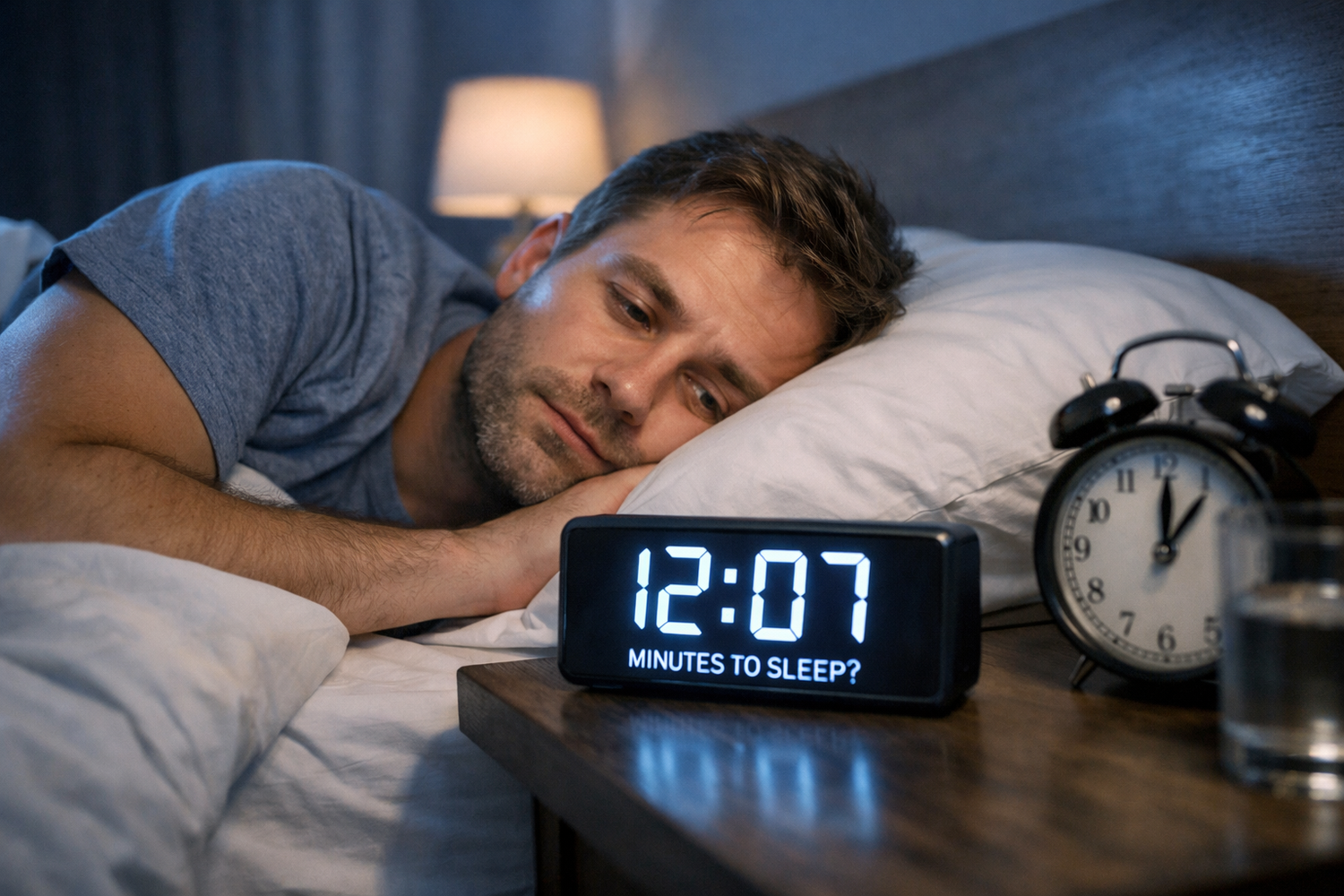
How Long Should It Take to Fall Asleep?
Introduction
There is a familiar scene many people know well. The lights are off, the room is quiet, and yet the mind is wide awake, counting the minutes on the clock and wondering how long does it take to fall asleep for a healthy brain and body. Others have the opposite experience, drifting off almost the second their head touches the pillow and assuming that this must be a sign of perfect sleep.
Both extremes can be misleading. In sleep science, the time between deciding to sleep and actually falling asleep is called sleep latency. For most adults, the healthy range is about ten to twenty minutes. That window sits in a helpful middle ground where sleep pressure is high enough to bring on rest, but not so high that the body is running on fumes.
Understanding that range matters because it acts like a simple, daily check on overall sleep health. Falling asleep in under five minutes on a regular basis or lying awake for more than thirty minutes most nights often hints at deeper issues with sleep quality, circadian rhythm, stress, or health. This article walks through what is normal, what is not, and practical ways to help the body move into sleep naturally rather than forcing it with heavy sedation.
SLP1 takes a science‑first approach to this question, building formulations that work with natural sleep architecture instead of simply knocking the nervous system out. By the end, the aim is for you to understand your own sleep latency, know when to be concerned, and have clear, evidence‑based tools, including SLP1’s Get to Sleep system, to support steady, restorative nights.
“Sleep is the single most effective thing you can do to reset your brain and body health each day.”
— Matthew Walker, PhD, professor of neuroscience and psychology
Key Takeaways
-
Healthy sleep latency: Most healthy adults fall asleep in about ten to twenty minutes. That range reflects a balance between natural sleep drive and a calm nervous system, not exhaustion. It is a simple way to track whether bedtime habits are working.
-
Very fast sleep onset: Regularly falling asleep in less than five minutes often points to sleep deprivation or heavy sleep debt. The brain is trying to catch up, which may lower sleep quality even if sleep seems fast. Waking tired after very quick sleep onset is a warning sign.
-
Very slow sleep onset: Taking more than thirty minutes to fall asleep on a regular basis often reflects insomnia, circadian rhythm misalignment, or poor sleep hygiene. When these patterns last for months and affect daytime function, professional help becomes important.
-
Layered support works best: Improving how long it takes to fall asleep usually works best through several steps. Consistent schedules, a calm environment, pre‑sleep routines, and science‑backed support such as SLP1’s Get to Sleep formulation can help restore natural sleep onset and deeper rest.
What Is Sleep Latency and Why Does It Matter?
Sleep latency is the time between deciding to sleep and actually drifting off into the first light stage of sleep. Clinicians usually measure it from “lights out” to the first clear change in brain waves that marks stage N1 sleep. To someone lying in bed, it feels like the shift from thinking in full sentences to drifting, fading thoughts and brief gaps in awareness.
For most healthy adults, ten to twenty minutes is considered the sweet spot. This range tells us that the body has built up enough sleep pressure across the day, mainly through the build‑up of a chemical called adenosine in the brain, yet is not so overdriven that it collapses into sleep instantly. It is a bit like arriving at the airport in good time rather than sprinting through the gate or sitting around for hours.
Sleep latency matters because it reflects several important systems at once. It shows:
-
How strong the homeostatic sleep drive is
-
How well the circadian rhythm is aligned with the chosen bedtime
-
How settled or stimulated the nervous system is
If any of these systems slide far off track, the time it takes to fall asleep often changes in noticeable ways.
It is also deeply personal, with research on how long should it take to fall asleep showing individual variation within the healthy range. Some people naturally drift off closer to ten minutes, others closer to twenty, and that can be fine if they wake feeling clear and steady. The key is to notice changes from your own baseline. When the answer to “how long does it take to fall asleep for me” suddenly doubles, or drops to almost nothing, something in the background has shifted.
At SLP1, this metric guides how products are built. Instead of forcing unconsciousness, formulations are designed to support the natural steps into sleep. Ingredients that raise calming neurotransmitters, lower late‑night cortisol, and support melatonin signaling help the brain enter sleep within that healthy window and stay there in a stable, restorative way.
You can think about sleep latency with a simple reference table:
|
Sleep Latency Range |
What It May Suggest |
|---|---|
|
Less than 5 minutes |
High sleep debt, severe tiredness, or possible sleep disorder |
|
About 10–20 minutes |
Typical range for healthy adults |
|
20–30 minutes |
Borderline; worth watching, especially if you feel unrefreshed |
|
Longer than 30 minutes |
Possible insomnia, circadian issues, stress, or health conditions |
The Hidden Danger of Falling Asleep Too Quickly
Falling asleep the instant your head hits the pillow sounds ideal on a busy schedule. However, when it happens most nights, and especially when it takes less than five minutes, it often points to a problem rather than perfect sleep. In sleep medicine, very short sleep latency usually means the brain is running on a heavy sleep debt.
Sleep drive builds the longer a person stays awake. Adenosine gathers in the brain throughout the day, and the pressure to sleep grows. When someone gets far less sleep than they need for many nights, that pressure climbs to an extreme level. In that state, the body will grab sleep as soon as it can, which may look like instant sleep onset.
Short sleep latency also tends to change sleep architecture. Instead of easing through light sleep and slowly into deeper stages, the brain may plunge quickly into deep or REM sleep. That can sound good, but the early, lighter stages have their own purpose, and skipping them can leave sleep feeling shallow or fragmented. People in this state often fall asleep quickly yet still wake foggy.
There can be medical reasons as well. Conditions such as obstructive sleep apnea, narcolepsy, and some neurological disorders can increase daytime sleepiness so much that falling asleep becomes almost automatic. In these cases, very fast onset is only one piece of a larger picture that includes loud snoring, pauses in breathing, sudden sleep attacks, or memory and mood changes.
Several signs suggest that very fast sleep onset is a warning rather than a gift:
-
Falling asleep very fast most nights, not just after rare long days
-
Relying on heavy caffeine to stay alert
-
Drifting off during meetings, classes, or while watching television
-
Waking feeling drained despite seeming to fall asleep instantly
In those cases, the question is not just “how long does it take to fall asleep” but also “how rested do I feel once I wake.”
SLP1’s Get to Sleep system is built with this in mind. It supports people who lie awake for long periods, but it also aims to help those in chronic overdrive rebuild a steady rhythm, instead of pushing them into deeper exhaustion. By supporting natural signaling rather than blunt sedation, it helps bring sleep latency back toward a healthy, sustainable range.
Recognizing the Signs You Are Not Getting Enough Quality Sleep
Sleep loss rarely shows up as simple tiredness alone, and studies examining whether we are getting enough sleep reveal widespread patterns of insufficient rest affecting multiple body systems. When sleep time or sleep quality is poor, nearly every system in the body feels the impact. Over time, the signs may blend into the background and feel like “normal life,” yet they are strong clues that the current pattern of rest is not working.
Some of the most common signs include:
-
Cognitive changes: It may feel harder to focus during long meetings or complex tasks. Short‑term memory can slip, with names, appointments, and small details falling through the cracks. Reaction times slow, which raises safety concerns while driving or operating equipment. Creative thinking and problem solving can feel dulled, as if the mind is working through thick fog.
-
Mood shifts: Mood is highly sensitive to sleep. Even one short night can raise irritability and lower patience. With ongoing poor sleep, people often notice stronger mood swings, a heavier or more anxious baseline, and less ability to handle daily stress. Brain imaging studies show that sleep and mental health weakens the control that the frontal cortex has over the emotional centers of the brain, which can explain why small issues suddenly feel huge.
-
Physical symptoms: Persistent fatigue, heavy eyelids, and muscle tension are common. Headaches may appear more often. The immune system does not repair and reset properly without regular deep and REM sleep, which can leave someone catching every cold that passes through the office. Hormones that regulate appetite, blood sugar, and libido also shift when sleep is short or fragmented.
-
Behavior changes: Needing several strong coffees just to feel “baseline” in the morning, dozing off while watching a short show, oversleeping late on weekends, or hitting the snooze button over and over are common red flags. These habits often feel like personality traits or just a response to a busy schedule, yet they point back to insufficient or poor‑quality rest.
Over months and years, sleep and longevity links to higher risk of high blood pressure, heart disease, insulin resistance, weight gain, and even neurodegenerative conditions. SLP1 approaches this from a full‑cycle perspective. Rather than focusing only on how long it takes to fall asleep, the protocol supports ease of onset, depth of sleep, and stability across the night, so waking feels clear and steady again.
“A good laugh and a long sleep are the best cures in the doctor’s book.”
— Traditional Irish proverb
Why It Takes Too Long to Fall Asleep Common Culprits
can't fall asleep for thirty minutes or more night after night can feel frustrating and confusing. When everything looks quiet on the outside yet the brain refuses to “shut off,” it often reflects several overlapping factors. Understanding the most common culprits helps turn a vague problem into something more specific and manageable.
One of the main patterns is insomnia. Short‑term insomnia often appears after a stressful event, travel, illness, or a major change in routine. It can last days or weeks, then ease once the trigger passes. Chronic insomnia is different. It involves trouble falling asleep, staying asleep, or waking too early at least three nights per week for more than three months, with clear impact on daily life. In this state, the bed itself can become linked with worry and wakefulness.
Circadian rhythm problems are another major driver. Shift work, frequent time‑zone travel, or very late social schedules can push the internal clock away from the desired bedtime. Someone with a delayed sleep phase may simply not feel sleepy until two or three in the morning, making a ten‑thirty bedtime feel like trying to sleep in the middle of the afternoon. Forcing sleep in that misaligned window often fails.
Mental health plays a strong role. Anxiety can keep racing thoughts, replaying past events or running through future worries. Depression can flatten energy during the day yet still disturb sleep at night, especially with early morning awakenings. Post‑traumatic stress and other stress‑related conditions often drive a state of high alert that does not fade when the lights go off.
Physical health also matters. Chronic pain makes it hard to get comfortable. Conditions that affect breathing, such as asthma or heart failure, can cause shortness of breath when lying down. Gastroesophageal reflux can flare once someone lies flat. Restless legs syndrome brings an odd pulling or tingling feeling in the legs that only settles with movement, making stillness in bed feel impossible.
Medications and substances add another layer. Stimulants such as caffeine and nicotine, especially in the afternoon or evening, can block natural sleep signals. Certain antidepressants, beta blockers, steroids, and some asthma drugs can disrupt sleep onset. Alcohol may feel calming at first, yet it changes sleep stages later in the night and can lead to lighter, broken sleep.
A shared theme across these causes is hyperarousal. The brain and body stay in a “switched on” state, with higher cortisol, tighter muscles, and faster heart rate. SLP1’s Get to Sleep formulation was built specifically with this in mind. Ingredients such as phosphatidylserine, Withania somnifera, lemon balm, passionflower, and magnesium glycinate work together to calm the nervous system, lower late‑night cortisol, and make it easier for a tired body to cross the bridge into sleep.
The Critical Role of Circadian Rhythm in Sleep Onset
The circadian rhythm acts as the master timekeeper for sleep and wake. Deep in the brain, a structure called the suprachiasmatic nucleus keeps roughly twenty‑four‑hour time and sends signals to the rest of the body about when to feel alert and when to feel sleepy. Light that reaches special cells in the eyes resets this clock each day.
This rhythm shapes almost every system linked with sleep. It controls the timing of melatonin release, the cooling of core body temperature in the evening, and shifts in digestion and blood pressure. When the internal clock lines up with the outside schedule, the body starts to feel sleepy shortly before the chosen bedtime, which shortens sleep latency in a comfortable way.
Light is the strongest signal for this system. Bright natural light in the morning and early day tells the clock that it is daytime, which anchors the rhythm. Bright light, especially blue‑heavy light from phones, tablets, and overhead LEDs late at night, can send the opposite message, pushing the clock later. That makes it harder to fall asleep at an early or even normal hour.
Modern habits create a pattern sometimes called social jetlag. Sleeping from midnight to seven on workdays, then two to ten on weekends, can shift the internal clock back and forth by several hours each week. The body then has to keep readjusting, and “how long does it take to fall asleep” can depend more on the day of the week than on actual tiredness.
More severe misalignments show up in shift work disorder and delayed sleep‑wake phase disorder. In those cases the internal signal for sleep does not match work or family needs. Getting sleepy at three in the morning while needing to wake at six is an example. In such cases, lifestyle changes, light therapy, and carefully timed melatonin can help.
SLP1 supports this system in several ways. The Melatonin Nasal Spray delivers melatonin directly through the nasal lining into the bloodstream, with faster onset than most pills. This can help signal “night time” more quickly in situations with limited sleep windows or temporary circadian shifts such as jet lag. At the same time, active B6 and B12 in SLP1 formulations support the natural tryptophan‑to‑serotonin‑to‑melatonin pathway, working with the clock rather than fighting it. Consistent sleep and wake times, combined with these supports, can bring sleep onset back into a predictable rhythm.
Sleep Hygiene The Foundation of Healthy Sleep Onset
Sleep hygiene is the collection of daily habits and environmental choices that either support or disturb healthy sleep. It might sound basic, yet research shows that simple changes in this area can meaningfully change how long it takes to fall asleep and how deep that sleep feels.
Some of the most important sleep‑hygiene habits include:
-
Consistent timing: Going to bed and waking up at roughly the same time every day trains the internal clock. Over time, the brain learns to start releasing melatonin and cooling the body before the expected bedtime. This makes the ten to twenty minute range for sleep latency much easier to reach.
-
Smart napping: Short, early afternoon naps of ten to twenty minutes can be refreshing. Long naps or naps after three in the afternoon can drain sleep drive, especially for people who already struggle to fall asleep at night. In that case, it may help to shorten or move naps earlier, or pause them altogether while building a more stable night schedule.
-
Calm pre‑sleep activities: What happens in the hour before bed shapes the transition. Answering work emails, watching intense shows, scrolling social media, or having heated conversations push the nervous system toward alertness. Swapping these for calmer activities such as reading a paper book, stretching gently, or listening to quiet music sends a very different message to the brain.
-
Bed‑only rules: The way the bed is used is a core principle in cognitive behavioral therapy for insomnia (CBT‑I). When the bed doubles as an office, snack spot, or streaming center, the brain learns to link it with wakefulness and mental activity. Keeping the bed for sleep and sex only, and getting out of bed if sleep does not come after about twenty to thirty minutes, helps rebuild a clear connection between bed and rest.
-
Caffeine, food, and alcohol choices: Caffeine has a long half‑life and can linger into the night when consumed in the late afternoon. Nicotine is stimulating as well. Heavy or spicy meals within two or three hours of bed can cause reflux or discomfort. Alcohol may bring on drowsiness but disrupts sleep structure later in the night, leading to more awakenings.
SLP1 products are meant to sit on top of, not replace, these foundations. The Get to Sleep formulation works best when paired with regular bedtimes, calm pre‑sleep habits, and wise intake choices. When those pieces are in place, the ingredients can do their job more effectively, helping the brain cross into sleep more smoothly and on schedule.
Optimizing Your Sleep Environment for Faster Sleep Onset
The bedroom itself sends powerful cues to the brain about whether it is time to rest or stay alert. Small changes in temperature, light, noise, and comfort can meaningfully change how long it takes to fall asleep. The aim is to make the sleep space feel safe, quiet, and boring in the best possible way.
Temperature is one of the most important levers. The body naturally cools down in the evening as part of the sleep process. A bedroom set between 60 and 67°F (16–19°C) usually supports this drop. Lighter, breathable bedding and sleepwear can prevent overheating, while a fan or climate system can keep the air both cool and moving.
Light control comes next. Even small amounts of light can tell the brain that it is still time to be awake. Blackout curtains, unplugging or covering glowing electronics, and using a dim, warm‑toned bedside lamp can make a big difference. If some light is needed for safety, such as a nightlight in a hallway, red or amber bulbs disturb melatonin far less than bright white or blue‑leaning lights.
Noise is another important factor. Sudden sounds, even if they do not wake someone fully, can pull the brain away from the edge of sleep. For people in noisy neighborhoods or shared households, earplugs or a steady source of soft background sound can help. White noise, a fan, or gentle nature sounds work by masking sudden spikes in noise with a more constant sound pattern.
Comfort rounds out the picture. A sagging mattress or flat pillow can cause aches that only become clear when the body tries to relax. Investing in a mattress and pillows that support your typical sleep position can reduce midnight shifting and the time spent hunting for a comfortable posture. Fresh, clean sheets and a clutter‑free room add to the sense of calm.
Air quality often gets less attention yet matters as well. Stale or stuffy air can make breathing less comfortable. Opening a window when weather allows, using an air purifier in dusty or high‑pollen areas, or simply keeping vents clear can help. SLP1’s use of magnesium glycinate supports the internal side of this equation, relaxing muscles and calming nerves, while the environment supports the external side, making it easier for the body to let go into sleep.
Building a Pre-Sleep Wind-Down Routine That Works
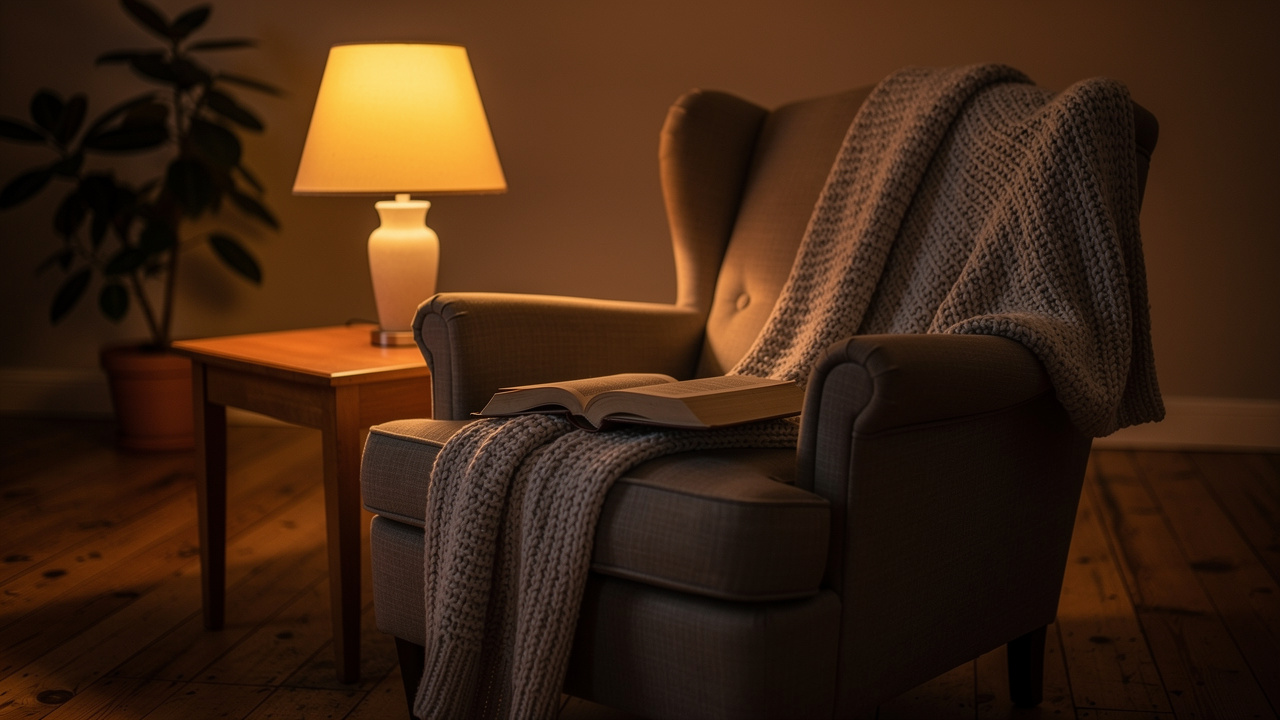
The human brain is not a light switch. Moving straight from intense work, parenting, or training to trying to sleep is like slamming on the brakes at highway speed. A wind‑down routine gives the nervous system time to shift from a high‑alert state into a calmer, rest‑friendly mode, which shortens sleep latency in a gentle way.
Timing matters. Starting a wind‑down routine about thirty to sixty minutes before bedtime works well for most adults. During this window, bright lights are dimmed, stimulating tasks are put away, and the focus turns to calming activities. Over time, this routine becomes a signal in itself, telling the brain that sleep is coming.
Light reduction is a simple but powerful step. Switching from bright overhead lighting to lower lamps, using warmer colored bulbs, and putting screens aside all help melatonin rise. If a screen is unavoidable for a short time, blue light filters and lower brightness settings reduce some of the impact, though a full break is best whenever possible.
Relaxation methods can be woven into this period. Options include:
-
Slow breathing exercises: Patterns such as the well‑known 4‑7‑8 method help activate the parasympathetic nervous system, which lowers heart rate and relaxes muscles.
-
Progressive muscle relaxation: Tensing and then releasing muscle groups from head to toe draws attention away from thoughts and back into the body.
-
Gentle stretching or yoga: Particularly for the back, hips, and neck, this can release built‑up tension from long hours of sitting.
For a busy or anxious mind, writing can help. A simple “brain dump” list of tasks for the next day, or a few paragraphs about what is on your mind, can move worries out of mental loops. Pairing this with quiet activities such as reading a calm book, listening to soft music, or taking a warm shower builds a string of cues that sleep is close.
Consistency is the glue. Doing the same sequence most nights, in the same order, builds a strong association between those steps and sleep. Over time, the body starts to feel sleepy even partway through the natural rhythm. SLP1’s Get to Sleep product fits naturally into this pattern. Taken about thirty to forty‑five minutes before bed, during the wind‑down, ingredients such as apigenin, inositol, lemon balm, passionflower, Withania somnifera, and magnesium glycinate begin to calm the nervous system so that, by the time your head meets the pillow, the bridge into sleep is already prepared.
The Lifestyle Factors That Influence Sleep Latency

Sleep does not stand apart from the rest of the day. What happens with movement, food, light, stress, and stimulants between waking and bedtime strongly shapes how long it takes to fall asleep and how restful that sleep feels.
Regular physical activity is one of the best daytime supports for night sleep. Moderate exercise such as brisk walking, cycling, or swimming helps build sleep drive, improves mood, and steadies circadian rhythms. Many people find that morning or early afternoon movement shortens sleep latency at night. Hard training sessions right before bed, however, can raise body temperature and stress hormones in ways that delay sleep.
Food and drink choices also have clear effects. Caffeine blocks adenosine receptors and can linger for many hours. For someone asking “why is it taking so long and how long does it take to fall asleep if I keep my habits the same,” the afternoon coffee or energy drink is often part of the answer. Many people do better when they stop caffeine by early afternoon. Alcohol can feel relaxing yet reduces REM sleep and leads to more awakenings later in the night, especially when used near bedtime.
Meal timing and content matter. Large, heavy, or spicy dinners close to bedtime can cause bloating or heartburn. Shifting the largest meal earlier in the day and keeping late meals lighter can ease this. Nutrients such as magnesium, found in greens, nuts, seeds, and whole grains, support relaxation, yet many people fall short in their intake.
Stress patterns across the day set the tone for night. Chronic stress raises cortisol, which is helpful in short bursts but harmful when high for long periods. Practices such as brief mindfulness breaks, time outside, gentle breathing during the day, and setting clear work‑life boundaries can lower baseline stress, making it easier for the nervous system to stand down at night.
SLP1’s protocol weaves directly into these lifestyle choices. Withania somnifera and phosphatidylserine help moderate evening cortisol. Active B vitamins support neurotransmitter pathways tied to mood and sleep. Magnesium glycinate fills a common nutritional gap related to muscle and nerve relaxation. Combined with movement, smart intake, and stress management, they help bring sleep latency and sleep depth back within a healthier range.
When Slow Sleep Onset Signals a Deeper Problem Insomnia and Sleep Disorders
Most people have short spells when sleep is harder to find, such as during busy seasons or after big life changes. When slow sleep onset turns into a pattern that lasts for months and affects daily life, it may be part of a clinical sleep disorder rather than a passing phase.
Insomnia is the most common of these disorders. It involves trouble falling asleep, staying asleep, or waking too early at least three nights each week for at least three months, along with clear daytime problems such as fatigue, mood changes, or poor concentration. Short‑term insomnia often begins with a stressor. Over time, the worry about not sleeping and the habits that form around this worry can continue the problem even after the original trigger fades.
Other sleep disorders often sit in the background. Obstructive sleep apnea causes the airway to collapse repeatedly during sleep, leading to brief breathing pauses and drops in oxygen. Some people with apnea have trouble falling asleep because their body, at a deep level, has started to resist entering a state that leads to breathing problems. Others fall asleep fast but wake often, gasping or with dry mouth and headaches.
Restless legs syndrome and periodic limb movement disorder are also common. With restless legs, odd, often uncomfortable sensations in the legs create an urge to move that peaks at night and when resting. Periodic limb movement disorder involves rhythmic leg kicks or movements during sleep, which the sleeper may not notice. Both can lead to long sleep latency and broken nights.
Mental health conditions weave closely with these patterns. Anxiety, depression, and post‑traumatic stress all raise the risk of insomnia and can worsen it once present. At the same time, long‑term insomnia increases the risk of future mood and anxiety disorders, creating a loop that can be hard to break without help.
A concept called conditioned or learned insomnia explains why bedrooms can start to feel like battlegrounds. When someone spends many nights awake in bed, worrying about sleep, the bed itself becomes linked with alertness and frustration. Cognitive behavioral therapy for insomnia uses structured steps, such as stimulus control and sleep restriction, to break this learned link and rebuild a fresh one.
You should seek professional help if sleep problems meet the pattern of chronic insomnia, cause clear problems at work or home, or come with signs of apnea such as loud snoring and pauses in breathing. SLP1 products are designed to fit inside a full care plan in these settings. They support brain chemistry and circadian timing while medical and psychological support address the underlying disorder.
The SLP1 Approach Supporting Natural Sleep Onset Without Sedation

Many common sleep aids work by depressing the central nervous system. They may help someone lose consciousness faster, but they do not necessarily support natural sleep structure, and they can bring grogginess, dependency, and changes in REM and deep sleep. SLP1 was created as a different option for people who care about long‑term health as much as short‑term relief.
The core idea is simple. Instead of forcing sleep, SLP1 works with natural biology. Formulations support the calming side of the nervous system, steady the stress response, and assist the brain’s own production and use of neurotransmitters such as GABA, serotonin, and melatonin. This helps improve how long it takes to fall asleep while keeping sleep stages intact.
The Get to Sleep formulation sits at the center of this approach:
-
Apigenin, a flavonoid found in chamomile, gently binds to GABA receptors in the brain. This supports mental relaxation in a way many people feel as a soft quieting of mental chatter, without heavy sedation.
-
Inositol supports balanced nerve signaling and may improve how GABA receptors respond.
-
Withania somnifera (ashwagandha) acts as an adaptogen for the stress system. Clinical research suggests it can lower perceived stress and evening cortisol levels, which is helpful for people who feel wired at night.
-
Phosphatidylserine adds further support for the stress axis by helping to smooth out excess cortisol production in the later part of the day.
-
Traditional nervine herbs such as lemon balm and passionflower bring additional calm. They have long histories of use for easing tension and mild anxiety.
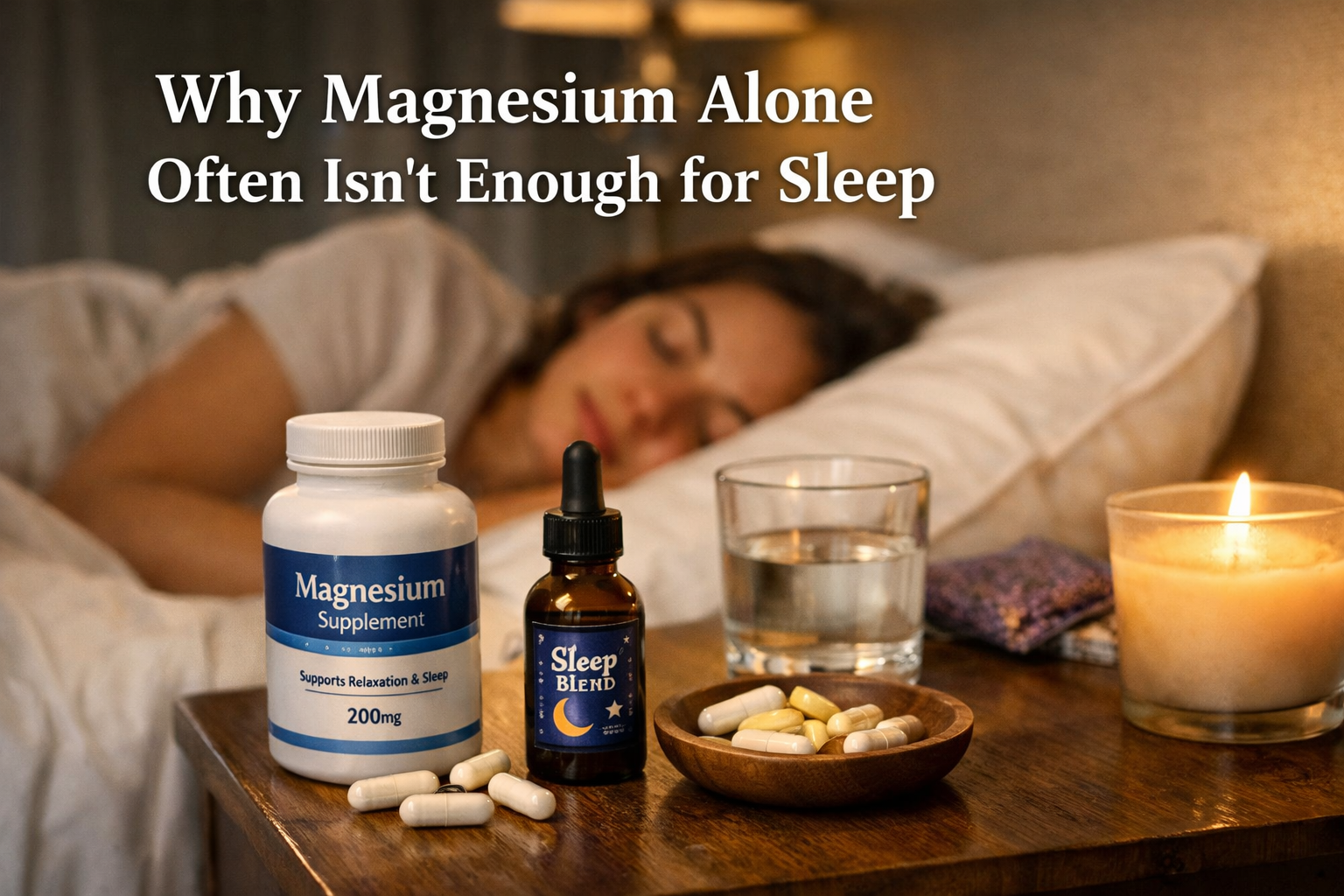
Magnesium glycinate, a well‑absorbed form of magnesium, relaxes muscles and nervous tissue and supports GABA receptor function. Because many adults are low in magnesium, this alone can make a noticeable difference.
Active forms of vitamins B6 and B12 round out the formulation. These nutrients serve as cofactors in the conversion of tryptophan to serotonin and serotonin to melatonin. By using pyridoxal‑5‑phosphate (P5P) and methylcobalamin rather than cheaper forms, SLP1 supports these pathways without relying on high doses that the body may not use efficiently.
For situations where sleep windows are very short or circadian disruption is sharp, SLP1’s Melatonin Nasal Spray adds another tool. By moving through the nasal lining directly into circulation, it reaches the brain faster than most oral forms. This makes it helpful for shift workers, frequent travelers, or parents who need to fall asleep quickly once the chance appears.
All of this sits inside the broader SLP1 Protocol, which also includes support for deeper stages of sleep and for staying asleep through the night. Formulations are built in house rather than bought off the shelf, with an emphasis on clean labels, clinically meaningful dosing, bioavailable forms, and third‑party testing. For health‑conscious people asking not just “how long does it take to fall asleep” but “how can I improve sleep in a way that fits my values,” this approach respects both sides of the question.
Conclusion
Sleep latency may seem like a small detail, yet it offers a clear window into overall sleep health. A regular pattern of falling asleep in about ten to twenty minutes often reflects the right mix of sleep pressure, circadian alignment, and nervous system calm. Moving far outside that range, on either side, usually signals that something deeper deserves attention.
Consistently falling asleep almost instantly points toward sleep debt or strong underlying sleepiness, sometimes from medical conditions. Taking more than thirty minutes most nights points toward insomnia, circadian misalignment, lifestyle factors, or other health issues. In both cases, the impact shows up during the day, in energy, mood, focus, and long‑term health risk.
The good news is that many of these patterns respond well to thoughtful, steady changes. Regular bed and wake times, smart light exposure, supportive sleep environments, and calming wind‑down routines all help the body shorten sleep latency in a healthy way. Exercise, careful intake of caffeine and alcohol, and daytime stress management add further support.
SLP1’s role is to support these foundations with clean, science‑based formulations that assist rather than override the body’s own design. The Get to Sleep system, Deeper Sleep support, Stay Sleep support, and fast‑acting Melatonin Nasal Spray all work toward the same aim. That aim is not just falling asleep faster for one night, but building a stable pattern of sleep that leaves you feeling clear, steady, and fully yourself.
Sleep is not a luxury that can wait for later. It is one of the most powerful daily investments in health, performance, and long‑term resilience. If you are ready to take that investment seriously, exploring the SLP1 Protocol and, when needed, talking with a qualified sleep professional can be the next right step.
Frequently Asked Questions (FAQs)
Questions about how long it should take to fall asleep come up often. Here are clear answers to some of the most common ones, based on current sleep science and SLP1’s experience working with sleep latency in real life.
FAQ 1 Is It Normal To Fall Asleep In 5 Minutes?
Falling asleep in about five minutes once in a while, after a very long or demanding day, can be normal. When this happens most nights, it usually points to sleep deprivation or heavy sleep debt. In that case, the brain is grabbing sleep as fast as it can rather than easing into a natural pattern. If you also wake unrefreshed, feel sleepy during the day, or lean hard on caffeine, it is a sign that more and better sleep is needed.
FAQ 2 What If I Cannot Fall Asleep Even When I Am Tired?
Feeling exhausted yet unable to drift off is a classic sign of hyperarousal, a key feature of insomnia. The body may be tired, but the nervous system stays in a high‑alert state, with racing thoughts, tense muscles, and often a faster heart rate. Stress, anxiety, irregular schedules, and habits like scrolling on a phone in bed all feed this pattern. Techniques such as slow breathing, progressive muscle relaxation, and getting out of bed after twenty to thirty minutes of wakefulness can help. SLP1’s nervines and phosphatidylserine are designed to support the calming side of the nervous system in these settings.
FAQ 3 How Does The SLP1 Melatonin Nasal Spray Work Differently From Pills?
Melatonin pills pass through the digestive system and liver before reaching the bloodstream, which can delay and blunt their effect. The SLP1 Melatonin Nasal Spray uses the thin nasal lining instead, so melatonin enters circulation much faster. Many people feel the effect within about ten to fifteen minutes rather than thirty to sixty. This speed can be especially helpful when the window for sleep is short, or when travel or shift work has disrupted the internal clock. It provides a clear night signal for the brain when timing really matters.
FAQ 4 Can Sleep Apnea Cause Difficulty Falling Asleep?
Yes, obstructive sleep apnea can contribute to trouble falling asleep, even though many people think of it only as a snoring condition. In apnea, the airway closes repeatedly during sleep, leading to brief choking episodes and drops in oxygen. Over time, the brain can begin to resist entering deeper sleep stages where these events occur more often. That resistance can show up as classic sleep‑onset insomnia. If you snore loudly, gasp in sleep, or wake with dry mouth or headaches, it is wise to talk with a sleep specialist.
FAQ 5 When Should I See A Doctor About My Sleep Latency?
You should talk with a healthcare provider or sleep specialist if it regularly takes you more than thirty minutes to fall asleep, at least three nights each week, for longer than three months. It is also important to seek help if poor sleep is affecting work, relationships, or safety, or if you suspect conditions such as sleep apnea or restless legs syndrome. Another clear sign is falling asleep very quickly yet waking drained day after day. A professional evaluation can clarify what is going on and guide a full plan, which can work alongside SLP1’s science‑based support for natural sleep onset.

Leave a comment
This site is protected by hCaptcha and the hCaptcha Privacy Policy and Terms of Service apply.