Why Sleep Supplements Stop Working (And How To Fix It)
Introduction
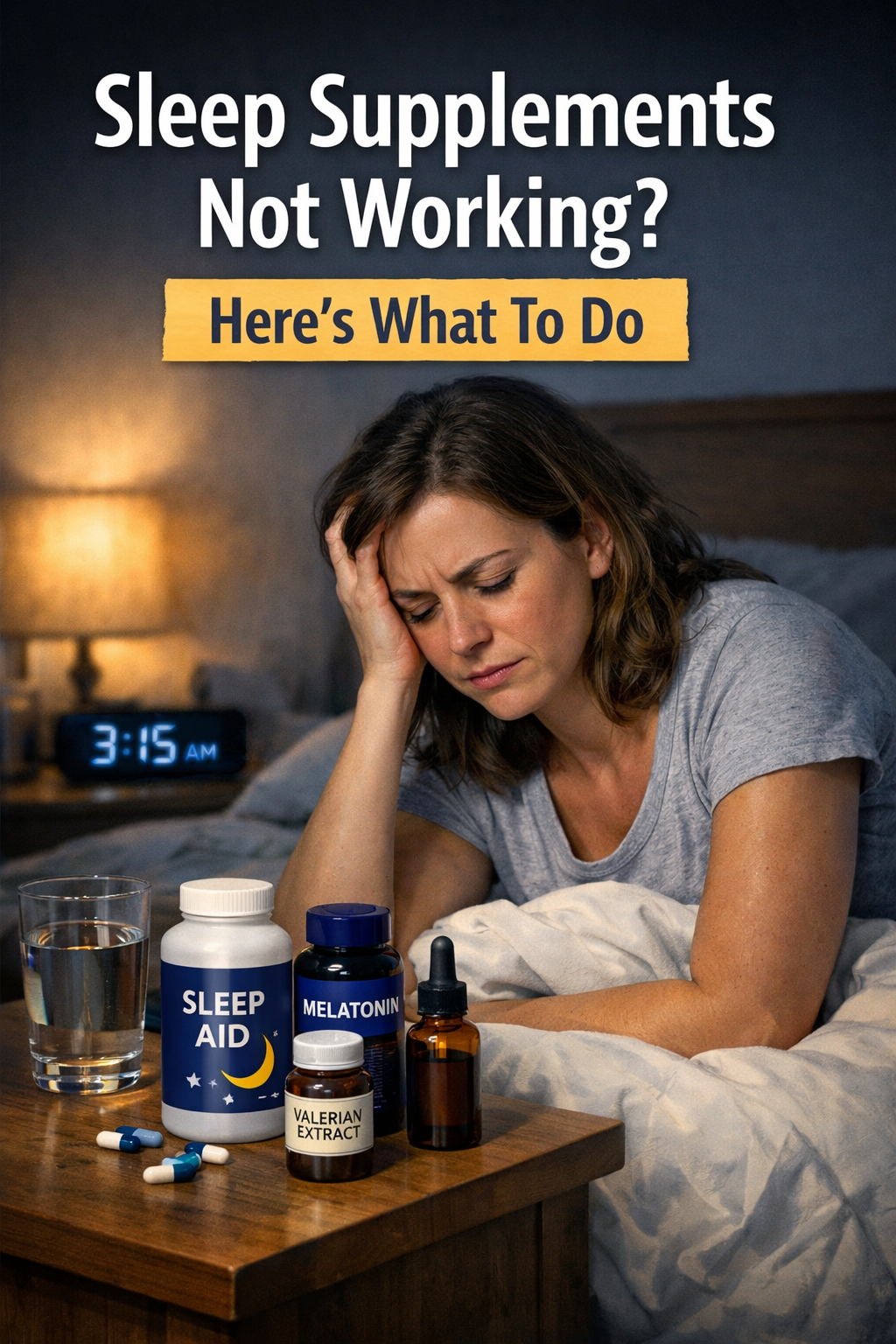
The scene is familiar. A new sleep capsule works like magic for a week or two. You fall asleep faster, stay asleep longer, and feel human again. Then, almost without warning, the effect fades. Nights stretch out, the bottle empties, and the search begins again. It is no surprise so many people end up Googling “sleep supplements not working” at 2 a.m.
That cycle is more than frustrating. It drains money, chips away at trust in your body’s own ability to sleep, and fuels anxiety that makes it even harder to rest. Most products promise deeper sleep in big letters on the front label, while hiding weak doses, poor ingredient forms, or dependency‑building compounds on the back.
The core problem is simple. Many sleep products try to push the brain into sleep instead of supporting the systems that already know how to sleep. Short term, that can knock someone out. Over time, the brain adapts, tolerance builds, and the same capsules stop doing anything helpful.
This guide walks through why that happens and what to do about it. It explains the science of tolerance, the melatonin trap, hidden health and lifestyle factors, and how ingredient quality shapes real‑world results. It also shows how SLP1’s melatonin‑free, bioavailable formulations are designed for steady, long‑term support so the body can find deeper sleep night after night without crashing or dependency.
“Sleep is the single most effective thing we can do to reset our brain and body each day.”
— Matthew Walker, PhD, author of Why We Sleep
Key Takeaways
Before diving into the details, it helps to see the big picture. Many readers arrive here after months or years of sleep supplements not working as promised. These points summarize what changes that story.
-
Many people run into sleep supplements not working because the products try to override the body rather than support it. High‑dose melatonin and sedative blends push receptors hard, so the brain pushes back by lowering sensitivity. That means larger and larger doses are needed for the same effect, which is a recipe for tolerance, side effects, and restless nights.
-
Melatonin can be helpful in a few narrow cases, but daily use at common doses often backfires. The brain starts dialing down its own melatonin output, and receptors become less responsive. When someone stops, rebound insomnia and lighter sleep are common, which creates a feeling of being trapped by the bottle.
-
Many commercial formulas rely on cheap, poorly absorbed ingredients and “fairy dust” doses that look good on the label but do little in the body. Even when labels look strong, low bioavailability, inconsistent manufacturing, and poor timing habits can all make sleep supplements not working feel like the norm instead of the exception.
-
Underlying issues like circadian disruption, chronic stress and high evening cortisol, blue‑light overload, caffeine and alcohol habits, and undiagnosed sleep disorders often overpower any capsule. Real change comes from combining clean, properly dosed nutrients with smart behavior, light, and stress strategies that help the body get to sleep and stay asleep naturally.
-
SLP1’s melatonin‑free approach focuses on supporting endogenous melatonin and calming pathways with ingredients like magnesium glycinate, active B6 (P5P), and methylcobalamin B12. The goal is steady, compounding benefits and long‑term efficacy, not a quick knockout followed by tolerance.
The Science Behind Supplement Tolerance: Why Your Body Stops Responding

When someone notices their sleep supplements not working anymore, what they are feeling is often simple biology. The brain is full of receptors that react to chemical signals. Repeatedly bathing those receptors in the same outside compound can cause them to downregulate, which means they become less sensitive or fewer in number.
Compounds that push hard on sleep systems, like high‑dose melatonin, sedating antihistamines, or strong herbal sedatives, often do this. At first, they make it much easier to get to sleep. Over time, the brain responds by turning the volume down on those pathways. The same dose then has a weaker effect, so many people increase the amount, which speeds the process.
On the other hand, nutrients that support natural processes work differently:
-
Magnesium helps GABA function.
-
Vitamin B6 (P5P) supports serotonin and then melatonin production.
-
Vitamin B12 (methylcobalamin) supports circadian gene activity.
-
Balanced minerals help calm the nervous system.
These do not force a state; they give the body the raw materials and conditions to enter that state on its own.
Homeostasis is the body’s constant attempt to keep things in balance. When outside compounds with long half‑lives linger into the morning, they can cause grogginess and shift the clock later. When those same compounds are used every night, homeostasis pushes back. This is why “more” is rarely better with sleep supplements and why SLP1 Protocol is built around support, not sedation.
To make this more concrete, consider how different supplement styles behave over time:
|
Type Of Ingredient |
How It Works |
Tolerance Risk |
Best Use Case |
|---|---|---|---|
|
High‑dose melatonin, sedatives |
Force sleep receptors into stronger activity |
High |
Short‑term, very specific situations |
|
Gentle botanicals |
Nudge calming pathways |
Medium |
Short‑to‑medium‑term support |
|
Nutrients (magnesium, B6, B12) |
Support natural sleep chemistry and rhythms |
Low |
Long‑term, daily sleep foundation |
The Melatonin Trap: Understanding Why America's Most Popular Sleep Supplement Fails

Melatonin looks perfect on paper. It is natural, easy to find, and inexpensive. For many people, it works very well for a short period. Then familiar complaints appear: lighter sleep, vivid dreams, morning fog, and sleep supplements not working the way they once did.
The key fact is that melatonin is a timing signal, not a sedative. The pineal gland releases a small pulse, around 0.3 milligrams, as darkness falls. That pulse tells the body it is night and helps line up the internal clock with the outside world. Swallowing 5–10 milligrams is more like shouting at those receptors rather than whispering.
Over time, the brain notices this flood and responds by dialing down both melatonin production and receptor sensitivity, which is why long-term use of melatonin supplements can lead to diminished effectiveness and potential health concerns. Many people then take more, which speeds that process. When they finally stop, they often struggle to get to sleep at all and wake often during the night. This rebound insomnia makes it easy to blame the body and hard to see that the pattern came from the supplement strategy itself.
Timing mistakes add to the problem. Taking melatonin right at bedtime, staring at a bright phone, or using it at odd hours trains the brain to connect the hormone signal with light patterns that do not match natural night. The result is circadian confusion rather than deeper sleep, especially when stress and high evening cortisol are the real issues.
When Melatonin Actually Works (And When It Doesn't)
While current evidence on common dietary supplements for sleep quality shows mixed results, there are specific situations where melatonin can be beneficial. People who cross time zones quickly, shift workers trying to move their schedule, those with delayed sleep phase syndrome, some blind individuals, and older adults with verified low melatonin can see clear benefits from a small, well‑timed dose for a short window.
Where melatonin rarely helps is the scenario most people face when they search for sleep supplements not working. That picture usually includes:
-
Chronic stress
-
Late‑night work
-
Blue‑light exposure
-
Scattered sleep times
-
A nervous system stuck in “on” mode
In that case, the real issue is cortisol and hyperarousal, not a lack of melatonin.
A practical rule is what many clinicians call a short test. If a low dose of melatonin, taken one to two hours before bed in dim light, has not helped after about two weeks, the main problem lies somewhere else. At that point, addressing stress, light, behavior, and using nutrients like magnesium glycinate and P5P to support natural melatonin production is usually much more effective.
The SLP1 Alternative: Supporting Your Natural Melatonin Production
SLP1 takes a different route. Instead of replacing melatonin night after night, its formulas support the pathways that create and respond to it. Vitamin B6 in its active P5P form helps convert tryptophan into serotonin and then into melatonin. Vitamin B12 as methylcobalamin supports healthy circadian signaling at the genetic level.
Magnesium glycinate plays several roles at once. It supports GABA activity, so the nervous system can ease into a calmer state. It also interacts with NMDA receptors involved in the timing of sleep cycles. These steps help the brain generate its own melatonin signal at the right time, rather than being flooded from the outside.
Because this method works with the body instead of against it, tolerance and rebound are far less likely. The benefits tend to build over weeks as rhythms stabilize, stress systems calm, and the brain learns that night is safe and predictable again. That can feel slower than a knockout pill, but it is the path that keeps sleep supplements not working from becoming a permanent pattern.
Hidden Culprits: Underlying Issues That Sabotage Sleep Supplement Efficacy
When someone has tried several brands and still finds their sleep supplements not working, that is often a sign that a deeper problem is in play. Pills can only do so much if the body’s master clock, stress hormones, or basic sleep biology are out of line.
Treating this as a sign to look deeper, rather than as a personal failure, is powerful. It opens the door to correcting the real issue instead of endlessly swapping formulas.
Circadian Rhythm Disruption And Misalignment

The suprachiasmatic nucleus (SCN) is the brain’s master clock. It reads light through the eyes and then sets the timing for hormones, temperature, digestion, and sleep drive. Late‑night screens, odd work hours, and “social jet lag” from very different weekday and weekend schedules confuse that clock.
In that setting, even strong supplements have trouble helping someone get to sleep and stay asleep on a predictable schedule. The body does not know when night starts. Bright outdoor light in the first hour after waking and dim, warm light in the two hours before bed are more powerful than any capsule. SLP1 is built to support this light‑driven system, not override it.
Chronic Stress And Elevated Evening Cortisol
High‑performing adults often carry stress straight into the night. Instead of spiking in the morning and dropping by evening, cortisol stays high all day or even rises at night. That flat or reversed curve keeps the brain alert, heart rate up, and thoughts racing.
In this state, sedating herbs or melatonin may work briefly, then stop as the stress system overpowers them. Testing options like salivary cortisol curves or DUTCH testing can show this pattern clearly. Layering in stress practices, therapy when needed, and nutrients such as magnesium glycinate that gently support HPA axis regulation helps lower that evening “wired” feeling so supplements have a fair chance.
Undiagnosed Sleep Disorders
Sometimes sleep supplements not working are a warning light for a separate sleep disorder:
-
Sleep apnea causes brief breathing stops, drops in oxygen, and constant micro‑awakenings.
-
Restless legs syndrome and periodic limb movement disorder trigger uncomfortable sensations or jerks that break up sleep.
Sedating products may hide some symptoms while the underlying condition worsens. Loud snoring, gasping, or severe daytime sleepiness call for a sleep study, not stronger pills. Once the real disorder is treated, many people find they can get to sleep and wake rested with far less extra help.
The Bioavailability Problem: Why Cheap Supplements Can't Deliver Results
Two bottles can list the same ingredient and dose yet act very differently in the body. The missing piece is bioavailability, which describes how much of a nutrient actually reaches the bloodstream and cells in a usable form. This is a key reason people land in the cycle of sleep supplements not working, even when labels look solid.
Minerals and vitamins can come in forms the body likes or forms it mostly flushes out. Fillers, binders, and poor manufacturing can slow or block absorption. Some compounds need certain carriers or co‑factors to cross the gut wall. When those details are ignored, a supplement becomes expensive urine instead of support for deeper sleep.
SLP1 is built around high‑absorption forms and clinically meaningful doses, not just impressive marketing numbers. That means choosing gentle chelated minerals, active vitamins, and clean excipients so that the amount on the label is close to the amount your brain can actually use.
The Magnesium Case Study: Why Form Matters

Magnesium is a standout example. Magnesium oxide is cheap and very common. It is also poorly absorbed, with a small fraction getting into the body. The rest stays in the gut and often acts like a laxative. Someone might take it for months and still feel their sleep supplements not working at all.
Magnesium glycinate is different. The mineral is bound to the amino acid glycine, which helps it cross the gut wall efficiently and adds its own calming properties. This form supports GABA receptors, smooths out stress responses, and has far less risk of digestive upset.
Research links magnesium to better sleep onset, deeper slow‑wave sleep, and improved morning alertness. Those effects depend on both dose and form. SLP1 uses magnesium glycinate for that reason. The goal is a real therapeutic amount in a form the body can use, instead of a large “label dose” that never reaches the nervous system.
Beyond Minerals: Active Vitamin Forms And Bioavailability
Something similar happens with B vitamins. Standard pyridoxine (common B6) needs to be converted into the active form, pyridoxal‑5‑phosphate (P5P), before the body can use it to build serotonin and melatonin. Many people, especially those with common genetic variations, do that conversion poorly.
Cyanocobalamin, a cheap B12 form, must also be processed before it becomes methylcobalamin, the form cells prefer. Using active versions like P5P and methylcobalamin skips these steps and gives more reliable support for neurotransmitter production across a wide range of people.
SLP1 commits to these active, bioavailable forms even though they cost more to source. That choice respects both the science and the user’s investment. It is a direct answer to one of the hidden reasons behind sleep supplements not working: ingredients that never had a fair shot at helping in the first place.
Formulation Integrity: The Dirty Truth About Sleep Supplement Quality Control
Beyond ingredient form, there is the question of what is really in the bottle. Supplements do not face the same oversight as prescription drugs. That gap can mean under‑dosed formulas, batch‑to‑batch variation, or, in worst cases, contaminants that have no place in a nighttime routine.
“Fairy dusting” is common. A brand sprinkles trendy herbs or nutrients in tiny amounts to dress up the label, while the actual doses fall far below levels shown to help people get to sleep or stay asleep. Inconsistent manufacturing can mean one bottle works better than the next, even from the same brand.
There are also concerns about heavy metals, pesticide residues, and undeclared allergens in low‑quality products. Any of these can trigger inflammation or nervous system activation that works directly against the goal of deeper sleep. SLP1 counters this pattern with tight formulation control and strict testing.
Why Third-Party Testing Is Non-Negotiable
Third‑party testing means an independent lab checks what is inside a supplement. Organizations such as NSF, USP, and ConsumerLab run tests for potency, purity, contaminants, and how well capsules dissolve. Products sometimes fail these tests in ways that match consumer complaints about sleep supplements not working as promised.
Without this outside check, there is no easy way to know whether the magnesium, B vitamins, or botanicals listed on the label are present in the right amounts and clean form. Variation leads to unpredictable results, even when someone’s sleep habits are solid.
SLP1 uses third‑party testing on every batch and makes those standards part of the brand’s core identity. That helps keep outcomes predictable and repeatable, which is exactly what long‑term sleep support requires.
The Clean Label Commitment: Why Fillers And Additives Sabotage Results
Many formulas are packed with extras that have nothing to do with sleep. Artificial colors, titanium dioxide, unnecessary binders, and high levels of certain flow agents can irritate the gut or immune system. For sensitive people, that irritation can show up as discomfort, flushing, or low‑level inflammation at night.
Digestive upset is the last thing someone wants while trying to get to sleep and stay asleep. Any extra metabolic burden also pulls energy away from rest and repair. SLP1 keeps labels clean on purpose, skipping artificial colors, flavors, and common allergens. Every ingredient serves a role in absorption, stability, or direct sleep support, instead of filling space to cut costs.
Dosing Errors And Timing Mistakes That Undermine Supplement Performance
Even the best‑built formula can feel like sleep supplements not working if it is used in the wrong way. Dose, timing, and how a supplement fits with meals all shape the effect someone feels at night and in the morning.
Many sleep ingredients need time to absorb and reach peak levels. Taking them right before lying down often means they are just kicking in when the alarm clock rings. Others do better with a bit of food. Matching the timing to how the body processes each nutrient turns a good formula into a reliable part of a nighttime routine.
The Timing Factor: When To Take Sleep Supplements For Maximum Effect
Most sleep‑supporting nutrients reach helpful blood levels within 60–90 minutes. That makes the hour to hour‑and‑a‑half before bedtime the key window for use. Taken too early, the effect may fade before sleep. Taken as the lights go off, they may still be digesting when the brain needs them most.
Magnesium glycinate and similar compounds often work well with a small evening snack, while some people prefer other ingredients on a lighter stomach. Picking a consistent time, such as 8:30 p.m. for a 10 p.m. bedtime, trains the body to expect both the nutrients and sleep at the same time each night.
Changing timing every few days makes it much harder to tell whether sleep supplements not working are a product issue or a usage issue. Treating timing as a fixed part of a sleep plan removes that guesswork.
Dosage: Why More Isn't Better And Less Might Be Optimal
There is a sweet spot for most nutrients. Below it, they do little. Above it, side effects rise and results can paradoxically get worse. High doses of magnesium, for example, can shift from calming to causing loose stools that disturb sleep. Very high B6 can drive vivid or disturbing dreams.
Body size, gut health, baseline nutrient status, and medication use all affect where the best dose lands for a person. Starting near the lower end of a researched range and adjusting slowly is usually smarter than jumping to the largest amount on the shelf.
SLP1 designs doses around clinical data rather than trying to win a “highest number” contest on the label. That reduces the risk of tolerance and side effects while giving the body enough support to actually change how easy it is to get to sleep and stay asleep.
The Lifestyle Factors That Determine Whether Supplements Work Or Fail
No supplement can fully offset a lifestyle that pushes the nervous system into overdrive and confuses the body’s clock every day. When those basics are out of sync, it is very common to see even high‑quality sleep supplements not working as hoped.
The good news is that small, steady changes in light, movement, food, and evening habits can dramatically raise the ceiling on how well any capsule performs. SLP1 was designed with this in mind, as one pillar in a bigger structure built from behavior and environment.
Light Exposure: The Master Regulator That Can Override Any Supplement
Light is the main signal that tells the SCN what time it is. Specialized melanopsin receptors in the eyes respond strongly to blue light, especially in the 450–480 nm range. Bright outdoor light soon after waking anchors the day, while dim, warm light in the evening tells the brain that night is approaching.
A common pattern is clear. Someone takes a supplement to help with deeper sleep, then spends the last hour before bed under bright LEDs, scrolling on a phone held close to the face. That blue light signal is strong enough to blunt the body’s own melatonin pulse and make sleep supplements not working feel like a mystery, when light is the real culprit.
A simple framework is:
-
Strong outdoor light early in the day
-
Softer indoor light in the afternoon
-
Low, amber light in the last two hours of the day
Outdoor time beats any artificial lamp. SLP1 supports the biology behind this pattern, but light management is the “master switch” that makes everything else easier.
Temperature Regulation And Sleep Environment Optimization
Falling asleep normally involves a small drop in core body temperature. A hot bedroom, heavy bedding, or poor airflow can block that drop and lead to tossing and turning. Most people sleep best in a room set somewhere between 60–67°F, with breathable sheets and pajamas.
A warm bath one to two hours before bed can actually promote cooling by bringing blood to the skin and then letting heat release as the body dries. Warm hands and feet with a cooler core seem to help many people drift off more easily.
Magnesium’s gentle support for blood vessel relaxation can fit into this thermoregulation picture. Pairing SLP1 with a quick “sleep environment audit” often clears away hidden barriers that looked like sleep supplements not working, but were really room conditions.
Caffeine And Alcohol: The Chemical Saboteurs
Caffeine blocks adenosine receptors and delays the feeling of sleep pressure. Its half‑life is around five to six hours, which means a quarter of a 3 p.m. dose is still active around 3 a.m. Sensitive people may need to keep all caffeine before noon to avoid trouble.
Alcohol has a different pattern. It may help someone get to sleep faster by acting as a sedative early in the night. Later, as the body processes it, sleep fragments. There are more awakenings, lighter stages, and less REM. That can leave someone tired the next day, reaching for more caffeine, and then needing another drink to wind down.
This loop makes many people think their sleep supplements not working must mean the product is weak, while the real issue is the push‑pull of caffeine and alcohol. Cutting back, especially in the late afternoon and evening, often makes a well‑designed supplement finally show its true value.
Advanced Strategies: Improving Supplement Efficacy Through Synergistic Practices
Once the basics are in place—light, temperature, caffeine, alcohol, and a reasonable schedule—there is room for more advanced tools. These appeal to the biohacker mindset and can turn good sleep into great sleep when combined with a formula like SLP1.
The theme is synergy. None of these practices stand alone. They work by making the nervous system more responsive to calming signals and by aligning metabolism with natural night‑day rhythms.
Nervous System Training: Beyond Supplementation

The nervous system has two main gears: sympathetic (alert, active) and parasympathetic (rest, digest, repair). Chronic stress, constant notifications, and late‑night work keep many people stuck in the first gear. Even strong supplements can feel like sleep supplements not working when the brain is locked in fight‑or‑flight.
Breathwork practices such as 4‑7‑8 breathing or slow box breathing signal safety to the brainstem. Progressive muscle relaxation, gentle evening yoga, and mindfulness meditation do the same. Over time, these practices raise vagal tone, which shows up as better heart rate variability and easier downshifting at night.
Cold showers or ice baths can be useful when timed early in the day, as they tend to raise alertness and cortisol briefly. Doing intense cold exposure right before bed, however, can be too stimulating. Magnesium’s calming effect on GABA receptors and stress circuits makes it a natural partner for this kind of nervous system training.
Nutritional Timing And Composition For Better Sleep
Food timing shapes both hormones and nervous system activity. Large, heavy meals close to bedtime keep digestion working hard and can trigger blood sugar swings that lead to 2 a.m. awakenings. Finishing dinner two to three hours before bed gives the body time to shift away from active digestion.
Protein during the day provides tryptophan and other amino acids that build serotonin and melatonin. Including complex carbohydrates in the evening meal can help tryptophan reach the brain more easily. Stable blood sugar also reduces middle‑of‑the‑night adrenaline spikes.
Magnesium‑rich foods such as leafy greens, nuts, and seeds add to the intake from SLP1 rather than replacing it. Together, whole‑food nutrients and a research‑backed supplement create a steady nutritional base that makes it easier to get to sleep, stay asleep, and wake ready to go.
Cognitive Behavioral Approaches: Addressing The Psychological Component
For many people, the biggest barrier to sleep is not chemistry but mindset. After enough bad nights, the bed starts to feel like a battleground. Every time someone lies down, they remember the last long, restless night. That alone can make sleep supplements not working seem like a personal flaw instead of a pattern that can change.
Cognitive Behavioral Therapy for Insomnia (CBT‑I) is the leading behavioral treatment for this. It works on the thoughts, habits, and associations that keep the nervous system in high gear at night. Supplements like SLP1 can support the biology while CBT‑I rewires beliefs and behaviors.
Understanding Sleep Performance Anxiety
Sleep performance anxiety is the fear of not sleeping, mixed with the belief that one bad night will ruin the next day. Thoughts like “If I do not fall asleep in the next 10 minutes, tomorrow will be a disaster” send a clear threat message to the brain.
That threat message raises heart rate, cortisol, and adrenaline—exactly the chemicals that keep someone awake. The bed and bedroom become cues for worry, not rest. Trying harder to force sleep has the same effect as trying not to think of a pink elephant; the effort backfires.
No capsule can fully sedate away that kind of spiraling thought pattern. Magnesium and B vitamins in SLP1 can help the nervous system calm down, but they work best when paired with cognitive restructuring, where those catastrophic thoughts are gently examined and replaced with more realistic ones.
Stimulus Control And Sleep Restriction Therapy
Two of the strongest CBT‑I tools are stimulus control and sleep restriction. Stimulus control rebuilds the link between bed and sleep. That means:
-
Going to bed only when sleepy
-
Using the bed only for sleep and intimacy
-
Getting out of bed if sleep does not come within about 20 minutes
Instead of lying there worrying, the person moves to another room, does something quiet in low light, and returns only when genuinely drowsy. Over time, the brain relearns that bed equals sleep, not stress. This breaks the pattern for many who feel stuck with sleep supplements not working night after night.
Sleep restriction sounds harsh but can be very helpful under professional guidance. It limits time in bed to just above the amount someone is actually sleeping, which boosts sleep pressure and can lead to deeper, more efficient rest. As sleep improves, time in bed slowly expands.
Supplements like SLP1 can support this process by smoothing out arousal and supporting the chemistry of sleep. The behavioral changes, though, are what make the brain trust bedtime again.
When To Seek Professional Help: Recognizing Treatment-Resistant Insomnia
Self‑directed changes in supplements and lifestyle can take someone a long way. Still, there are times when sleep remains poor for months, and the pattern looks more like treatment‑resistant insomnia than a simple habit issue. Recognizing that point and getting help is a sign of wisdom, not weakness.
A common definition of chronic insomnia is trouble falling or staying asleep at least three nights per week for more than three months, with clear effects on daytime function—and understanding how safe is melatonin and how the sleep aid actually works becomes crucial when considering long-term treatment options. If that sounds familiar, and several attempts to fix things have failed, it is time to look beyond the supplement shelf.
Signs You Need More Than Supplements
Certain red flags point toward deeper evaluation:
-
Persistent insomnia despite solid light habits, caffeine control, and high‑quality supplements
-
Loud snoring, gasping, or waking with a dry mouth and morning headaches
-
An intense, often painful urge to move the legs at night
-
Mood symptoms like deep sadness, loss of interest, or constant worry that spills into daytime life
-
Hormonal shifts, thyroid issues, chronic pain, or severe daytime sleepiness
In all these cases, trying more and more products and still finding sleep supplements not working wastes time and can delay needed care. A thorough medical workup, sometimes including a sleep study and lab tests, can reveal issues that respond best to targeted treatment.
Building Your Sleep Optimization Team
Good sleep care is often a team effort. A primary care physician is usually the first stop. They can screen for medical causes, review medications, and order basic tests. If needed, they may refer to a board‑certified sleep specialist who can arrange in‑lab or home sleep studies.
For insomnia rooted in thoughts and habits, a psychologist trained in CBT‑I is often the best guide. Functional or integrative practitioners can explore hormones, nutrients, gut health, and other root‑cause factors. Sharing data from a sleep diary or wearable tracker can help every member of this team see patterns more clearly.
Supplements like SLP1 fit into this system as one support, not a replacement for medical care. Discussing any product use with providers keeps the plan safe and coordinated while giving the best chance to get to sleep, stay asleep, and feel good during the day.
The SLP1 Approach: Formulated To Maintain Long-Term Efficacy
Everything discussed so far leads to a clear question. If many people end up with their sleep supplements not working over time, how should a product be built to avoid that fate? SLP1 was created around that exact problem.
The brand’s in‑house formulations focus on long‑term biology, not short‑term sedation. That means no nightly melatonin, no dependency‑building herbs, and no race to the highest milligram number. Instead, SLP1 uses bioavailable ingredients in research‑backed doses that work with sleep pathways rather than bullying them.
Why SLP1 Formulas Don't Stop Working
SLP1 avoids exogenous melatonin entirely. By not flooding receptors every night, there is no direct trigger for melatonin receptor downregulation or suppressed natural production. Instead, the formulas give the body what it needs to produce its own rhythm signal.
Active B6 (P5P) supports the creation of serotonin and then melatonin from dietary amino acids. Methylcobalamin B12 supports healthy circadian signaling and energy balance. Magnesium glycinate supports GABA receptor function, smooths out NMDA activity, and gently calms the nervous system.
Doses are set where human research shows benefits, not at “megadose” levels that can feel strong at first, then crash. As someone uses SLP1 consistently, the benefits build. Nights tend to become more predictable, it becomes easier to get to sleep, and awakenings often shorten or become less frequent.
This compounding effect depends on patience. Quick‑fix products may knock someone out faster in week one, but they are also more likely to join the long list of sleep supplements not working by week four. SLP1 aims for the opposite curve: a gentle start that keeps improving over time.
The Quality Difference: Advanced Formulation For Reliable Absorption
SLP1’s ingredient choices match the philosophy. Magnesium appears as glycinate instead of oxide or carbonate. B6 is P5P, not basic pyridoxine. B12 is methylcobalamin, not cyanocobalamin. Each of these decisions improves absorption and reduces reliance on individual genetic and metabolic quirks.
The formulas are also built to sit well in the stomach as part of a normal evening routine. That reduces digestive distraction at night. Synergy matters too. Ingredients are dosed and paired to support each other rather than compete for absorption or send mixed signals to the nervous system.
Clean labels and third‑party testing finish the picture. No artificial colors or flavors, no unnecessary fillers, and strict screening for contaminants create a product that matches what health‑conscious, research‑minded consumers expect. The result is a tool that keeps working month after month, instead of joining the stack of half‑used bottles bought when other sleep supplements not working pushed someone back to online search results.
Creating Your Personalized Sleep Optimization Protocol
Knowing the pieces is one thing; putting them together is another. A simple, stepwise plan helps turn ideas into better nights. Think of this as a 6–8 week experiment designed to support deeper sleep in a sustainable way.
The protocol pairs lifestyle foundations with SLP1’s nutrient support. It leaves room to observe what helps, adjust intelligently, and seek professional input when needed. The goal is not perfection but steady progress away from the pattern of sleep supplements not working and toward reliable rest.
Phase 1: Foundation (Weeks 1–2)
For the first two weeks, focus on habits and environment:
-
Pick a wake‑up time and hold it every day, including weekends.
-
Build a wind‑down routine that fills the last 30–60 minutes of the day with low‑light, low‑stress activities like reading, stretching, or soft music.
-
Step outside for bright light within an hour of waking and dim household lights two hours before bed.
-
Keep the bedroom cool, between 60–67°F, and as dark and quiet as is practical.
-
Set a caffeine cut‑off between noon and 2 p.m., and either skip alcohol or keep it early and light.
Start a simple sleep log that tracks bedtime, how long falling asleep seems to take, awakenings, and how rested the morning feels. Add one stress‑management practice, such as five minutes of breathing or journaling, to help lower evening arousal.
Phase 2: Integration (Weeks 3–4)
Once the foundation feels steady, bring in SLP1. Take it consistently 60–90 minutes before the target bedtime, ideally at the same time each evening. Keep all the routines from Phase 1 in place; the supplement is meant to support that base, not replace it.
Continue the sleep log and pay attention to changes like how easy it is to get to sleep, how often waking happens at night, and how refreshed mornings feel. Resist the urge to change several other variables at once. Keeping diet, exercise timing, and other supplements stable for these weeks makes it easier to see what SLP1 is doing.
Most people notice subtle shifts first: less mental buzz at night, fewer long wake periods, or a softer morning “crash.” Those signs show that systems are adjusting, even if sleep is not perfect yet.
Phase 3: Optimization And Refinement (Weeks 5–8+)
With a month or so of data, patterns usually start to show. If the trend is positive, keep going. If certain issues persist—such as very early awakenings, strong leg discomfort, or severe daytime sleepiness—consider adding professional evaluation.
This is also the time to layer in advanced tools if desired. Nervous system training, more precise meal timing, or targeted exercise can all pair well with SLP1. The key is to think long term. Sleep health grows through repeated, consistent choices, not a single trick.
Conclusion
When someone has tried several brands and still ends up with their sleep supplements not working, it is easy to feel discouraged. The pattern can erode trust in both products and the body’s own ability to rest. The truth is far more hopeful. The problem usually lies in how most products are designed and used, not in some permanent flaw in the sleeper.
High‑dose melatonin and sedative blends tend to override natural systems. At first, they knock people out. Over time, tolerance, receptor changes, poor bioavailability, and ignored lifestyle factors bring them right back to square one. Underlying issues—like circadian misalignment, stress‑driven hyperarousal, caffeine and alcohol habits, or real medical sleep disorders—often sit untouched.
SLP1 was created from the opposite mindset. Its melatonin‑free, science‑driven formulas aim to support the body’s own clock and calming chemistry with bioavailable magnesium glycinate, active B vitamins, clean labels, and strict testing. The goal is steady, predictable support that keeps working as weeks turn into months.
Lasting change asks for patience and consistency. Supplements work best when they sit on top of a solid base: smart light exposure, a cool and quiet bedroom, thoughtful caffeine and alcohol use, and, when needed, behavioral tools like CBT‑I or professional medical care. With that structure in place, sleep no longer has to depend on a new bottle every few weeks.
The choice going forward is clear. One path continues the cycle of temporary relief and disappointment. The other builds a thoughtful, root‑cause‑oriented plan and uses high‑quality tools like SLP1 to help the body do what it already knows how to do: get to sleep, stay asleep, and wake ready to live well.
FAQs
Why did my sleep supplement stop working after a few weeks?
Most often, this comes from tolerance. Strong sedatives and high‑dose melatonin push sleep receptors hard, so the brain reduces their sensitivity over time. Lifestyle factors like late‑night screens, stress, and caffeine can also grow worse in the background, making it look like the supplement failed when the whole system needs support.
Is melatonin safe to take every night long term?
Low‑dose melatonin for short periods is usually well tolerated, especially for jet lag or shift changes. Daily high doses for months, however, can suppress natural production and lead to lighter sleep, vivid dreams, and rebound insomnia when stopping. Many people searching for sleep supplements not working are feeling the result of that long‑term pattern.
How long should I give a new sleep supplement before deciding it does not work?
If the product is well‑designed and used correctly, many people notice early signs of benefit within one to two weeks. Nutrient‑support formulas like SLP1 can keep improving sleep over several more weeks as rhythms stabilize. If there is no change at all after a month, it is wise to review timing, lifestyle habits, and possible medical causes with a professional.
Can I use SLP1 with other health routines and medications?
SLP1 is built to complement healthy routines like regular exercise, stress practices, and a nutrient‑dense diet. Many people use it alongside other wellness habits without issues. If you take prescription medications or have a medical condition, it is always best to discuss any new supplement with your healthcare provider so they can look for interactions and keep your overall plan safe.


Leave a comment
This site is protected by hCaptcha and the hCaptcha Privacy Policy and Terms of Service apply.