Serotonin And Sleep
Introduction
Most people know serotonin as the mood or "happiness" chemical. Then they hear that serotonin keeps the brain awake and alert, yet low serotonin is linked with insomnia. At first glance, serotonin and sleep seem to pull in opposite directions, and that can be confusing.
The truth is more interesting. Serotonin helps the brain stay focused during the day, but it also helps prepare the body for deep, restorative sleep at night. It shapes how easily sleep starts, how long deep sleep lasts, and even how dream sleep shows up. When serotonin and sleep fall out of sync, the result often looks like light, broken rest, foggy mornings, and low mood that never quite lifts.
For anyone who cares about long-term health, understanding serotonin and sleep is more than a science lesson. It is a way to see why some quick fixes fail, why some medications help mood but disturb sleep, and why building healthy serotonin during the day can pay off at night. In this article, we move from basic brain chemistry to practical strategies, so the science actually informs what to eat, what to supplement, and what to expect.
SLP1 builds on this research with formulations that support the body’s own serotonin pathways instead of forcing sedation. The goal is not to knock someone out, but to help the brain run its natural sleep program more smoothly. By the end, serotonin and sleep will feel less like a mystery and more like a system that can be supported on purpose.
"Sleep is the single most effective thing we can do to reset our brain and body each day." – Matthew Walker, PhD, author of Why We Sleep
Key Takeaways
-
Serotonin and sleep are tightly linked, but the same molecule can either promote wakefulness or prepare the brain for rest. The outcome depends on timing in the day, where in the brain serotonin is released, and which receptor it touches. This pattern explains why serotonin can both sharpen alertness and support deep sleep in the same person.
-
Different serotonin receptors shape different parts of sleep. Some, like 5‑HT1A and 5‑HT1B, help hold back REM sleep, while others, like 5‑HT2A, tend to reduce deep sleep when active. When these receptors are blocked in a targeted way, deep slow-wave sleep often improves, which changes how serotonin and sleep feel in real life.
-
Supporting natural serotonin production through nutrition, 5‑HTP, vitamin B6, and smart supplementation often gives a steadier result than heavy sedatives. Brands like SLP1 focus on this route, using clean, third-party tested formulas that work with biology to improve serotonin and sleep over time instead of relying on quick chemical knockouts.
What Is Serotonin And Why Does It Matter For Sleep?
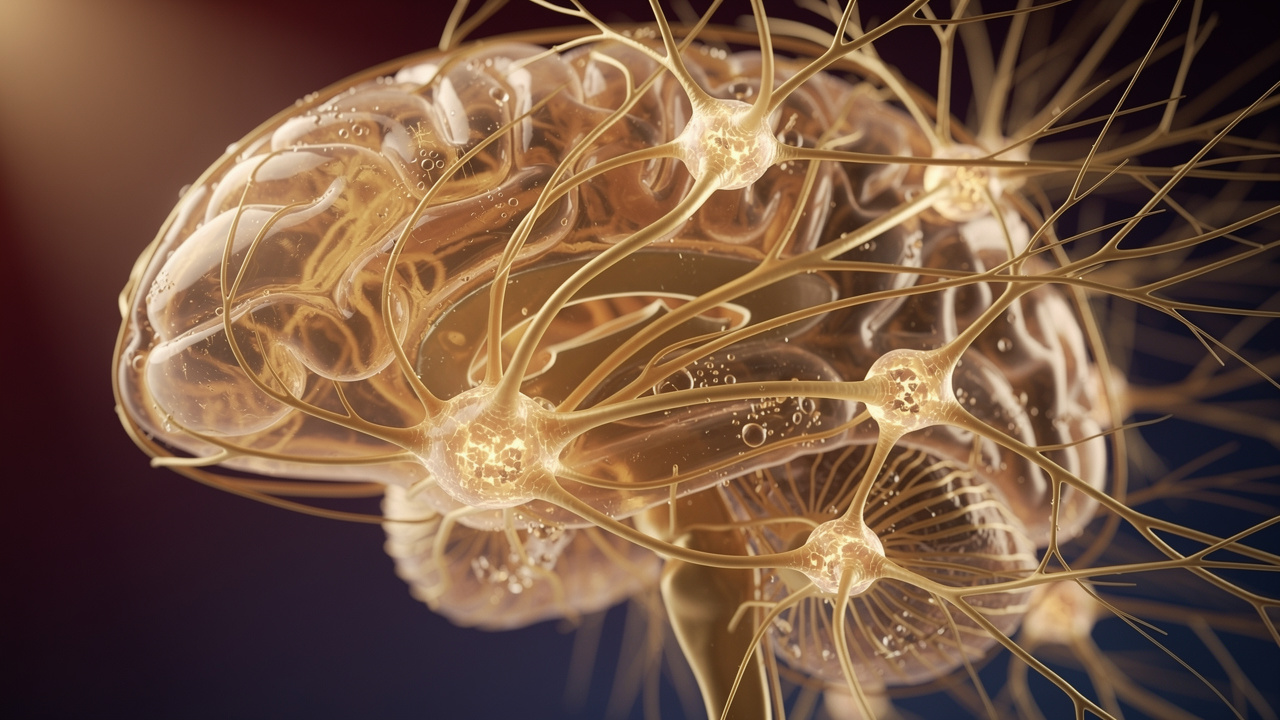
Serotonin, also called 5-hydroxytryptamine or 5‑HT, is a chemical messenger that helps brain cells talk to each other. One neuron releases serotonin into the tiny gap between cells, and the next neuron "listens" through special proteins called receptors. Once the message passes, serotonin is pulled back inside or broken down so the signal stops. This constant back and forth shapes mood, focus, pain, appetite, and of course the relationship between serotonin and sleep.
Most of the body’s serotonin actually lives in the gut, where it helps control movement and digestion. The serotonin that matters for sleep, though, is made separately inside the brain. It cannot cross the blood–brain barrier from the gut, so the brain must build its own supply from the amino acid tryptophan. This brain-based serotonin has a special role in emotional balance, alertness, and circadian timing.
One reason serotonin and sleep are so closely linked is receptor diversity. There are at least seven main receptor families, labeled 5‑HT1 through 5‑HT7, and many of those have subtypes. Some receptors quiet the cells they sit on, while others excite them. That means the same serotonin molecule can either calm a circuit or drive it harder, depending on which receptor subtype it reaches and where that receptor sits.
From an evolutionary view, it makes sense that one chemical would help manage both mood and the sleep–wake cycle. The brain needs a single, flexible system that ties emotional state, daylight exposure, and sleep pressure together. When that system works well, someone feels steady during the day and drifts through the night with solid cycles of deep and dream sleep. When it does not, serotonin and sleep often show up as mood swings, shallow rest, early morning waking, or daytime fatigue.
Later in this article we look at the "dual-mechanism" idea, where serotonin both prepares the brain for sleep during the day and participates in the switch that how sleep actually works. For now, it helps to remember that serotonin and sleep do not follow a simple on–off rule. They follow a network of timing, location, and receptor behavior.
The Dorsal Raphe Nucleus As Your Brain's Serotonin Command Center
Inside the brainstem sits a thin line of serotonin-producing cells called the raphe nuclei. Among them, the dorsal raphe nucleus (DRN) is the main source of serotonin for many higher brain regions. When people talk about serotonin and sleep, they are often talking about what this cluster of cells is doing across the day and night.
Neurons from the dorsal raphe nucleus send long fibers all over the brain. They reach:
-
The cerebral cortex, which handles thought and awareness
-
The thalamus, which relays sensory input
-
The hypothalamus, which tracks body rhythms and basic drives
-
The basal forebrain, which helps keep the cortex awake
-
The amygdala, which shapes fear and emotional tone
-
Brainstem areas that control REM sleep and general arousal
Because the dorsal raphe nucleus reaches so many key hubs at once, it can shift multiple parts of consciousness together. A change in DRN firing does not just nudge one circuit. It alters attention, emotional tone, and the timing of sleep all at the same time. This wide network is one reason serotonin and sleep feel so tightly tied to mood and stress.
Classic animal studies showed just how important this area is. When researchers damaged the raphe region in cats and drained serotonin from the forebrain, the animals developed severe, long-lasting insomnia. The more serotonin stores dropped, the worse the sleep. These findings gave a clear message: an intact dorsal raphe nucleus and steady serotonin output are basic requirements for healthy serotonin and sleep patterns.
The DRN works both as a broadcast tower that sends serotonin outward and as a control switch that receives signals about sleep need. Later we will see how this same cluster helps turn off its own wake-promoting activity, acting like a built-in sleep switch.
The Serotonin Paradox As Wake Promoter And Sleep Enabler
Serotonin and the sleep/wake cycle research shows that when scientists first recorded from serotonin neurons, they noticed a striking pattern. Cells in the dorsal raphe nucleus fired rapidly during waking, fired more slowly during non‑REM sleep, and went almost silent during REM sleep. That led many to think of serotonin and sleep in simple terms. Serotonin was labeled a wake chemical, and REM sleep was thought to happen only once serotonin quieted down.
Over time, that simple picture stopped fitting the data. On one hand, boosting serotonin activity in many parts of the brain keeps animals awake longer and cuts both deep sleep and REM sleep. On the other hand, blocking serotonin production completely does not give clean, lasting wakefulness. Instead, it gives broken patterns of light sleep, odd timing, and eventually, signs that the brain has trouble starting normal sleep at all.
To explain this, researchers proposed a dual-mechanism view of serotonin and sleep:
-
Daytime role. During the day, serotonin released from long axons acts across widespread target areas. This axonal release supports alertness, focus, and movement. At the same time, it triggers the building of sleep-promoting substances inside certain brain regions. These substances, sometimes called hypnogenic factors, slowly raise sleep pressure as waking hours pass.
-
Nighttime switch. As those hypnogenic substances build, they act back on the dorsal raphe nucleus itself. Inside the DRN, serotonin is released not from long axons, but from the dendrites of serotonin neurons. This local release hits special 5‑HT1A autoreceptors that sit on the same nervous system that made the serotonin. When those receptors turn on, they tell the cells to quiet down.
This auto‑inhibition is like a feedback switch. Dendritic serotonin helps silence the very network that kept the brain awake earlier. Once that happens, the strong wake‑promoting influence from the dorsal raphe nucleus lifts, and circuits that generate deep sleep and REM sleep can step forward. Nitric oxide, a gas made in the same cells, appears to work alongside serotonin in this shift.
The sleep quality of wakefulness shapes how this process feels. After a stressful or demanding day, one mix of hypnogenic peptides may rise. After a calmer, physically active day, another mix may appear. In both cases, serotonin and sleep are linked by how daytime experience is recorded in brain chemistry and later paid back at night.
Seen this way, serotonin and sleep are not enemies. Serotonin first supports wake, then helps store the memory of how taxing the day was, and finally helps flip the system into a state where real sleep can happen.
How Different Serotonin Receptors Shape Your Sleep Architecture
Not all serotonin signals look the same to the brain. The impact of serotonin and sleep depends heavily on which receptors are involved. Sleep architecture—how much time someone spends in light sleep, deep slow‑wave sleep, and REM sleep—is shaped by this receptor mix.
Broadly, non‑REM sleep includes lighter stages and deep slow‑wave sleep. REM sleep features rapid eye movements, vivid dreaming, and muscle paralysis. Serotonin interacts with these stages through several receptor families, with some acting as brakes and some as gas pedals.
A simple way to see this is with a summary table:
|
Receptor |
General Effect On Neuron |
Main Effect On Sleep |
|---|---|---|
|
5‑HT1A / 5‑HT1B |
Inhibitory |
Hold back REM; timing depends on location (autoreceptor vs. postsynaptic) |
|
5‑HT2A / 5‑HT2C |
Excitatory |
Compete with deep slow‑wave sleep; blocking can improve deep sleep |
|
5‑HT3 |
Fast excitatory channel |
Tends to reduce REM sleep |
|
5‑HT6 / 5‑HT7 |
Excitatory via second messengers |
Support wakefulness; 5‑HT7 loss reduces REM |
5-HT1A And 5-HT1B Receptors As REM Suppressors
The 5‑HT1A and 5‑HT1B receptors tend to quiet the neurons that carry them. When serotonin binds to these receptors, it makes the cell membrane more negative, so the cell is less likely to fire. In the context of serotonin and sleep, that usually means holding back parts of the REM‑generating system.
Animal studies give a clear clue. When mice are bred without 5‑HT1A or 5‑HT1B receptors, they spend much more time in REM sleep than normal mice. That suggests that in a healthy brain, activation of these receptors helps keep REM sleep under control, especially in brainstem regions that normally turn REM on.
The story gets more interesting with drugs. When a strong 5‑HT1A agonist is given through the whole body, wake time rises and both slow‑wave sleep and REM sleep fall. Yet when a similar agonist is placed directly into the dorsal raphe nucleus, REM sleep can increase. That happens because 5‑HT1A also acts as an autoreceptor on serotonin cells in the DRN. When it turns on there, it quiets those wake‑promoting neurons, which can free up the REM generators downstream.
This mix of local and widespread actions shows how subtle serotonin and sleep signaling can be. The same receptor can either reduce or permit REM, depending on where in the network it is active.
5-HT2A And 5-HT2C Receptors As Deep Sleep Gatekeepers
The 5‑HT2 family, especially 5‑HT2A and 5‑HT2C, tends to excite the neurons that carry these receptors. Their activation sets off internal chemical cascades that make cells more likely to fire. In many circuits, that means more arousal and more competition with deep sleep.
Mice that lack 5‑HT2A or 5‑HT2C receptors show a telling pattern. They are awake more and spend less time in slow‑wave sleep. At first this seems odd, because removing a wake‑promoting receptor might be expected to lower wake time. But the brain often adapts by raising other arousing systems, such as those using norepinephrine and dopamine, which can keep someone alert but at a cost to deep rest.
The most important finding for real life, though, is what happens when 5‑HT2A receptors are blocked. Drugs that block these receptors tend to increase the amount and quality of slow‑wave sleep, both in animals and humans. In other words, the same receptor that often links serotonin and sleep disruption becomes a target for improving deep sleep when turned off.
This has led to the development and testing of several compounds that focus on 5‑HT2A. Unlike classic sleeping pills that mainly sedate, these agents tend to raise the depth of sleep. Because faulty 5‑HT2A signaling is also linked with depression and suicidal thoughts, this receptor sits at the center of both mood and sleep regulation.
Other Receptor Subtypes
Other serotonin receptors also take part in the dance between serotonin and sleep:
-
The 5‑HT3 receptor is different from most others because it forms a channel that opens when serotonin binds. When active, it allows positive ions into the cell and rapidly excites it. Drugs that turn on 5‑HT3 tend to reduce REM sleep.
-
The 5‑HT6 and 5‑HT7 receptors also excite their host cells through internal signaling pathways. When 5‑HT7 is missing in animals, REM sleep time drops, and drugs that turn this receptor on can reduce REM and increase wakefulness.
Taken together, most receptor activations line up with a wake‑promoting role for serotonin and a tendency to hold back REM. This receptor‑level view helps explain why serotonin and sleep problems often show up together. It also shows why targeted receptor modulation, not just "more or less serotonin," is the real key for better rest.
Serotonin's Impact On Sleep Quality With Deep Sleep, REM, And Circadian Timing
Sleep quality is more than hours in bed. It depends on how smoothly someone cycles through deep slow‑wave sleep, lighter stages, and REM. The way serotonin and sleep interact has a large effect on this pattern, and on how refreshed a person feels in the morning.
"Sleep is the golden chain that ties health and our bodies together." – Thomas Dekker
Common signs that serotonin‑related sleep quality is off include:
-
Waking up often during the night
-
Feeling wired but tired at bedtime
-
Rarely remembering dreams, or having only shallow, anxious ones
-
Getting "enough" hours but still feeling drained
Before breaking things down by stage, it helps to notice a theme: serotonin activity usually needs to fall from its daytime levels for the deepest parts of sleep to appear. Where and how it falls shapes slow‑wave sleep, REM sleep, and the timing of the whole night.
Effects On Slow-Wave Sleep
Slow‑wave sleep (SWS) is the deep sleep for optimal brain health, marked by large, slow brain waves and very relaxed muscles. This stage is linked with physical recovery, immune function, and the feeling of real rest. In many people with insomnia, the total night is not dramatically shorter, but slow‑wave sleep is shallow or brief.
Here, the 5‑HT2A receptor plays a central role. When this receptor is active, it tends to suppress the depth and length of slow‑wave sleep. Blocking it removes that pressure and often allows more deep sleep to form. In studies, people given 5‑HT2A blockers spend more time in slow‑wave sleep without needing higher total sleep time.
This stands in sharp contrast to common sleeping pills such as benzodiazepines and many "Z‑drugs." Those drugs often help people fall asleep faster, but they typically reduce slow‑wave sleep further. The result can be more hours of sleep recorded, but less true restoration. By seeing how serotonin and sleep depth interact through 5‑HT2A, it becomes clearer why some people wake feeling unrefreshed even when they technically "slept enough."
Effects On REM Sleep
REM sleep is the stage where most vivid dreaming occurs, and the body’s larger muscles are turned off. It is linked with certain types of memory, emotional processing, and creative problem solving. Serotonin and sleep research shows that serotonin has a strongly blocking effect on this stage.
Serotonin neurons in the dorsal raphe nucleus fire least during REM, often going almost completely silent. That silence seems to be a requirement for REM to appear. When most serotonin receptors are activated, including 5‑HT1B, 5‑HT2A and 5‑HT2C, 5‑HT3, and 5‑HT7, REM sleep is shortened or pushed back.
Medications that raise serotonin broadly, such as many antidepressants, can cut REM time by a large amount. Scientists are still sorting out what this means long term. Some REM suppression may help people with severe nightmares or PTSD, yet long‑standing loss of REM could carry its own risks. Once again, the finer details of serotonin and sleep matter more than a simple "more is better" view.
Circadian Rhythm Regulation
Beyond individual sleep stages, serotonin helps set the circadian rhythm for when sleep tends to start and end. The brain’s main clock sits in the suprachiasmatic nucleus (SCN) in the hypothalamus. Light input from the eyes and serotonin signals together help this clock line up with the outside day and night.
When serotonin levels in the brain are deeply disturbed, timing falls apart. In mouse studies where serotonin was largely depleted, total sleep time over a day did not change much. What changed was the pattern. Sleep became fragmented, with frequent brief awakenings during the main rest period. For a human, that would feel like tossing and turning, waking up again and again, and never quite reaching steady, deep rest.
People in that situation might spend eight hours in bed but still wake tired. Their issue is not only sleep quantity, but poor consolidation. Healthy serotonin and sleep signals help the SCN and related circuits hold a stable pattern, so sleep clusters into a solid block and daytime alertness returns.
The Connection Between Serotonin, Sleep Disorders, And Depression
Sleep problems and depression show up together so often that they are part of how doctors diagnose sleep and mental health. Up to nine out of ten people with major depression report trouble with sleep. Sometimes depression seems to start after months of poor rest. Other times, low mood appears first and sleep soon follows. To understand this tangle, serotonin and sleep biology give a deeper clue.
Psychological explanations do matter. Stress from not sleeping well can wear down resilience. Dark thoughts and worry can make it harder to fall asleep or stay asleep. Yet these stories do not fully explain why the two problems are so tightly woven together across many people and families.
Genetic Evidence For Shared Pathways
An exploratory study on the genetic links between sleep and mood disorders offers one way to separate shared environment from shared biology. In large samples, about 58 percent of the overlap between depression and sleep disorders appears linked to shared genes. That implies a common biological base for many people, not just a chain where one problem causes the other.
Specific gene findings point straight at serotonin and sleep regulation. Variations in the gene that codes for the 5‑HT2A receptor have been tied to depression, especially when suicidal thoughts are present. The same receptor helps determine how much deep slow‑wave sleep someone gets. If that receptor does not respond to serotonin properly, both mood control and sleep architecture can be disturbed by a single flaw.
From this view, depression and insomnia are not always separate enemies. Often they are two faces of one serotonin system that is out of balance.
The Negative Feedback Loop
Once serotonin and sleep patterns start to falter together, a harsh feedback loop can form:
-
Low or poorly timed sleep for happier healthier mood leads to shallow, fragmented sleep.
-
That kind of sleep raises stress hormones such as cortisol and makes emotional control harder the next day. The person feels more depressed or anxious.
-
Increased anxiety and depression then lead to more rumination at night. Thoughts race, and the brain does not settle.
-
This disrupts serotonin rhythms further, because serotonin neurons never fully complete the cycle from daytime activity to nighttime quiet.
The result is even less restorative sleep and deeper mood problems. Trying to patch only one side often fails. A sedative can knock someone out for a while but will not fix the mood circuits. An antidepressant that raises serotonin may settle mood yet disturb sleep architecture. Without attention to the whole loop, serotonin and sleep problems may continue to feed off each other.
Implications For Treatment Approach
This shared biology suggests a different strategy. Instead of treating mood and sleep as unrelated, it makes sense to support the serotonin network in a way that benefits both. That means aiming at receptor behavior, timing, and natural production, not just broad increases in serotonin.
This is where the philosophy behind SLP1 Protocol fits in. By focusing on precursors like 5‑HTP, co‑factors like vitamin B6, and compounds that support a healthy 5‑HT2A balance, the goal is to support serotonin and sleep together. The intent is not to sedate, but to give the brain raw materials and steady signals so it can regain its own rhythm.
For many people, simply knowing that their mood and sleep issues may share a biological base is calming. It means they are not failing twice. They are dealing with one system that needs thoughtful support.
Pharmacological Approaches For Targeting Serotonin Receptors And Better Sleep
Modern sleep medicine often uses drugs that touch serotonin pathways. The results can be helpful or frustrating, depending on how broadly or narrowly those drugs act. Understanding how they interact with serotonin and sleep makes it easier to see both benefits and limits.
SSRIs As A Double-Edged Sword
Selective Serotonin Reuptake Inhibitors (SSRIs) are common treatments for depression and anxiety. They work by blocking the transporter that normally pulls serotonin back into the sending neuron. This leaves more serotonin in the gap between cells and raises signaling through many receptor types at once.
For mood, this can be life changing. For sleep, it is more complicated. Use of Selective Serotonin Reuptake Inhibitors (SSRIs) in clinical practice shows that many people starting these medications notice trouble falling asleep, lighter sleep, or frequent awakenings. These effects often come from extra activation of wake‑promoting receptors such as 5‑HT2A and 5‑HT2C. Most SSRIs also cut REM sleep time, sometimes by half.
Over weeks or months, some people adapt and sleep settles into a new pattern. Others continue to feel that serotonin and sleep are out of sync, with better mood but worse rest. Clinicians may shift dose timing, add another sleep‑supporting drug, or switch to a medicine with a different receptor profile. The balance between emotional relief and sleep quality can be hard to find.
5-HT2A Receptor Antagonists As A Targeted Option
A more targeted way to work with serotonin and sleep is to block specific receptors that interfere with deep sleep. As noted earlier, 5‑HT2A tends to suppress slow‑wave sleep when active. Drugs that block 5‑HT2A lift that pressure and often increase the time spent in deep sleep.
In trials, compounds that strongly block 5‑HT2A, and sometimes 5‑HT2C as well, have raised slow‑wave sleep in both healthy sleepers and people with chronic insomnia. Unlike many sedatives, they can do this without heavy next‑day grogginess or large drops in REM. Some antidepressants with strong 5‑HT2A blocking actions, such as low‑dose trazodone, are often used off‑label for insomnia for this reason.
Compared with benzodiazepines and common Z‑drugs, which may help people fall asleep but tend to reduce deep sleep, 5‑HT2A blockers aim at improving the structure of sleep itself. They are not free of side effects, and not everyone responds, but they represent a shift toward more precise control of serotonin and sleep.
The Natural Alternative Perspective
At the same time, not everyone wants or needs a prescription to work on serotonin and sleep. For many, the better first step is to support the body’s own serotonin production and receptor balance. This means making sure there is enough tryptophan, enough vitamin B6, and in some cases adding 5‑HTP to increase serotonin during the day so it can flow into melatonin at night.
This is the lane where SLP1 chooses to work. Instead of forcing a single receptor on or off with a drug, SLP1 uses ingredients like 5‑HTP, magnesium glycinate, glycine, vitamin B6, apigenin, reishi, and tart cherry in carefully designed combinations. The aim is to support the natural dance between serotonin and sleep, not overwrite it. For some, this kind of support pairs well with medical treatment; for others, it may be enough on its own.
As always, anyone taking prescription antidepressants or other serotonin‑active drugs should work with a healthcare professional before adding serotonin‑related supplements.
Building Healthy Serotonin With Tryptophan, 5-HTP, And Nutrition
The brain cannot make serotonin from nothing. It needs building blocks and helpers that mostly come from food. Understanding this pathway makes the link between everyday choices and serotonin and sleep very direct.
Before talking about supplements, it helps to see how the body turns food into serotonin, and where that process can get stuck.
The Serotonin Synthesis Pathway
Serotonin is made in two main steps:
-
The enzyme tryptophan hydroxylase converts the amino acid tryptophan into 5‑hydroxytryptophan (5‑HTP). This step is the slow gate of the process and often limits how much serotonin can be produced.
-
A second enzyme quickly converts 5‑HTP into serotonin. This step depends on vitamin B6 in its active form.
If someone is low in tryptophan, or if vitamin B6 is lacking, serotonin production slows down. Over time, that can show up as changes in mood, pain sensitivity, and the pattern of serotonin and sleep. Supporting the full pathway means thinking not only about serotonin itself, but also about the earlier steps and co‑factors.
Dietary Tryptophan Sources And Challenges
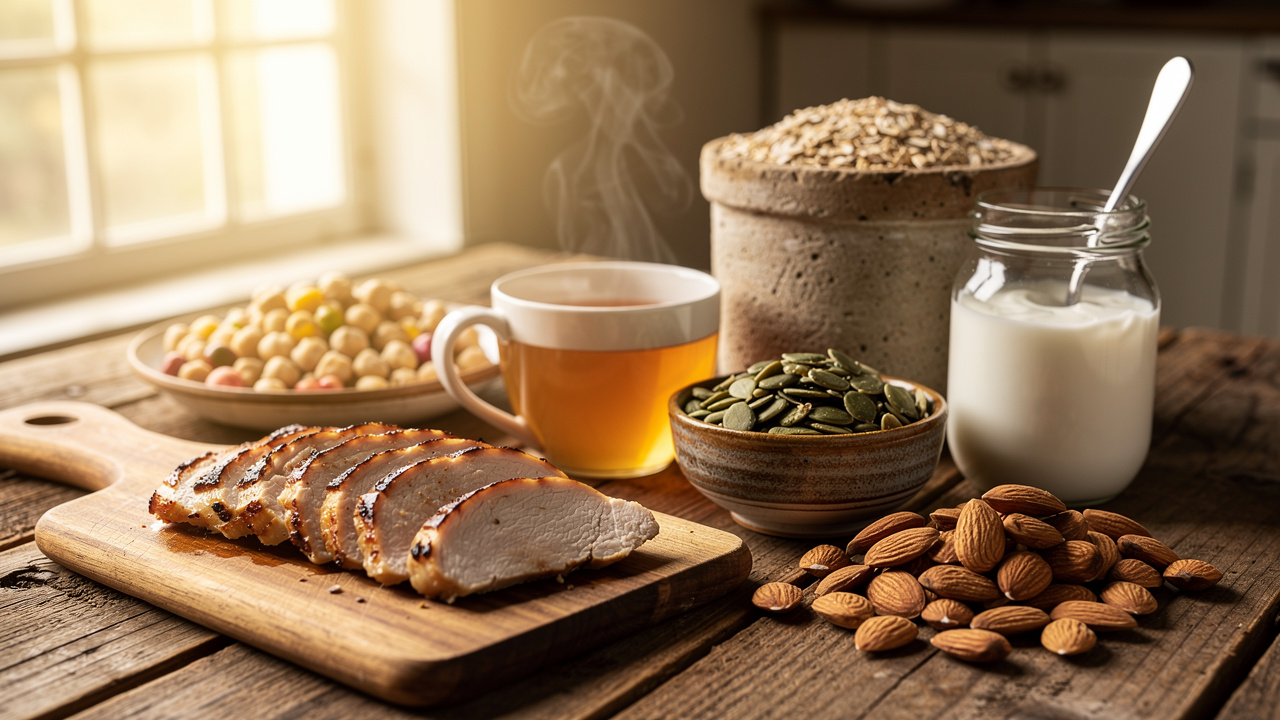
Tryptophan is found in many protein foods, including:
-
Turkey and chicken
-
Milk, yogurt, and cheese
-
Nuts and seeds (pumpkin seeds, almonds, sunflower seeds)
-
Beans, chickpeas, and lentils
-
Oats and other whole grains
On paper, a balanced diet supplies plenty of this amino acid.
The twist is that tryptophan has to cross the blood–brain barrier to be used for brain serotonin and sleep, and it must ride the same transporters as several other amino acids. After a large high‑protein meal, there is a surge of competing amino acids in the blood. That can make it harder, not easier, for tryptophan to reach the brain.
Carbohydrates help change this balance. When someone eats carbs, insulin moves many amino acids into muscle, but it leaves tryptophan levels in the blood relatively higher. This shift gives tryptophan a better chance of entering the brain. This is one reason a small carb‑containing snack in the evening can sometimes make people feel calmer or sleepier. It nudges serotonin and sleep chemistry, not just blood sugar.
Even so, diet alone may not correct low serotonin in people with long‑standing sleep or mood issues. That is where more direct support such as 5‑HTP can make sense.
5-HTP Supplementation And Bypassing The Bottleneck
5‑HTP sits one step closer to serotonin than tryptophan. When someone takes 5‑HTP, they bypass the rate‑limiting enzyme at the start of the pathway. 5‑HTP also crosses the blood–brain barrier more easily, without as much competition from other amino acids. Inside the brain, it converts to serotonin with the help of vitamin B6.
By taking 5-HTP for better sleep during the day, people can build up a steady serotonin pool. Later in the evening, as light falls and the brain’s clock says it is time, some of that serotonin converts into melatonin. This supports the natural rhythm of serotonin and sleep, instead of forcing melatonin from the outside on a fixed schedule.
SLP1 uses this synergistic sleep formulas directly. Its formulas include 5‑HTP, magnesium for better sleep to calm the nervous system, and vitamin B6 to support the conversion steps. glycine for sleep, apigenin enhances sleep quality, reishi mushroom sleep quality, and tart cherry sleep benefits are added to support other parts of sleep, such as body temperature control, stress response, and the serotonin–melatonin link. SLP1 also focuses on bioavailable forms and research-based doses, then backs them with third‑party testing, so people know what they are actually taking.
As with any serotonin‑related supplement, it is wise to talk with a healthcare provider first, especially for anyone already taking SSRIs or other drugs that affect serotonin. Used thoughtfully, though, nutritional support can be a powerful way to improve serotonin and sleep over the long term.
Tip: Pair daytime 5‑HTP or tryptophan intake with exposure to natural morning light and consistent bedtimes to give your brain both the chemicals and the timing cues it needs.
The SLP1 Approach For Supporting Natural Serotonin Pathways For Restorative Sleep

Many sleep products promise quick results by forcing sedation. SLP1 takes a different path. The aim is to support the body’s own architecture of serotonin and sleep, so the brain can run the full cycle of falling asleep, sinking into deep stages, and staying asleep without constant jolts awake.
Instead of using white‑labeled blends or trendy extras, SLP1 designs its own formulas around clear mechanisms. Ingredients are chosen to work together and to be suitable for steady, long‑term use. Advanced delivery and gentle forms, such as magnesium glycinate rather than cheaper salts, are used so that the nutrients reach where they need to go. Third‑party testing backs up label claims and screens for contaminants.
The Three-Phase Protocol
The core SLP1 system is a three‑part protocol:
-
Get To Sleep focuses on the early part of the night, combining 5‑HTP to support daytime serotonin with magnesium glycinate to quiet the nervous system and help the body shift into a rest‑and‑digest state. This targets the first bridge between serotonin and sleep, which is the transition from busy thinking to a state where sleep is possible.
-
Deeper Sleep adds ingredients such as apigenin from chamomile, which binds to calming receptors in the brain. This supports the formation of slow‑wave sleep without pushing total sleep time to extremes.
-
Stay Sleep brings in glycine to lower core body temperature, reishi mushroom to ease stress reactivity, and tart cherry, which research links to better serotonin–melatonin pathways and longer sleep duration.
Together, these phases are meant to support falling asleep, reaching deep sleep, and maintaining sleep, instead of focusing on only one point in the night.
The Synergistic Formulation Strategy
SLP1 does not sprinkle tiny amounts of many ingredients just for label appeal. Each component is there for a defined role in the system of serotonin and sleep:
-
5‑HTP and vitamin B6 support serotonin synthesis.
-
Magnesium glycinate and glycine calm excitatory circuits.
-
Apigenin and reishi nudge the brain toward deeper stages and less stress‑driven wakefulness.
-
Tart cherry supports the shift from serotonin into melatonin.
Bioavailability sits at the center of this strategy. Magnesium glycinate, for example, is absorbed better and is gentler on digestion than magnesium oxide, which is cheaper but much less usable. All ingredients are used at clinically meaningful doses drawn from research, rather than token amounts. The formulas avoid common allergens and do not add artificial colors or flavors, aligning with the expectations of careful, health‑focused consumers.
Long-Term Wellness Vs. Quick Fixes
Working with serotonin and sleep through natural pathways is not a magic switch. It takes consistency and time. As the serotonin system stabilizes and sleep architecture slowly improves, benefits tend to build from night to night. People often report not just sleeping, but waking clear and steady.
By contrast, heavy sedatives can lead to tolerance and dependence. Over time, they may weaken the brain’s own sleep circuits. SLP1’s approach is to avoid that trap by helping the body remember how to sleep on its own. For someone who values long‑term performance and health, this often fits better than chasing one more high‑dose pill at bedtime.
Conclusion
Serotonin and sleep are woven together in a way that is far richer than a simple on‑off story. Serotonin supports alertness during the day, helps record how demanding those hours were, and later participates in the very switch that allows deep and REM sleep to unfold. Its many receptor types explain why the same molecule can either block or permit different sleep stages.
At the heart of this system sits the dorsal raphe nucleus, acting as both a broadcaster to the rest of the brain and a sleep switch that can silence its own wake‑promoting signals. When this network runs well, mood, circadian timing, and sleep architecture line up. When it falters, problems such as depression, shallow sleep, and fragmented nights often appear together.
Modern science of sleep shows that the best results do not come from simply pushing serotonin higher everywhere. They come from understanding how receptors like 5‑HT2A affect deep sleep, how serotonin depletion fragments rest, and how targeted support can guide the system back into balance. Precision drugs that block 5‑HT2A and natural strategies that support serotonin synthesis both grow from this deeper map.
For someone serious about long‑term rest, this knowledge is not just theory. It points toward a path that favors steady serotonin production, clean nutrition, thoughtful supplementation, and respect for the body’s own clock. SLP1 was built around that idea, offering science‑based, transparent formulations that work with biology rather than against it. When serotonin and sleep are supported in this way, better nights and clearer days stop feeling like accidents and start feeling like the new normal.
FAQs
Can You Take Serotonin Supplements For Sleep?
Serotonin itself cannot be taken as a standard supplement to fix sleep, because it does not cross the blood–brain barrier when swallowed. Taking a serotonin pill would mostly affect the gut, not the brain circuits that control serotonin and sleep. What people can use instead are precursors such as L‑tryptophan and 5‑HTP, which the brain can convert into serotonin. These precursors help the body build its own supply in a more natural way.
Timing matters, because raising serotonin during the day lets it flow into melatonin production at night. Anyone already on antidepressants or other serotonin‑active drugs should talk with a clinician before adding such supplements.
Does Low Serotonin Cause Insomnia?
Low serotonin usually does not cause total sleeplessness where a person never dozes at all. Instead, low or poorly timed serotonin tends to disturb the pattern of serotonin and sleep, leading to shallow, broken rest. Studies in animals with low brain serotonin show that total daily sleep time may stay similar, yet sleep becomes fragmented, with many brief awakenings.
People with this pattern often say they got eight hours in bed but still feel drained in the morning. Their sleep lacked depth and continuity. The same serotonin imbalance that affects sleep quality can also show up as depression or anxiety, which then loops back and makes sleep even harder.
How Does Serotonin Affect REM Sleep?
Serotonin has a strong blocking effect on REM sleep. During REM, serotonin neurons in the dorsal raphe nucleus are almost silent, and this quiet state seems to be required for REM to appear. When serotonin receptors such as 5‑HT1A and 5‑HT1B, 5‑HT2A and 5‑HT2C, 5‑HT3, and 5‑HT7 are more active, they tend to shorten REM or push it later into the night.
Many SSRIs reduce REM sleep time in this way. Researchers are still working out how much REM suppression is safe or helpful in the long run. In some people with nightmares or PTSD, less REM can ease distress, but for general health, a balanced amount of REM is likely best.
What Is The Best Way To Increase Serotonin Naturally For Better Sleep?
A natural plan for better serotonin and sleep works on several fronts at once:
-
Nutrition with foods rich in tryptophan such as turkey, dairy, nuts, seeds, beans, and oats, paired with sensible carbohydrates so more tryptophan reaches the brain.
-
Morning light exposure to help the brain’s clock align serotonin and melatonin with the day–night cycle.
-
Regular movement, especially moderate exercise through the week, to improve serotonin production and receptor sensitivity.
-
Stress management, including simple breathing work or mindfulness, to protect serotonin stores from chronic stress damage.
-
Consistent sleep habits (similar bed and wake times, a wind‑down routine, and a dark, cool bedroom) to stabilize the system.
When diet and lifestyle are not enough, targeted best sleep supplements like 5‑HTP and vitamin B6, used in clean, well‑designed formulas such as those from SLP1, can give extra support without replacing the basics.
Why Do Antidepressants (SSRIs) Sometimes Make Sleep Worse?
SSRIs increase serotonin levels across many brain regions at once, which means they stimulate a wide range of receptors. Some of those receptors, especially 5‑HT2A and 5‑HT2C, promote wakefulness and can disturb the natural balance of serotonin and sleep. People starting SSRIs often notice trouble falling asleep, lighter sleep, or vivid dreams, because REM sleep is strongly suppressed.
Over time, some adjust and find a new steady state, while others continue to feel that their sleep quality has dropped even as mood improves. Clinicians may change the dose time, combine the SSRI with a sleep‑supporting medicine, or consider other drugs with gentler sleep effects.
For some individuals, working on serotonin production through precursors, nutrients, and approaches like the SLP1 protocol can offer a milder way to support mood and sleep together, although this should always be coordinated with medical advice.

Leave a comment
This site is protected by hCaptcha and the hCaptcha Privacy Policy and Terms of Service apply.