
Introduction
Most people track how many hours they sleep and stop there. Yet the real game changer is what happens during the deepest part of the night, when the hidden benefits of deep sleep quietly go to work. In that window, the brain rinses itself, the body repairs, and hormones reset in ways that lighter sleep simply cannot match.
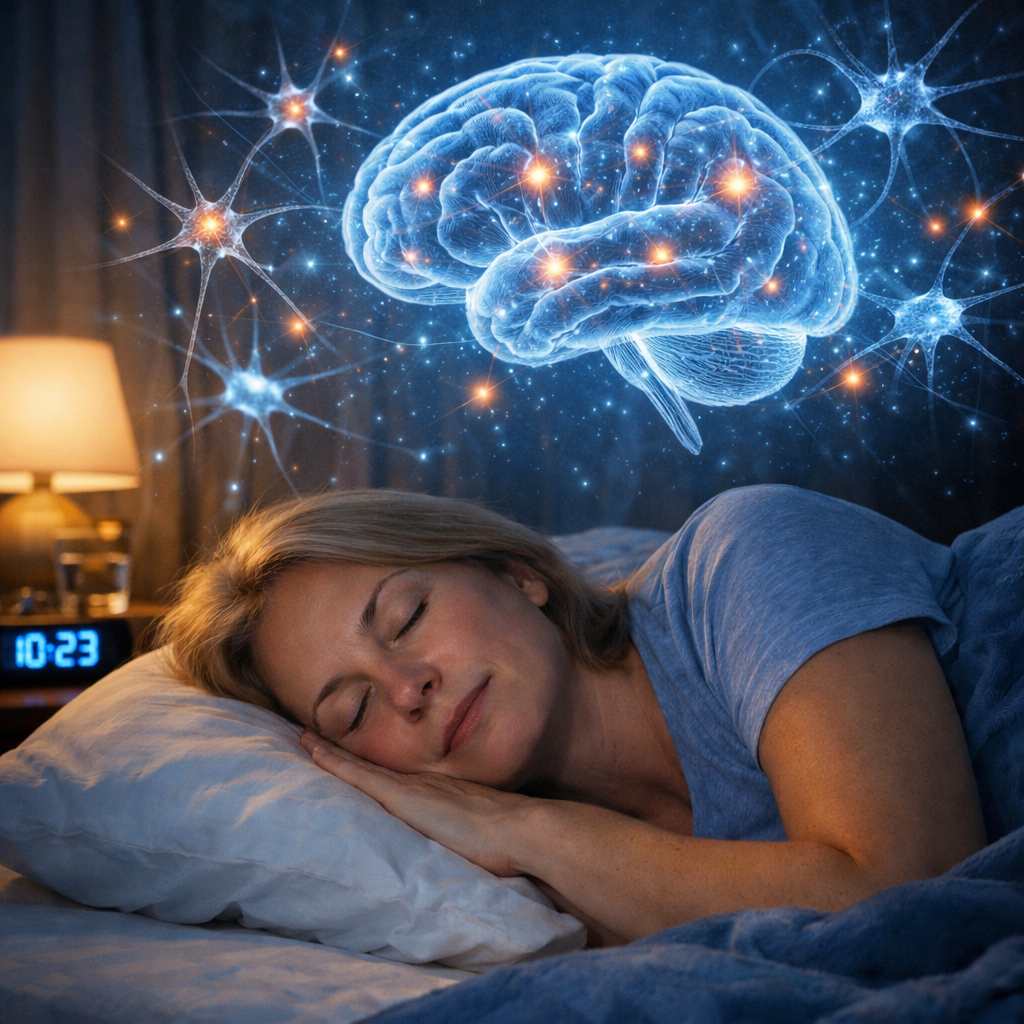
Deep sleep, also called Stage 3 or slow‑wave sleep, is the body’s main repair shift. This is when brain cells clear waste, growth hormone rises, muscles rebuild, and the immune system strengthens. When this stage is cut short, the benefits of deep sleep shrink, and the result often shows up as brain fog, stubborn fatigue, and slower recovery.
Many health‑minded adults do “everything right” on paper. They log seven or eight hours in bed, track sleep with a wearable, yet still wake up heavy and unrefreshed. That pattern often points to a problem with deep sleep, not sleep time in general.
This article breaks down what deep sleep actually is, the science‑backed benefits of deeper sleep across brain and body, what happens when you miss it, and how to support it naturally. It also explains how SLP1 Protocol’s science‑driven formulations fit in for those who want gentle, long‑term support instead of quick fixes. By the end, you’ll know how to create better conditions for deep sleep so your days feel clearer, calmer, and stronger.
Key Takeaways
-
Deep sleep (Stage 3 slow‑wave sleep) is the single most restorative phase of the night. During this stage, the benefits of deep sleep reach every system in the body, from brain health to muscle repair. No other sleep stage can fully replace what happens here.
-
The benefits of deep sleep include sharper thinking, faster learning, stronger immunity, better blood sugar control, and more stable mood and appetite. Adults usually spend about 13 to 23 percent of the night in deep sleep, and both time and quality matter.
-
Habits such as a regular sleep schedule, a dark cool bedroom, early daylight, and thoughtful use of natural supplements can raise the quality of deep sleep. SLP1 is designed to support the conditions for Stage 3 sleep so you can feel the compounding benefits of deep sleep over time.
What Is Deep Sleep and How Does It Fit Into Your Sleep Cycle?
Sleep runs in repeating cycles that last about ninety minutes. Each cycle moves through non‑rapid eye movement (NREM) sleep and rapid eye movement (REM) sleep, and this repeats four to six times per night. Deep sleep shows up inside NREM, mainly in the first half of the night, which is why going to bed on time matters so much for capturing the full benefits of deep sleep.
NREM has three stages:
-
Stage 1: The brain drifts from wake to light sleep as muscles relax and breathing slows.
-
Stage 2: Body temperature drops, heart rate slows further, and short bursts of brain activity called sleep spindles appear, which support memory.
-
Stage 3 (deep sleep): Also known as slow‑wave sleep, where physical and mental restoration reach their highest level.
During deep sleep, the body enters its calmest state of the night. Brain waves become slow and high in amplitude, muscles are fully relaxed, and it becomes hard to wake up. If you are pulled out of this stage by a noise or alarm, you often feel heavy and confused for a while. That groggy feeling is called sleep inertia and shows how deep this state really is.
Key physical features of deep sleep include:
-
Heart rate and breathing slow to their lowest level of the night. This gives the cardiovascular system a needed break and supports long‑term heart health. It also sets the stage for steadier energy the next day.
-
Blood pressure drops in a gentle, sustained way. This nightly dip acts like a reset for blood vessels and helps protect them from constant strain. People who miss this drop night after night may see higher risk markers over the years.
-
Muscles reach a state of full relaxation. That deep relaxation allows microscopic damage from training and daily movement to be repaired more efficiently. It also helps reduce tension that can build up in the neck, shoulders, and jaw.
-
Brain waves shift into slow delta patterns. These slow waves mark the point where the brain turns inward to focus on repair and memory processing. They are a key driver behind the long‑term benefits of deep sleep for learning and mental clarity.
“Sleep is the single most effective thing we can do to reset our brain and body health each day.” — Dr. Matthew Walker, neuroscientist and author of Why We Sleep
Deep sleep is not simply “sleeping harder” – it is the body shifting into a state of active biological maintenance that no other sleep stage can match.
The Science-Backed Benefits of Deep Sleep
Deep sleep is not a passive pause in life. It is a highly organized repair window where the brain clears waste, the body rebuilds, and hormones return to a healthier pattern. The most important benefits of deep sleep fall into three areas that work together every night.
Brain Detoxification and Cognitive Performance

During deep sleep, the brain’s cleaning system, called the glymphatic system, switches on powerfully. Cerebrospinal fluid pulses through brain tissue more rapidly, washing away waste that builds up during the day. This includes proteins such as beta‑amyloid and tau, which are linked to Alzheimer’s disease when they accumulate over time.
When deep sleep is steady, those waste products clear more effectively, and the brain can spend more energy on healthy signaling. That is one reason the benefits of deep sleep include clearer thinking, quicker recall, and better focus. People who routinely miss deep sleep often notice memory slips, lost words, and a general sense of mental “static.”
Deep sleep also supports memory consolidation. Through a process called active system consolidation, the brain quietly replays patterns from the day, moving information from short‑term storage in the hippocampus into longer‑term networks in the cortex. At the same time, through synaptic homeostasis, the brain trims weaker connections and keeps the ones that matter most.
Think of deep sleep as your brain’s nightly defragmentation, clearing clutter, filing what matters, and preparing you to think sharply tomorrow. When this process repeats night after night, the long‑range benefits of deep sleep can include better learning capacity, more stable mood, and a lower risk of age‑related cognitive decline.
Physical Restoration, Growth Hormone, and Muscle Recovery

While the brain is cleaning and filing, the rest of the body is busy rebuilding. During deep sleep, the pituitary gland releases a large share of the night’s human growth hormone. This hormone supports tissue repair, muscle growth, bone strength, and healthy body composition. Without this pulse, the physical benefits of deep sleep shrink dramatically.
At a cellular level:
-
More blood flow is directed to working muscles, delivering oxygen and nutrients needed to repair fibers stressed by exercise or daily strain.
-
Cells use this time to regenerate structures and restore their energy stores.
-
Connective tissues and bones receive signals that support their strength and resilience.
This is one reason hard training with poor deep sleep often leads to soreness that lingers and plateaus in performance.
Late‑night intense workouts and heavy meals can push back the onset of deep sleep. When that window gets shorter, there is less time for growth hormone release and full physical recovery. Over weeks and months, the lost benefits of deep sleep can show up as nagging injuries, weaker gains from the gym, and general fatigue that supplements alone cannot fix.
Deep sleep is not optional for physical performance — it is the recovery itself.
Immune System Fortification and Hormonal Balance
Deep sleep also acts as a nightly tune‑up for the immune and hormonal systems. During this stage, the body increases production of cytokines, the signaling proteins that help direct immune cells toward viruses, bacteria, and areas of inflammation. When deep sleep is steady, these messages fire more cleanly, and defenses stay stronger.
Chronic loss of deep sleep, on the other hand, is linked with higher rates of infections, slower wound healing, and more background inflammation. That pattern can slowly erode the benefits of deep sleep and push the body toward metabolic and cardiovascular problems over time.
Deep sleep also supports a healthier hormone rhythm:
-
It helps keep cortisol, the main stress hormone, from staying too high across the day.
-
It steadies leptin and ghrelin, which guide appetite and fullness, so late‑night cravings and overeating are less likely.
-
It supports insulin sensitivity, which makes it easier for cells to manage blood sugar.
When this balance breaks down, the risk of insulin resistance, type 2 diabetes, and weight gain rises.
The table below shows how steady deep sleep compares with long‑term deep sleep loss.
|
Adequate Deep Sleep |
Chronic Deep Sleep Loss |
|---|---|
|
Sharper focus, better memory, and more stable mood across the day |
Brain fog, forgetfulness, and higher risk of mood swings |
|
Stronger immune response and quicker recovery from illness or training |
More frequent colds, slower healing, and higher inflammation |
|
Healthier blood sugar, appetite control, and cardiovascular markers |
Higher risk of insulin resistance, weight gain, and heart disease |
Protecting the benefits of deep sleep in this way is one of the most straightforward paths to stronger overall health.
What Happens When You Don't Get Enough Deep Sleep?
Missing deep sleep rarely causes an immediate crash. Instead, the cost builds slowly, the way compound interest can, only in the wrong direction. Many people adjust to feeling a little foggy or tired and never connect it to a long‑term loss of the benefits of deep sleep.
Over time, though, the gaps start to show. Tasks that used to feel easy can take more effort. Workdays feel heavier, motivation to train drops, and minor stress feels bigger than it should. Inside the body, the loss of deep sleep is changing brain chemistry, immune signaling, and metabolism.
Short-Term Effects vs. Long-Term Health Risks
In the short term, even a few nights of poor deep sleep can have clear effects. People often feel groggy on waking, especially if pulled from deep sleep by an alarm. Focus and reaction time drop, memory feels slippery, and physical performance during the day can suffer. The immune system may also respond less strongly to new threats.
When this pattern repeats for months or years, the risks become more serious. The brain’s ability to clear beta‑amyloid and tau proteins drops, raising concern about later‑life cognitive decline. Ongoing loss of the benefits of deep sleep is linked to higher rates of high blood pressure, heart disease, stroke, obesity, and type 2 diabetes.
|
Short Term Effects |
Long Term Health Risks |
|---|---|
|
Morning grogginess, sleep inertia, and irritability |
Greater chance of Alzheimer’s disease and other forms of dementia |
|
Trouble focusing, reduced creativity, and weaker memory recall |
Higher risk of hypertension, cardiovascular disease, and stroke |
|
Lower training power and slower reaction time |
Increased likelihood of obesity and type 2 diabetes |
Deep sleep disruption is also tied to parasomnias, which are unusual behaviors during sleep. These include sleepwalking, night terrors, sleep eating, and bedwetting in some people. Knowing these risks is not meant to cause worry. Instead, it highlights how protecting the benefits of deep sleep is a direct investment in long‑term health.
How Much Deep Sleep Do You Actually Need?
Most healthy adults spend about 13 to 23 percent of the night in deep sleep. For someone who sleeps eight hours, that works out to a little over an hour to almost two hours. Within that range, what matters most is how consistently the body reaches this stage and how protected it is from disruption, because that is when the benefits of deep sleep unfold.
Age has a strong influence on deep sleep:
-
Younger adults (under ~30): Deep sleep can reach about two hours per night, which supports growth, strong recovery, and peak learning.
-
Middle age (roughly 30–65): Deep sleep time tends to fall slowly, so quality and regular habits become more important to maintain the benefits of deep sleep.
-
Older adults (65+): Deep sleep may shrink to around thirty minutes per night or less. This drop is a normal shift in sleep architecture and does not always signal a disorder. In this group, the focus often moves toward protecting the depth and continuity of whatever deep sleep is present.
There is no single perfect deep sleep number that fits everyone. A strong sign that deep sleep is on track is how you feel during the day:
-
You wake feeling reasonably clear, not wiped out.
-
You can focus without constant caffeine.
-
You recover from exercise at a normal pace.
Wearable devices can hint at patterns in deep sleep, but they are not fully precise. A clinical sleep study called polysomnography gives the clearest picture if deeper testing is needed.
How to Increase Deep Sleep Naturally: Proven Strategies

Deep sleep responds best to consistent patterns rather than one dramatic change. Supporting it means removing the habits that disturb it and adding cues that tell the body it is safe to drop into slow‑wave sleep. Those steady steps are what preserve the benefits of deep sleep over months and years.
Optimize Your Sleep Environment

The bedroom environment quietly shapes how quickly you reach deep sleep and how long you stay there. Small changes here can create a noticeable shift in how the night feels and how well the benefits of deep sleep show up the next day.
-
Darkness signals the brain that night has truly arrived. Blackout curtains, an eye mask, or covering bright status lights can reduce even small glows that confuse your body clock. Less light helps melatonin rise more smoothly so deep sleep starts on time.
-
Cool temperature makes it easier for core body temperature to drop, which is a natural trigger for sleep onset. Most people sleep best near sixty to sixty‑five degrees Fahrenheit. When the room is cooler, the body does not need to work as hard to reach the state that supports deep slow‑wave sleep.
-
Sound control helps protect the long stretches of continuous deep sleep that provide the strongest benefits. Earplugs, a fan, or a white or pink noise machine can soften sharp sounds that might otherwise pull you toward lighter sleep. Pink noise has even shown early promise in research for supporting slow‑wave patterns.
-
Physical comfort matters more than many people think. A sagging mattress or flat pillow can create low‑grade pain that keeps the body from fully relaxing. Updating pillows or adjusting mattress support can remove these small stressors so the nervous system feels safe enough for deeper rest.
-
Warm baths or sauna sessions before bed can act as a gentle signal that night is beginning. They warm the skin, and as the body cools afterward, that drop in temperature supports a smooth slide into sleep and a stronger early block of deep slow‑wave sleep.
Lifestyle Habits That Protect Deep Sleep
Daily habits send powerful messages to the brain about when to feel alert and when to let go. Protecting the benefits of deep sleep means lining these messages up with your natural rhythm instead of fighting against it.
-
Keep a consistent sleep schedule. Going to bed and waking up at roughly the same time, even on weekends, teaches the brain when to release melatonin and when to favor deep sleep. Over time, this makes it easier to fall asleep and stay asleep.
-
Get morning sunlight. Spending ten to twenty minutes outside soon after waking helps set a clear signal for wake time. This early cue helps build a stronger sleep drive for the coming night and supports deeper slow‑wave sleep.
-
Move your body most days. Even twenty to thirty minutes of walking, cycling, or strength work can increase slow‑wave sleep. It is best to avoid hard training in the last two or three hours before bed so the nervous system has time to settle.
-
Limit evening alcohol. Alcohol may make you feel sleepy, but it tends to disrupt deep and REM sleep later in the night. Cutting back, especially near bedtime, keeps the natural cycling of sleep stages closer to what the body needs for full recovery.
-
Watch your caffeine timing. Because caffeine can stay active in the body for many hours, afternoon coffee or energy drinks can reduce your ability to reach deep sleep. Stopping caffeine by early afternoon is a simple way to protect the benefits of deep sleep.
-
Create a wind‑down ritual. Thirty to sixty minutes of low‑stimulation activity, such as reading, light stretching, or slow breathing away from screens, gives the brain space to shift from alert mode to rest mode. That shift makes it easier to enter deep sleep more quickly once you are in bed.
“A regular sleep schedule and a relaxing bedtime routine are cornerstones of healthy sleep.” — American Academy of Sleep Medicine
How SLP1 Supports Deeper, More Restorative Sleep
Lifestyle changes are the foundation of healthy sleep. Still, many people face extra stress, late work hours, parenting demands, or recovery needs that can interfere with deep sleep even when habits are solid. In those cases, targeted, natural support can help the body access more of the benefits of deep sleep without heavy sedation.
SLP1 was built around that idea. Instead of a single strong pill, the SLP1 Protocol is a three‑part system that works with the body’s sleep architecture:
-
The Get to Sleep formula supports smooth sleep onset so you can fall asleep without a “knockout” effect.
-
The Deeper Sleep formula is focused on nervous system unwinding and Stage 3 slow‑wave sleep, the state that carries so many benefits of deep sleep for immune and physical recovery.
-
The Stay Sleep formula is designed to help maintain continuity through the night.
These formulas use ingredients chosen for both research support and synergy:
-
Magnesium glycinate, a highly absorbable form, supports muscle relaxation and calmer nerves.
-
L‑theanine and glycine help quiet mental chatter and support steady sleep cycles.
-
Apigenin has been studied for its role in mental relaxation and circadian rhythm support.
-
Reishi mushroom and botanical extracts such as valerian, lemon balm, and hops add gentle support for stress relief and sleep depth.
SLP1 also reflects growing research on brain energy and sleep. BHB mineral salts help support brain metabolism in a way that can promote deeper, more restorative sleep without making you feel sedated. For those who struggle with waking in the middle of the night, the Natural Magnesium Sleep Powder offers extra support for staying asleep and preserving the later‑night benefits of deep sleep.
For people who mainly struggle to fall asleep, the SLP1 Melatonin Spray provides a clean, fast‑acting way to nudge the brain toward sleep onset. Because it works quickly, it can be especially helpful for parents or shift workers who need to fall back asleep during short windows.
Across the line, SLP1 centers clean, transparent formulation. Products are made with bioavailable forms, clinically thoughtful dosing, and third‑party testing, without artificial colors or unnecessary fillers. The goal is not to force you into unconsciousness, but to support your biology so natural deep sleep can return and build night after night.
Conclusion
Deep sleep is not a luxury or an add‑on. It is the core period when the brain clears waste, the body repairs, and hormones reset in ways that shape how every day feels. When the benefits of deep sleep are protected, thinking becomes clearer, training pays off more, and the immune system and metabolism are better prepared for stress.
The good news is that deep sleep responds to steady, realistic steps. A cool dark bedroom, a regular sleep schedule, morning light, and a simple wind‑down routine form a strong base. From there, natural, science‑backed support such as the SLP1 Protocol can help fill in the gaps when life is demanding, without blunt sedation or morning haze.
You do not have to chase perfect nights to see progress. Small improvements, repeated, allow the benefits of deep sleep to compound over weeks and months. Deep sleep is not something you chase – it is something you create the conditions for, night after night.
If you are ready to give your brain and body a better foundation, consider exploring how SLP1’s approach can fit into your evening rhythm and support the deeper, more restorative sleep you have been missing.
FAQs
What are the main benefits of deep sleep?
The main benefits of deep sleep touch both brain and body. During this stage, the glymphatic system clears waste, memories consolidate, and growth hormone supports muscle and tissue repair. Immunity strengthens, appetite and blood sugar stay more stable, and mood tends to be steadier. Over time, the benefits of deep sleep support clearer thinking, healthier recovery, and better long‑term health.
How do I know if I'm getting enough deep sleep?
A strong sign is how you feel during the day. Waking up feeling rested, mentally sharp, and physically ready to move suggests that you are getting enough deep sleep for your needs. Wearable trackers can show patterns, though their staging data is not perfect. Ongoing morning grogginess, brain fog, or heavy fatigue often signals that the benefits of deep sleep are being cut short.
What foods or supplements support deep sleep?
Nutrients such as magnesium (especially magnesium glycinate), glycine, L‑theanine, and melatonin have supportive research for sleep quality and depth. A light evening meal with some protein and avoiding heavy, late dinners can also help. SLP1’s Deeper Sleep formula and Natural Magnesium Sleep Powder are designed to combine these kinds of ingredients in clean, synergistic ways that focus specifically on Stage 3 sleep and the benefits of deep sleep.
Can you catch up on lost deep sleep?
After a period of short sleep, the body often responds by spending a little more time in deep sleep, which is called rebound. This can restore some of the lost benefits of deep sleep, but it does not fully erase a long‑term pattern of poor sleep. The most reliable approach is to protect deep sleep regularly rather than relying on catch‑up weekends.
Does aging mean you'll always get less deep sleep?
Deep sleep usually declines with age, especially after about sixty‑five, and that shift is a normal part of sleep biology. Even so, the depth and quality of the deep sleep that remains still matter. By keeping a steady routine, tending to the sleep environment, and using natural support such as the SLP1 Protocol when needed, older adults can preserve more of the benefits of deep sleep and feel better during the day.


Leave a comment
This site is protected by hCaptcha and the hCaptcha Privacy Policy and Terms of Service apply.