Introduction
A perfect night of sleep rarely happens by accident. For many high performers, bedtime feels like trying to tune an old radio with constant static. The body asks for rest, yet stress, late‑night screens, and irregular hours keep pulling that dial off station. The usual advice to “just get eight hours” does not help much when the brain refuses to slow down or sleep dissolves at 2 a.m.
Sleep is not an on–off switch. It is a how sleep actually works that moves through light sleep, deep slow‑wave sleep, and REM. When that rhythm holds, people wake clear, steady, and able to handle real life. When it breaks, even a full night in bed can leave someone foggy, sore, and short‑tempered. That gap between time in bed and true rest is what drives many people toward pills and stronger sedatives.
Standard sleep drugs and many heavy over‑the‑counter products push the nervous system into a kind of forced unconsciousness. They may stop night wakings, but they often flatten normal sleep stages and leave a thick haze the next morning. People start to depend on them yet still do not feel restored.
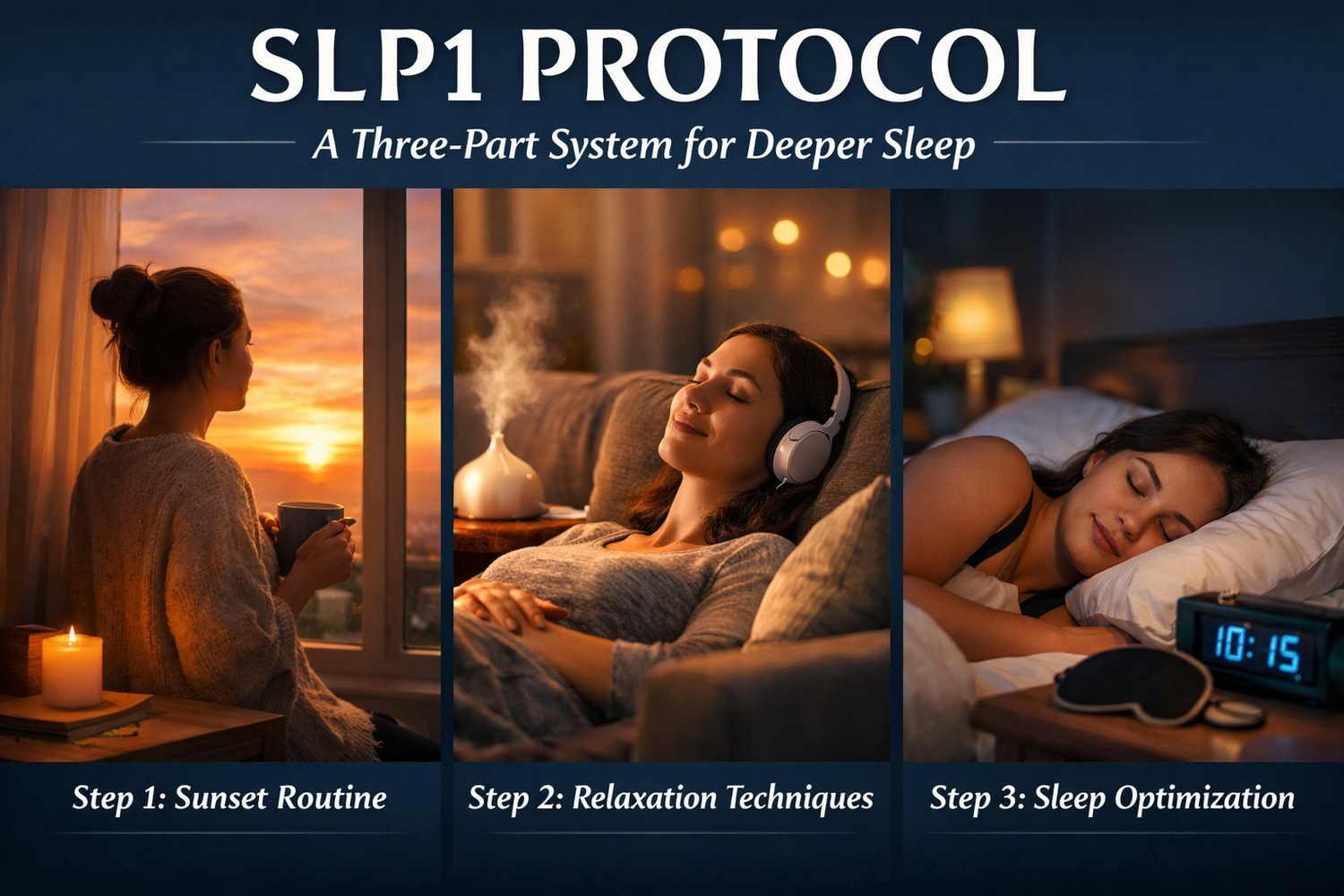
The SLP1 Protocol takes a different approach. It is a three‑part, science‑driven system built to work with natural sleep architecture instead of against it. One part focuses on falling asleep, another on deep stages, and a third on staying asleep through the night. Clean, tested ingredients — including a melatonin nasal spray and a magnesium‑based sleep powder — are paired with delivery methods that aim for quick onset and steady support.
Over the next sections you will see how the SLP1 Protocol works, what each component does in the brain and body, how real users describe their nights, and how this method compares with common drugs and standard supplements. The goal is straightforward: help you treat sleep as a biological rhythm you can support rather than a problem you need to crush.
Key Takeaways
-
The SLP1 Protocol is a three‑part sleep system that targets falling asleep, depth of sleep, and continuity across the night instead of acting as a single knockout pill.
-
Rather than sedating the nervous system, the protocol supports natural sleep architecture so cycles of light sleep, deep sleep, and REM stay intact and people wake without heavy fog.
-
Key mechanisms include support for GABA, serotonin, and melatonin pathways through ingredients such as magnesium, 5‑HTP, L‑theanine, glycine, and low‑dose melatonin delivered by nasal spray.
-
Real‑life feedback points to faster sleep onset, fewer night wakings, and better next‑day clarity, especially when the protocol is paired with basic sleep‑hygiene habits.
What Is the SLP1 Protocol? Understanding the Three-Part Sleep System
The SLP1 Protocol is a structured sleep‑support system designed to cover the entire night, not just the moment you drift off. Instead of asking one pill to do everything, SLP1 uses three coordinated formulas that echo how sleep naturally unfolds: winding down, dropping into deeper stages, and holding those stages long enough for repair.
Many conventional aids rely on broad central nervous system depression. From the outside a person looks asleep, yet normal sleep stages are shortened or rearranged, which is why people can log eight hours and still feel exhausted. The SLP1 Protocol aims instead to support three linked needs: falling asleep on cue, moving into deep sleep, and staying asleep until a natural wake time.
To do that, SLP1 uses:
-
Get To Sleep – fast, gentle signaling that it is time to fall asleep, centered around a precise melatonin nasal spray.
-
Deeper Sleep – a magnesium‑based powder with amino acids that calm the nervous system and support slow‑wave sleep.
-
Stay Sleep – nutrients that keep the nervous system less reactive overnight so brief disturbances are less likely to snap you awake.
Because these formulas are created together by SLP1, ingredient choices and doses are designed for synergy rather than fads. The protocol is meant for steady nightly use, with an emphasis on restoring rhythm over quick fixes that fade.
The Philosophy Behind the Protocol Why Rhythm Matters More Than Sedation
Deep inside the brain, a cluster of neurons called the suprachiasmatic nucleus (SCN) acts as the body’s master clock. It responds to light, meal timing, temperature, and movement, shaping daily patterns for hormones such as cortisol and melatonin. When this clock is in sync, a wave of sleepiness builds toward evening while alertness rises in the morning.
Sleep also runs in repeating cycles of light sleep, deep slow‑wave sleep, and REM. Light sleep eases the shift from wake to rest, deep sleep drives much of physical repair and immune activity, and REM is heavily involved in memory and emotional processing. Sedative drugs and some heavy over‑the‑counter products can disturb these stages — shortchanging REM, reducing deep sleep, or altering how long each stage lasts.
Someone may stop waking during the night yet still feel flat, forgetful, or irritable, because the brain never completed its normal cycles. That is why “how long you slept” and “how you slept” can feel so different.
The SLP1 Protocol is built to respect this architecture. It supports natural sleep pressure from adenosine buildup, helps the clock send a clear signal through melatonin at the right time, and works with calming neurotransmitters such as GABA instead of overpowering them.
“Sleep is the single most effective thing we can do to reset our brain and body health each day.” — Matthew Walker, PhD, Why We Sleep
By building around rhythm rather than brute sedation, SLP1 aims to help the body do what it is already wired to do — just more consistently.
How the Three-Part System Works in Sequence

The three parts of the SLP1 Protocol are meant to be used in a simple evening sequence that mirrors how the body naturally prepares for sleep. Timing matters because each step sets up the next phase of the night.
-
Deeper Sleep – 90–120 Minutes Before Bed
Mix the magnesium‑based powder into water or herbal tea about an hour and a half to two hours before your target bedtime. Forms such as magnesium glycinate, glycine, L‑theanine, and inositol begin absorbing during this window, easing muscle tension and mental overdrive so the body is ready for deeper stages later. -
Get To Sleep – 15–30 Minutes Before Bed
Shortly before lying down, use the melatonin nasal spray. Absorption through nasal tissue is rapid, so blood levels rise within minutes and act as a sharp yet gentle “time to sleep” signal from the clock in the brain. -
Stay Sleep – Background Support All Night
Slow‑release forms of magnesium and other calming nutrients continue working while you sleep, helping keep the nervous system less reactive during lighter stages in the second half of the night — the time when many people with fragile sleep tend to wake.
This sequence lines up with natural melatonin curves and the normal drop in body temperature that supports slow‑wave sleep. SLP1 allows for sensible adjustments based on schedule and chronotype, but keeping the same order each evening helps anchor the rhythm.
|
Component |
Usual Timing Before Bed |
Key Ingredients |
Main Aim |
|---|---|---|---|
|
Deeper Sleep |
90–120 minutes |
Magnesium glycinate, glycine, L‑theanine, inositol |
Calm the nervous system and support deep sleep |
|
Get To Sleep |
15–30 minutes |
Melatonin nasal spray |
Give a clear “time to sleep” signal |
|
Stay Sleep |
All night (in powder) |
Slow‑release magnesium and calming nutrients |
Support sleep continuity and reduce early awakenings |
The Science of Sleep Support Key Ingredients and Their Mechanisms

Many thoughtful shoppers are wary of sleep supplements, and with good reason. Store shelves are full of blends that sprinkle in trendy herbs at token doses or rely on cheap forms that the gut does not absorb well. The SLP1 Protocol was built as a response to that pattern.
Instead of throwing twenty ingredients into one scoop, SLP1 focuses on a small set with clear evidence and defined roles: magnesium, 5‑HTP, L‑theanine, glycine, apigenin, inositol, and low‑dose melatonin delivered via nasal spray. Just as important, it uses highly absorbable forms and doses that line up with research or established clinical ranges.
Bioavailability — how much of a nutrient actually makes it into circulation and then into cells — is central here. For example, magnesium oxide is inexpensive but largely passes through the gut, while magnesium glycinate binds magnesium to the amino acid glycine and is absorbed far more efficiently. Choices like this shape the practical impact of the SLP1 Protocol.
Magnesium The Foundation of Nervous System Regulation
Magnesium sits at the center of many sleep formulas for good reason. It participates in hundreds of enzyme reactions, many tied to how nerves fire and relax. Low magnesium status often shows up as muscle tightness, twitching, anxiety, or restless sleep, especially during stressful periods.
In the brain, magnesium modulates GABA‑A receptors — the same calming system targeted by many prescription sedatives — and helps prevent runaway excitation from glutamate and NMDA receptors. It also plays a role in melatonin production and supports a healthy cortisol pattern, helping the body shift out of “go mode” after dark. SLP1 relies on well‑absorbed forms such as magnesium glycinate so more of the mineral reaches tissue instead of passing straight through the gut.
The glycine for sleep bound to magnesium in glycinate brings its own sleep support. Research suggests that glycine for deeper sleep slow‑wave sleep and slightly lower core body temperature, both friendly to deep stages. Building the SLP1 Protocol on magnesium is therefore both science‑based and practical.
5-HTP Serotonin Pathway Support for Mood and Sleep Readiness
5‑Hydroxytryptophan (5‑HTP) is a direct building block the brain uses to make serotonin. Serotonin influences mood, appetite, gut motility, and body temperature. Later in the evening, cells in the pineal gland convert serotonin into melatonin, the hormone that signals night.
Long work hours and chronic stress can drain serotonin stores, leaving people flat or anxious and prone to racing thoughts at bedtime, while research shows that Slp1-Emp65: A Guardian Factor mechanisms help protect cellular processes from degradation under stress. By providing 5‑HTP, the SLP1 Protocol gives the brain more raw material for serotonin, which can translate into a steadier, calmer state in the evening. Because some of that serotonin converts into melatonin, this pathway also supports the body’s own night signal instead of relying only on large external doses.
Research has linked 5-HTP for better sleep with shorter time to fall asleep and more stable mood over time. Within the protocol it pairs with magnesium, L‑theanine, and glycine to nudge the nervous system toward rest.
Melatonin Nasal Spray Delivery Rapid Onset Sleep Signaling
Melatonin is among the most widely used sleep aids, but form and dose matter. Standard tablets and gummies must pass through the digestive tract and liver before levels rise in the blood, which can delay effects by an hour or more and produce wide swings in how much actually reaches the brain.
The SLP1 melatonin nasal spray sidesteps this bottleneck. Nasal tissue contains a dense network of small blood vessels and a thin barrier to the bloodstream, so melatonin absorbed here reaches circulation quickly and predictably. That allows SLP1 to use lower doses while still giving a clear “time to sleep” cue, often within about twenty minutes.
Quicker, more precise delivery reduces the risk of morning fog that can follow mega‑dose oral products. It also helps people with digestive issues who do not absorb tablets well, as well as shift workers or parents who need to fall asleep on a tight schedule. In the SLP1 Protocol, melatonin functions as a timing signal rather than a blunt sedative.
How the SLP1 Protocol Addresses Common Sleep Challenges
Sleep trouble rarely has a single cause. Stress, late‑night work, caffeine, aging, and irregular schedules all interact. Some people cannot fall asleep even when they feel exhausted. Others drift off easily but wake again and again. Some log seven or eight hours and still feel drained.
The SLP1 Protocol was built around these patterns. Instead of claiming a one‑size‑fits‑all fix, it targets mechanisms behind the main profiles of insomnia by adjusting the balance of calming and activating neurotransmitters, supporting circadian signals, and keeping sleep pressure steady through the night.
For Those Who Cannot Shut Off Their Mind Sleep Onset Insomnia
Many high‑achieving people describe bedtime as lying down while the racing thoughts. Thoughts loop through conversations, to‑do lists, and what‑ifs. This restless state often reflects high beta brain‑wave activity, elevated cortisol, and low GABA tone — the nervous system is still geared to solve problems.
The Get To Sleep component of the SLP1 Protocol was designed with this profile in mind. Fast‑acting melatonin from the nasal spray provides a clear night signal to the brain’s clock, while magnesium, L‑theanine, and 5‑HTP in the powder or capsules help nudge chemistry away from fight‑or‑flight. Users commonly report that within twenty to thirty minutes, the pace of thinking slows and the urge to keep working fades, so natural sleep pressure can take over.
For Light Sleepers and Frequent Night Wakers Sleep Maintenance Insomnia
Another pattern is the person who falls asleep without much effort but wakes at one, three, or four in the morning and struggles to drift back down. Causes can include unstable sleep pressure, early cortisol spikes, muscle tension, blood‑sugar swings, or an easily startled nervous system.
The Stay Sleep support in the SLP1 Protocol focuses on this problem. Slow‑release magnesium keeps muscles loose and nerves less jumpy, while amino acids such as glycine and inositol benefits promote steady GABA activity. Many light sleepers describe moving from two or three wakeups per night to sleeping straight through their alarm, and those who still wake say they can fall back asleep far more easily.
For Those Who Wake Up Groggy Despite Enough Sleep Poor Sleep Quality
A third profile involves people who are technically in bed long enough but wake up hazy and unrefreshed. In these cases, deep slow‑wave sleep and REM may be too short, or the brain may not cycle smoothly between stages. The problem is not only how long they sleep but how restorative those hours are.
The Deeper Sleep component addresses this layer. By calming the nervous system before bed and supporting GABA and glycine activity, it helps the brain drop into deep sleep for brain health more reliably. That is the stage when the glymphatic system clears waste from brain tissue and when much of the body’s repair and immune support takes place.
Over several weeks of consistent use, many people notice clearer thinking, less morning heaviness, and a sense of having truly slept even when nights are slightly shorter. That is the difference between mere unconsciousness and meaningful restoration.
What Makes SLP1 Different Clean Formulations and Advanced Bioavailability
Anyone who has scanned supplement labels knows how crowded and confusing the sleep category can be. Many products showcase long ingredient lists with fashionable names but leave out clear dosing and testing information, or lean on sugar, dyes, and cheap fillers that health‑conscious people try to avoid.
SLP1 approached the SLP1 Protocol differently. Formulas are created in‑house, every ingredient has a job, and doses match research ranges instead of marketing trends. Clean, gluten‑free, and vegan‑friendly options respect people who think carefully about what they put into their bodies.
On top of that, SLP1 pairs these formulas with delivery systems that help more of each ingredient reach its target — and backs them with third‑party testing for purity and potency.
Clinical-Grade Ingredients at Research-Backed Dosages
When SLP1 calls its ingredients clinical grade, that refers to purity, testing, and dose accuracy. Raw materials come from vetted suppliers and are checked by independent labs for heavy metals, microbes, and precise potency, so the amount listed on the label matches what is in each scoop or spray.
Dosing receives just as much attention as ingredient choice. Many sleep blends list magnesium, 5‑HTP, or L‑theanine but include only tiny amounts that look good on paper yet do little in practice. SLP1 builds its formulas around effective ranges — for example, several hundred milligrams of well‑absorbed magnesium and 5‑HTP amounts that reflect research on mood and sleep — and avoids hiding numbers behind “proprietary blends.” For people who read studies and ask hard questions, this level of clarity matters.
Advanced Delivery Systems for Maximum Absorption
Even the best ingredient cannot help if it never reaches the bloodstream. That is why the SLP1 Protocol uses delivery approaches that improve absorption and timing. The melatonin nasal spray is a clear example: by using the nasal route, it bypasses digestive breakdown and first‑pass liver metabolism that slow and blunt oral melatonin.
Powder formats bring their own benefits. When mixed into water or herbal tea, the sleep powder begins dissolving before it reaches the stomach, which can mean steadier absorption than dry capsules that must open and dissolve in limited fluid. Chelated minerals such as magnesium glycinate link minerals with amino acids that the body already recognizes, which often leads to better uptake and fewer digestive complaints than simple salts like oxides.
By thinking through these steps, SLP1 helps its ingredients do more real work with fewer surprises.
Clean Label What You Will Not Find in SLP1 Products
What stays out of a supplement can matter as much as what goes in. SLP1 keeps common allergens off the table in the SLP1 Protocol by formulating without gluten, dairy, or soy and by avoiding artificial colors and synthetic flavors.
Instead, natural flavors such as tart cherry provide both taste and functional benefits through polyphenols and traces of melatonin. People who follow plant‑based diets value that the protocol is vegan‑friendly, and every batch is tested by outside labs not only for heavy metals and microbes but also for label accuracy. The result is sleep support that aligns with the values of health‑conscious professionals and wellness enthusiasts.
Real User Outcomes How the SLP1 Protocol Improves Sleep and Performance
Mechanisms and theory matter, but many people decide what to try based on how it works for others. Across different kinds of users — from professionals juggling deadlines to athletes chasing recovery — reports about the SLP1 Protocol fall into a few consistent themes.
Most describe falling asleep faster, waking less often, and feeling more like themselves in the morning. Their stories put real‑life color on the science.
“If sleep does not serve an absolutely vital function, then it is the biggest mistake the evolutionary process has ever made.” — Allan Rechtschaffen, PhD, sleep researcher
Falling Asleep Faster Without Feeling Knocked Out
Many SLP1 users arrive after years of tossing and turning. They have tried herbal teas, white noise, and screen limits yet still find themselves staring at the ceiling. After adding the protocol, a common comment is that they begin to feel ready for bed within about half an hour of their evening dose.
Instead of a sudden blackout, people describe a gentle slide into sleep. They might finish a page of a book or a quiet conversation and then notice that their eyes feel heavy and their interest in tasks fades. The change feels natural rather than forced, and — unlike heavy sedatives — it does not bring a “drug hangover” the next morning.
Sleeping Through the Night for the First Time in Years
For others, the hardest part has been staying asleep. They had grown used to waking two or three times each night and lying awake in frustration. With the SLP1 Protocol, many say they sleep straight through to their alarm for the first time in years.
Light sleepers report that small household sounds that once woke them now fade into the background. People who used to wake at the same early‑morning time often find that those wakeups simply stop. As overnight continuity improves, anxiety about bedtime usually falls as well, because they no longer expect the night to fall apart.
Waking Up Restored Mental Clarity and Physical Recovery

The real test of any sleep method shows up after sunrise. Many SLP1 users highlight how they feel when they step out of bed: clearer thinking, steadier mood, and far less reliance on caffeine. Office workers describe sharper focus during morning meetings, while parents mention feeling more patient and present.
Athletes and active people often notice a physical shift. Deep sleep is when growth hormone peaks and muscle repair accelerates. After several weeks of consistent use, some users report faster recovery between hard training days and less lingering soreness. These daytime gains reflect the difference between simple unconscious time and truly restorative sleep.
How to Use the SLP1 Protocol Practical Implementation for Best Results
A carefully designed formula reaches its full potential only when it is used in a way that matches human biology. The SLP1 Protocol is simple to follow, but timing and routine still matter. Small differences in when and how you take each part can change how it feels.
It helps to think of SLP1 as part of a nightly rhythm rather than a last‑minute fix when sleep has already fallen apart. A consistent schedule teaches the body to link certain tastes, smells, and actions with the message that night is approaching.
Recommended Timing and Dosing for Each Component
Most people do well starting with SLP1’s standard timing and tweaking only if needed:
-
Deeper Sleep Powder (90–120 Minutes Before Bed)
Mix one scoop into 8–12 ounces of warm or room‑temperature water or herbal tea one and a half to two hours before your building a sleep system. This window gives magnesium, glycine, L‑theanine, and inositol time to absorb and begin calming the nervous system. -
Get To Sleep Melatonin Nasal Spray (15–30 Minutes Before Bed)
Use one or two sprays per nostril, as indicated on the label, about fifteen to thirty minutes before lying down. Because onset is rapid, use the spray only when you are close to actually going to bed. -
Stay Sleep Support (Built Into The Evening Dose)
Slow‑release forms of magnesium and other calming nutrients are already present in the powder, so no extra steps are needed overnight.
The single most important factor is consistency. Taking the SLP1 Protocol at roughly the same times every evening helps the circadian system settle into a stable pattern.
Creating an Optimal Sleep Environment and Evening Routine
Supplements work best when the environment matches the message they send. A few simple shifts in the hours before bed can make the SLP1 Protocol even more effective:
-
Keep the bedroom cool, often around 65–68°F (18–20°C), since the body naturally cools as it prepares for sleep.
-
Dim overhead lights 60–90 minutes before bed, and switch screens to warmer tones or use blue‑light‑blocking glasses if you must use devices.
-
Reduce noise spikes with a fan or white‑noise machine, especially if you are a light sleeper.
-
Choose relaxing activities — gentle stretching, light reading, or a short breathing exercise — over intense work, heated conversations, or heavy meals close to bedtime.
By pairing the SLP1 Protocol with these cues, you create several layers of signals that all point the nervous system toward rest.
Building Consistency The Key to Long-Term Sleep Rhythm Restoration
One of the most helpful ways to view the SLP1 Protocol is as a rhythm trainer instead of a one‑night rescue. While some people feel a shift on night one, deeper patterns usually change over two to four weeks as the brain’s clock learns when to expect certain signals.
Regular use builds a predictable pattern of melatonin rise, nervous‑system calm, and deep‑sleep support. As that pattern settles in, many people find their sleep becomes both easier to start and more dependable through the night. Later, some keep SLP1 as a nightly anchor, while others move to “most nights,” bringing it back more strictly during travel or stressful periods.
Comparing Sleep Support Approaches How the SLP1 Protocol Stacks Up
People who care about their health rarely accept the first option they see. They compare approaches, read research, and weigh trade‑offs. Sleep support is no different: choices range from prescription drugs and over‑the‑counter products to neuromodulation therapies and simple behavioral changes.
The SLP1 Protocol sits between doing nothing and using heavy sedatives. It offers more structure than single‑ingredient supplements without the risks associated with many drugs. To see where it fits, it helps to compare mechanisms and use cases.
SLP1 Protocol vs Prescription Sleep Medications
Prescription sleep drugs such as benzodiazepines and “Z‑drugs” act by strongly depressing central nervous system activity. They bind to GABA receptors in a way that can induce quick unconsciousness, and for short‑term, severe insomnia under medical care they may have a place.
Yet these drugs bring real risks: tolerance, dependence, next‑day drowsiness, memory problems, and disruption of normal sleep stages. Many shorten deep sleep and REM, which can leave people feeling unrefreshed even when they do not wake at night.
The SLP1 Protocol takes a gentler path. It supports natural GABA activity, eases stress chemistry, and improves melatonin signaling without shutting the nervous system down. For people whose sleep issues relate more to stress, light exposure, or nutrient gaps, SLP1 often provides enough support without the baggage of stronger drugs, and it can pair well with therapy and behavioral methods.
SLP1 Protocol vs Single-Ingredient Sleep Supplements
Many people start with a single product such as melatonin tablets or basic magnesium. For some, that is all they need. But sleep is governed by several pathways at once, so focusing on just one often leaves gaps.
High‑dose melatonin alone may shorten the time it takes to fall asleep but can cause morning grogginess and, with long‑term heavy use, may blunt the body’s own melatonin output. Magnesium alone may relax muscles but might not fully quiet a racing mind. Herbs such as valerian or passionflower help some people yet do little for others.
The SLP1 Protocol blends several well‑studied ingredients in a coordinated way. It supports onset, depth, and maintenance in the beyond melatonin synergistic formulas instead of patching each issue separately. Doses and combinations are designed to work together so no single pathway is pushed too hard, which often feels more predictable than do‑it‑yourself supplement stacks.
SLP1 Protocol vs Neuromodulation Therapies Such as Safe and Sound Protocol
Neuromodulation therapies occupy another corner of the sleep field. Methods such as specially filtered music that stimulates the vagus nerve, including programs like the Safe and Sound Protocol, or certain forms of neurofeedback aim to calm an overactive nervous system by training brain‑body patterns.
These approaches can be very helpful for people with trauma histories, deep anxiety, or sensory processing issues, but they usually require professional guidance, special equipment, and set appointment times. They tend to be more intensive and more expensive than supplement‑based systems.
The SLP1 Protocol does not replace this kind of care when it is needed. Instead, it offers an accessible, self‑directed option that many people can start right away. Some users even combine SLP1 with neuromodulation, using the protocol to support sleep chemistry while therapy works on deeper regulation patterns.
Addressing Common Concerns and Misconceptions About Sleep Supplements
Thoughtful consumers often have strong questions about sleep supplements before they decide to use them. They wonder about dependence, long‑term safety, and whether any product can make a difference when stress is the main problem. These concerns are healthy and worth taking seriously.
SLP1 designed the SLP1 Protocol with these questions in mind. The formulas rely on nutrients and compounds the body already uses in its own sleep pathways rather than on unfamiliar chemicals, and they are backed by clear labeling, third‑party testing, and detailed education through the SLP1 Learn hub.
“Will I Become Dependent on Sleep Supplements?”
Dependence happens when the brain and body adapt to a drug in a way that makes it hard to function without it. Many prescription sedatives change receptor sensitivity over time, so stopping them abruptly can lead to worse sleep than before and uncomfortable withdrawal symptoms.
The ingredients in the SLP1 Protocol behave differently. Magnesium, glycine, L‑theanine, 5‑HTP, and inositol provide building blocks and gentle modulators rather than forcing receptors to fire in one direction. They support processes the body already runs instead of replacing them. Melatonin is used at lower, more precise amounts through the nasal spray to reduce the risk of disturbing the body’s own rhythm.
For many users, the protocol restores a more stable pattern of sleep so that over time they continue it by choice, not because they feel trapped.
“Can I Take This Long-Term Safely?”
Long‑term safety is a fair question for anything you might use night after night. The core ingredients in the SLP1 Protocol are nutrients and amino acids with wide safety margins. Magnesium is an essential mineral, and compounds such as glycine, L‑theanine, and inositol occur in common foods and have been used in research for extended periods.
SLP1 backs its products with strict quality control and third‑party testing. Each batch is checked for contaminants and to confirm that actual ingredient amounts match the label. Even so, people with kidney disease, those on multiple prescriptions, or anyone who is pregnant or nursing should consult a healthcare professional before starting any supplement, including SLP1.
“Will This Work If My Sleep Issues Are Stress-Related?”
Stress sits behind many modern sleep problems. Long workdays, constant notifications, and emotional strain keep the body’s stress axis switched on. The hypothalamic‑pituitary‑adrenal (HPA) system responds with cortisol and adrenaline, which push directly against melatonin and deep sleep.
The SLP1 Protocol touches this connection from several angles. Magnesium and inositol help soften the impact of stress hormones in the evening, L‑theanine encourages brain‑wave patterns associated with calm focus rather than anxious rumination, and 5‑HTP supports serotonin pathways that influence mood and later melatonin formation.
No supplement can replace therapy, boundary‑setting, or other stress‑management tools, but SLP1 can take the physical edge off stress so the brain has a better chance to rest. Many users pair the protocol with practices such as meditation, walking, or counseling to address root causes while still sleeping better along the way.
The Broader Context Integrating the SLP1 Protocol into a Holistic Wellness Strategy
Sleep does not exist on its own. Nutrition, movement, stress levels, light exposure, and even social connection all feed into how well someone sleeps. The SLP1 Protocol works best when it sits inside a broader care pattern that supports health from several angles.
For health‑conscious professionals and wellness enthusiasts, this systems view feels natural. They see sleep, training, and nutrition as linked, which is why SLP1 also invests in education through the SLP1 Learn hub on topics like glycine, reishi, and melatonin nasal spray.
“A good laugh and a long sleep are the best cures in the doctor’s book.” — Irish proverb
By aligning supplement use with sensible shifts in diet, exercise timing, and technology habits, people can gain more from the same protocol and move toward deeper, more dependable rest.
The Role of Nutrition and Meal Timing in Sleep Quality
What and sleep cycle bioavailability can shape your night almost as much as your mattress. Heavy, late dinners keep digestion active when the body should be winding down. Body temperature stays higher, heart rate rises, and deep sleep becomes harder to reach.
Lighter evening meals that finish two to three hours before bed usually pair better with the SLP1 Protocol. Including magnesium‑rich foods — leafy greens, nuts, seeds, and legumes — through the day can complement the magnesium in the powder. Steady blood sugar from balanced meals reduces the chance of sharp drops at night that can trigger cortisol spikes and sudden wakeups.
Alcohol deserves special mention. A drink may make you sleepy, but it often fragments sleep later in the night, especially REM. Many users notice cleaner, more continuous rest when they limit alcohol close to bedtime and focus on water earlier in the day so bathroom trips do not cut sleep short.
Exercise Timing and Recovery Supporting the Protocol’s Effects
Movement supports sleep, and sleep supports movement. Regular training raises sleep pressure by building adenosine in the brain, lowers baseline anxiety, and helps regulate the circadian clock. People who exercise consistently tend to fall asleep faster and sleep more deeply than those who stay sedentary.
Timing still matters. Hard strength sessions or intense intervals late at night can keep body temperature, adrenaline, and heart rate too high when you are trying to wind down. For most people, morning or early‑afternoon workouts pair best with the SLP1 Protocol, leaving enough time to cool off before the evening dose.
Because deep sleep drives much of muscle repair and hormone release, improving sleep with SLP1 can also improve training results. Athletes often see better recovery scores and steadier energy when their program and their rest finally line up.
Technology and Sleep Tracking Using Data as a Compass
Wearable devices such as Oura rings, WHOOP bands, and smartwatches now give people detailed estimates of sleep stages, heart‑rate variability, and temperature. Many SLP1 users enjoy watching how their numbers shift as they start the SLP1 Protocol.
These tools can be helpful when treated as guides rather than judges. A trend toward more deep sleep or higher heart‑rate variability over several weeks can confirm that habits are working. A downward trend can signal rising stress, overtraining, or too much late‑night screen time.
At the same time, obsessing over nightly scores can backfire, creating “orthosomnia” — worry about sleep that harms sleep. The healthiest approach is to let long‑term data inform choices while giving more weight to how rested, clear, and stable you feel during the day.
Frequently Asked Questions About the SLP1 Protocol
People tend to raise similar practical questions as they consider the SLP1 Protocol. Here are concise answers to the ones SLP1 hears most often.
Question 1 Do I Need to Take All Three Parts of the Protocol or Can I Use Just One Component?
The protocol was designed as an integrated three‑part system because sleep involves onset, depth, and continuity. Using all three gives the most complete support across the night.
That said, some people start with the part that matches their main issue. Someone who only struggles to fall asleep might begin with the melatonin nasal spray, while a person who wakes at 3 a.m. might focus first on the magnesium‑based powder. Over time, many users add the remaining pieces for a more stable rhythm.
Question 2 How Quickly Will I Notice Results With the SLP1 Protocol?
Responses vary, but many users feel some effect on the first night — usually falling asleep faster or waking less often. Others notice a gradual shift over one to two weeks as their circadian rhythm lines up with the new routine.
The SLP1 Protocol is built for both short‑term and long‑term gains. Quick wins often show up in easier sleep onset, while deeper recovery and morning clarity tend to build over several weeks. For a fair trial, using the protocol consistently for about thirty days is a smart approach.
Question 3 Can I Take the SLP1 Protocol If I Am Already on Prescription Medications?
Anyone taking prescription medications should talk with a healthcare provider before adding new supplements. Even natural compounds can interact with drugs. People using sedatives, antidepressants, blood‑pressure medications, or blood thinners should be especially careful.
SLP1 designs the SLP1 Protocol with safety and clear dosing in mind, and many customers use it alongside medications under medical oversight. For extra support, SLP1’s customer‑service team can share product details that you can bring to your clinician. The brand ships within the United States and internationally, so access is straightforward once you have the green light.
Question 4 Is the SLP1 Protocol Safe for Long-Term Use?
The ingredients in the SLP1 Protocol have long safety records when used at responsible doses. Magnesium, amino acids such as glycine and L‑theanine, and inositol all come from nutritional or plant sources that the body already recognizes.
Many people use the protocol nightly for extended periods as part of their wellness routine, checking in with a clinician from time to time — especially if health status or medications change — to make sure long‑term use still fits their needs.
Question 5 What If I Wake Up in the Middle of the Night Can I Take Another Dose?
In most cases, taking a full second dose in the middle of the night is not recommended. Extra melatonin or magnesium too late can carry into the next morning and create grogginess.
If middle‑of‑the‑night waking is frequent, it usually points to a need for stronger support earlier in the evening. Adjusting the timing of the SLP1 Protocol, fine‑tuning the sleep environment, and reviewing caffeine, alcohol, and stress patterns usually helps more than extra doses. For occasional early‑morning wakeups, some people use a very small amount of the nasal spray, but that should be rare and cautious rather than routine.
Question 6 Are SLP1 Products Vegan and Free From Common Allergens?
Yes. SLP1 designs its products with clean, accessible formulas. The core items in the SLP1 Protocol are vegan‑friendly and free from gluten, dairy, and soy, which makes them suitable for many people with dietary needs or ethical preferences.
The brand also avoids artificial colors, synthetic flavors, and unnecessary fillers, relying instead on natural flavorings such as tart cherry. Every batch goes through independent testing to check for contaminants and confirm label accuracy, giving users confidence that they are supporting sleep with products that match their broader health values.
Conclusion
Quality sleep underpins sharp thinking, stable mood, athletic recovery, and long‑term health. Yet many common approaches treat it as something to force rather than a rhythm to guide. The SLP1 Protocol offers another path — one that works with the brain’s own architecture through thoughtful ingredients, smart delivery systems, and consistent nightly cues.
Used alongside simple habits around light, food, movement, and technology, SLP1 can help many people fall asleep more easily, stay asleep longer, and wake feeling ready for the day. For health‑conscious professionals, wellness seekers, and curious biohackers who value science and transparency, it provides a structured way to rebuild sleep as a rhythm that holds, night after night.


Leave a comment
This site is protected by hCaptcha and the hCaptcha Privacy Policy and Terms of Service apply.