Introduction
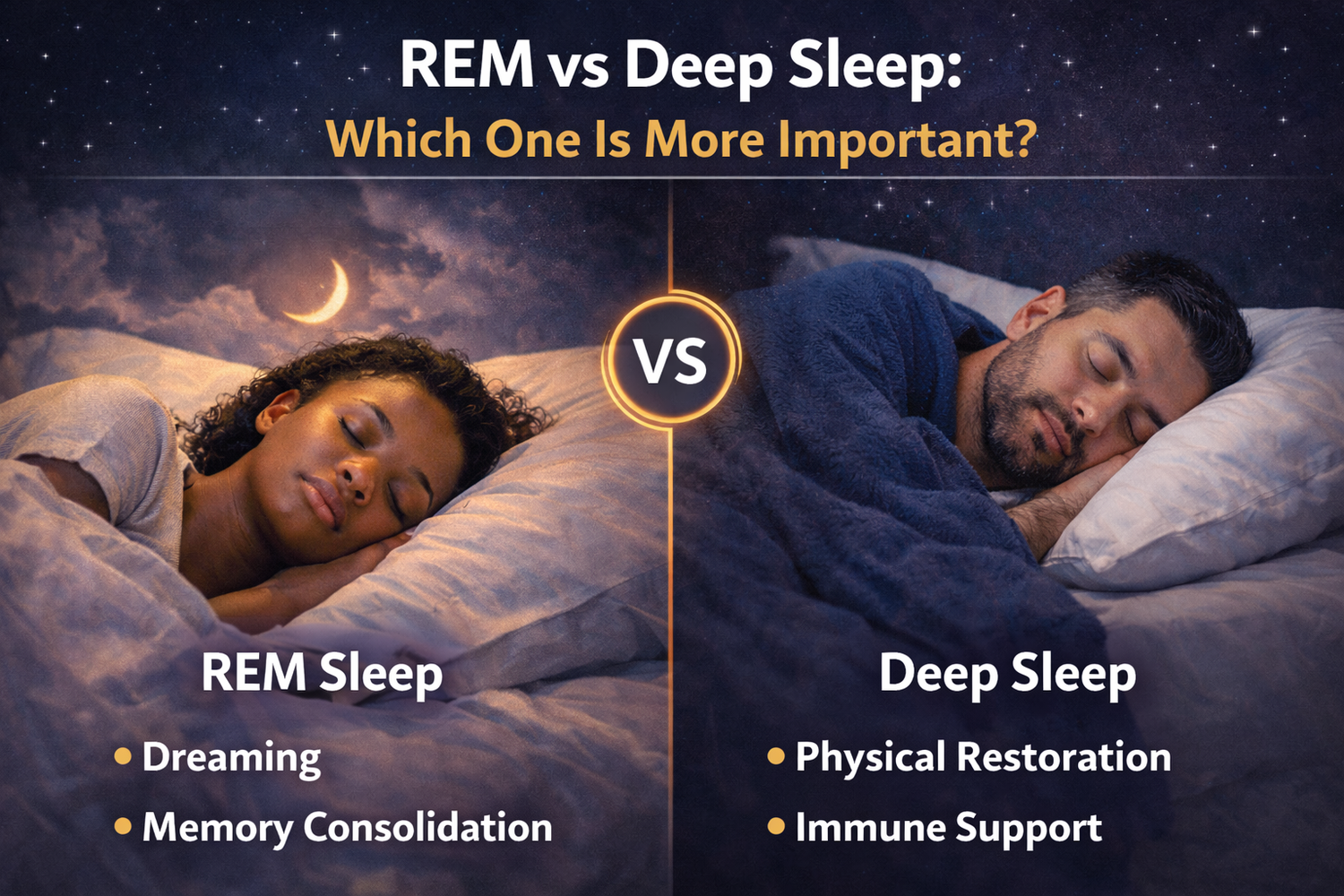
Most people hear about sleep stages in a simplified way: deep sleep is the “good stuff,” while REM sleep is just for dreams. That is how the REM sleep vs deep sleep debate usually starts, and it sets up a false choice. Asking which matters more is like asking whether the heart or lungs matter more.
Deep sleep and REM sleep do very different jobs, yet both are essential. Deep sleep focuses on physical rebuilding, immune support, and energy recovery. REM sleep supports memory, learning, and emotional balance. Your brain does not run deep sleep vs REM sleep as a contest; it runs them as parts of one carefully timed cycle.
This article explains:
-
What happens in each major sleep stage
-
How much deep and REM sleep most adults need
-
What commonly disrupts these stages
-
Why sedatives can quietly damage sleep architecture
-
How science-driven support from brands like SLP1 aims to work with natural biology instead of fighting it
By the end, REM sleep vs deep sleep should feel less like choosing a winner and more like a framework for supporting your entire night.
Key Takeaways
-
Deep sleep is the main window for physical repair and immune strength. REM sleep is central for memory, learning, and mood. A healthy night includes both, not one “winner.”
-
Most adults do best with about 1.5–2 hours of deep sleep and a similar amount of REM sleep (roughly 20–25% of the night for each), which depends more on total sleep time and regular routines than on hacks that promise to boost a single stage.
-
Stress, alcohol, late caffeine, health issues, and shift work usually disturb both deep and REM sleep over time, raising the risk of infections, mood problems, metabolic issues, and weaker performance.
-
The smartest approach supports the brain’s natural timing instead of trying to force one stage. That is the philosophy behind SLP1’s protocol and other science-based strategies.
“Sleep is the single most effective thing we can do to reset our brain and body health each day.”
— Matthew Walker, PhD, neuroscientist and author of Why We Sleep
What Is The Sleep Cycle And How Does It Work?
Sleep runs in repeating 90–120 minute sleep cycles. Each cycle moves through non-rapid eye movement (NREM) stages and then into REM sleep. Most adults complete four to five cycles per night.
A typical pattern looks like:
-
N1 (very light sleep)
-
N2 (light but more stable sleep)
-
N3 (deep sleep)
-
Back to N2
-
REM sleep
Early in the night, your brain favors deep slow-wave sleep (N3). Later, especially toward morning, REM periods get longer. Anything that chops up the night—frequent awakenings, alarms, late-night scrolling—tends to shrink or fragment time in these stages.
The Three NREM Stages Explained
NREM sleep includes three progressively deeper stages:
-
N1 (Stage 1)
-
Drowsy, drifting-off phase
-
Muscles relax, thoughts blur
-
Lasts a few minutes and makes up ~5% of the night
-
-
N2 (Stage 2)
-
Deeper light sleep with sleep spindles and K-complexes on brain recordings
-
Helps with early memory processing and shields you from waking too easily
-
Takes up about 45% of total sleep
-
-
N3 (Stage 3 / Deep Sleep)
-
Dominated by slow, high-amplitude delta waves
-
Hardest stage to wake from
-
Main window for intense physical restoration
-
Usually 20–25% of sleep in healthy adults
-
The Distinct Nature Of REM Sleep
REM (Rapid Eye Movement) sleep usually appears about 90 minutes after you fall asleep. Brain waves speed up and look closer to quiet wakefulness, yet your body is mostly paralyzed (a state called atonia), with rapid eye movements and more variable breathing and heart rate.
REM features:
-
Highly vivid, story-like dreams
-
Growing duration across the night (longest episodes toward morning)
-
About 25% of total sleep in most adults
In a REM sleep vs deep sleep comparison, REM is where much of the mental and emotional work of the night happens.
“If sleep does not serve an absolutely vital function, then it is the biggest mistake the evolutionary process ever made.”
— Allan Rechtschaffen, sleep researcher
Deep Sleep Explained: Your Body's Physical Restoration Phase
Deep sleep (N3) is often called slow-wave sleep because of its slow delta brain waves. During this stage:
-
Heart rate and breathing fall to their lowest regular levels
-
Muscles fully relax
-
Outside noise has a hard time waking you
Most deep sleep occurs in the first half of the night. Going to bed much later than usual cuts into this early block, even if your alarm time is the same.
Waking from deep sleep can feel rough. Heavy grogginess and fuzzy thinking for 30–60 minutes—called sleep inertia—are common and simply reflect how deep this stage is.
The Critical Functions Of Deep Sleep
During deep sleep, your body concentrates on:
-
Physical repair
-
Rebuilding muscle fibers after daily wear or workouts
-
Supporting bone growth and tissue renewal
-
-
Immune support
-
Increased activity of cytokines and antibodies
-
Better response to infections and faster recovery
-
-
Hormone balance and metabolism
-
Pulses of growth hormone that aid repair and muscle gain
-
Adjustments in leptin and ghrelin that influence hunger
-
Support for the brain’s glymphatic system, which clears waste like beta-amyloid
-
What Happens When You Don't Get Enough Deep Sleep
Chronic shortfalls in deep sleep can show up as:
-
More frequent colds and slower recovery from illness
-
Sluggish workout recovery, persistent soreness, and weaker progress
-
Higher risk of poor blood sugar control, Type 2 diabetes, and high blood pressure
-
Daytime fatigue, brain fog, and a feeling of being “physically flat”
Deep sleep naturally declines with age, but very low levels at any age (especially with symptoms) are a sign that sleep architecture may need attention.
REM Sleep Explained: Your Brain's Cognitive And Emotional Processing Center
If deep sleep focuses on the body, REM sleep focuses on the brain. During REM:
-
Neural activity spikes and looks similar to problem-solving wakefulness
-
Voluntary muscles below the neck are switched off, preventing you from acting out dreams
-
Breathing and heart rate become more variable
REM periods start short but can stretch to 30–60 minutes later in the night. Cutting sleep short in the early morning usually slices off a large portion of REM, even if total hours in bed look decent.
From the perspective of REM sleep vs deep sleep, REM is the standout stage for learning, memory, and emotional health.
The Essential Functions Of REM Sleep
Key roles of REM include:
-
Memory consolidation
-
Moving memories from short-term storage into longer-term networks
-
Solidifying both factual knowledge and skills (like playing an instrument or sport)
-
-
Emotional processing
-
Replaying emotional events with dampened stress chemistry
-
Helping you process fear, grief, excitement, and everyday frustration
-
Supporting steadier mood and better stress resilience
-
-
Creativity and brain development
-
Linking distant ideas by activating many brain regions at once
-
Supporting rapid brain growth and dense neural networks in infants and children
-
The Consequences Of REM Sleep Deprivation
When REM sleep is cut short:
-
Attention, focus, and working memory decline
-
Learning new material becomes harder, and details slip away
-
Decision-making slows, and tasks feel more effortful
Emotionally, people tend to:
-
Feel irritable, anxious, or emotionally fragile
-
Overreact to small problems
-
Struggle with stress that would normally feel manageable
Long-term REM loss is associated with higher risk of depression, anxiety, and cognitive decline. Alcohol and some medications often suppress REM, creating the illusion of good sleep while quietly disturbing brain recovery.
REM Sleep Vs Deep Sleep: The Key Differences
Side by side, deep sleep is heavier and body-centered, while REM sleep is more active and mind-centered. Both are woven into the same cycles and depend on the same foundations: enough time in bed, regular schedules, and a sleep-friendly environment.
Treating them as rivals can backfire:
-
Chasing more deep sleep with strong sedatives can reduce REM
-
Using substances that boost dreaming but disturb overall cycles can leave the body under-recovered
A better question than “Which is more important?” is: What does each stage repair, and how can I support both?
Side-By-Side Comparison Table
|
Feature |
Deep Sleep (NREM Stage 3) |
REM Sleep |
|---|---|---|
|
Brain Wave Activity |
Slow, high-amplitude delta waves |
Faster, low-amplitude waves similar to quiet wakefulness |
|
Primary Function |
Physical repair, tissue rebuilding, immune support, hormone release |
Memory consolidation, learning, emotional processing, mood support |
|
Body State |
Muscles relaxed, lowest heart rate and breathing, very stable |
Muscles mostly paralyzed, rapid eye movements, irregular heart rate and breathing |
|
Timing In Night |
Longer blocks in the first half of the night |
Shorter early, then longer and more frequent toward morning |
|
Dreaming |
Less vivid, often not remembered |
Most vivid, narrative dreams that people recall |
|
Ease Of Waking |
Hardest stage to wake from; strong sleep inertia if disturbed |
Easier to wake than deep sleep; less heavy grogginess |
|
Percentage Of Sleep |
About 20–25% of total sleep |
About 25% of total sleep |
|
What Gets Restored |
Muscles, bones, immune function, energy, many hormones |
Memory, skills, emotions, creativity, psychological balance |
Why Both Stages Are Non-Negotiable For Health
Healthy sleep behaves like a linked system where each part affects the others. Deep sleep supports the body, which supports the brain. REM sleep stabilizes mood and cognition, which supports good choices, exercise, and stress management. Disturbing either stage sends ripples through the whole pattern.
High-dose sedatives and late-day stimulants may change total sleep time but often distort the balance between stages. True sleep support focuses on calming the nervous system and aligning with circadian timing so light sleep, deep sleep, and REM can all unfold naturally. That is the framework science-based brands like SLP1 prioritize.
How Much Deep And REM Sleep Do You Actually Need?
For most healthy adults, the first step is straightforward: aim for 7–9 hours of total sleep per night. Within that window, the brain usually divides time between light, deep, and REM sleep in fairly stable proportions.
Some nights you may get more deep sleep (after hard training or illness). Other nights, your brain may grab more REM after intense emotional days. Small swings are normal as long as you:
-
Wake reasonably refreshed
-
Stay alert and functional during the day
-
Avoid frequent illness or mood crashes
Trackers can help spot patterns, but their stage estimates are only approximations. How you feel still matters most.
Sleep Stage Targets For Adults
Typical ranges for a well-rested adult are:
-
Deep sleep (N3): ~20–25% of the night (about 1.5–2 hours)
-
REM sleep: ~20–25% of the night (about 1.5–2 hours)
-
Light sleep (N1 + N2): The remaining ~50%
In an eight-hour night, that might look like:
-
~1.5 hours of deep sleep
-
~2 hours of REM sleep
-
~4.5 hours of light sleep
Being slightly above or below these numbers is usually fine. What matters more is consistent patterns and solid daytime function.
How Sleep Needs Change With Age
Sleep needs shift across life:
-
Infants and children: Need much more total sleep (10–14+ hours) with a higher share of both deep and REM sleep to support growth and brain development.
-
Teenagers: Typically need 8–10 hours. REM is vital for learning and emotional regulation, but early school times and late bedtimes often cut it short.
-
Adults (18–64): Usually need 7–9 hours per night with the stage ranges above.
-
Older adults: Often see less deep slow-wave sleep and more light sleep, with more awakenings. Some change is normal, but chronic insomnia, very short nights, or persistent daytime exhaustion are not inevitable parts of aging and deserve attention.
What Disrupts Deep And REM Sleep? Common Sleep Architecture Saboteurs
Most modern sleep problems come from everyday habits and conditions that tug against the brain’s natural timing. When that happens, both deep sleep and REM sleep can shrink or become choppy, even if you spend many hours in bed.
Some factors are directly under your control (screens at night, caffeine, alcohol). Others (health problems, shift work) are harder to change but can still be managed more thoughtfully. Rather than asking, “How do I get more of one stage?” ask, “What is blocking my natural cycles?”
Lifestyle And Environmental Factors
Common disruptors include:
-
Irregular schedules
-
Weekend–weekday swings (“social jet lag”) confuse your body clock
-
Deep sleep early in the night and longer REM toward morning become misaligned
-
-
Light exposure and screens
-
Bright screens before bed suppress melatonin
-
Sleep onset is delayed and REM shifts later
-
-
Caffeine and alcohol
-
Afternoon or evening caffeine can still be active at midnight, trimming deep sleep
-
Alcohol may help you fall asleep but fragments cycles and suppresses early REM
-
-
Food, exercise, and bedroom setup
-
Heavy late meals or intense exercise close to bed can raise body temperature and stress hormones
-
A bedroom that is too warm, noisy, or bright prompts more awakenings from both deep and REM stages
-
Health Conditions And Medications
Several medical conditions directly disturb sleep architecture:
-
Obstructive sleep apnea: Repeated breathing pauses pull you out of deep sleep and REM dozens of times an hour.
-
Insomnia: Trouble falling or staying asleep cuts into all stages.
-
Movement disorders: Restless leg syndrome and periodic limb movement disorder disrupt deep sleep.
-
Mental health conditions: Depression and anxiety often change REM timing and fragment sleep.
-
Neurological diseases: Dementia and Parkinson’s disease frequently disturb stage regulation.
Some medications—including certain antidepressants, beta-blockers, corticosteroids, and others—may reduce REM, reduce deep sleep, or increase awakenings. If problems persist despite good habits, review conditions and prescriptions with a qualified clinician.
The Impact Of Sleep Trackers And Performance Anxiety
Wearable sleep trackers can be helpful, but they can also spark anxiety. Many people become fixated on getting a perfect “sleep score,” a pattern sometimes called orthosomnia.
Most devices estimate stages using movement and heart rate, not brain waves. They are usually decent at spotting sleep vs wake, but much less accurate at labeling every minute as light, deep, or REM.
Use trackers to notice trends such as:
-
“My deep sleep increases when I walk more during the day.”
-
“Alcohol after dinner shortens my REM.”
But avoid obsessing over each night’s REM sleep vs deep sleep numbers. Your energy, mood, and focus during the day are still the best guides.
The Dangers Of Chronic Sleep Deprivation: What Happens When You Consistently Miss Both Stages
An occasional short night happens to everyone. The deeper problem is chronic sleep deprivation—regularly getting less than seven hours, or sleeping poorly despite enough time in bed. In the U.S., more than a third of adults report fewer than seven hours on workdays, which means many are missing both deep and REM sleep again and again.
Your body tries to repay this sleep debt by carving out more deep sleep or REM when it can, but weekend catch-up usually cannot erase the full impact of repeated short nights.
When deep sleep is short, the body does not repair well. When REM is short, the brain does not process emotions and information well. Together, that combination burdens nearly every organ system.
Short-Term Effects Of Inadequate Sleep
After even one bad night, many people notice:
-
Foggy thinking and weaker attention
-
Slower reaction time (making driving or operating equipment riskier)
-
Memory slips and more mistakes at work
Mood shifts quickly:
-
Irritability and impatience
-
Lower tolerance for stress
-
Stronger cravings for high-sugar, high-fat foods
Headaches, clumsiness, and an urge to nod off at the wrong times can appear. Microsleeps—seconds-long lapses into sleep—are especially dangerous when driving.
Long-Term Health Risks Of Chronic Sleep Loss
Over months and years, chronic sleep loss is linked with:
-
Heart and blood vessel problems
-
Higher rates of hypertension, heart attack, stroke, and atherosclerosis
-
-
Metabolic issues
-
Greater risk of Type 2 diabetes and obesity
-
Changes in how the body handles glucose and fat
-
-
Immune and mental health
-
Higher inflammation and weaker responses to infections and vaccines
-
Increased risk of depression, anxiety disorders, and suicide in vulnerable people
-
-
Brain aging and hormones
-
Faster cognitive decline and higher dementia risk
-
Disrupted cortisol and reproductive hormones
-
Put simply, chronic loss of deep and REM sleep raises the risk of illness and early death across many categories.
“The best bridge between despair and hope is a good night’s sleep.”
— E. Joseph Cossman
How To Optimize Your Sleep For Both Deep And REM Sleep
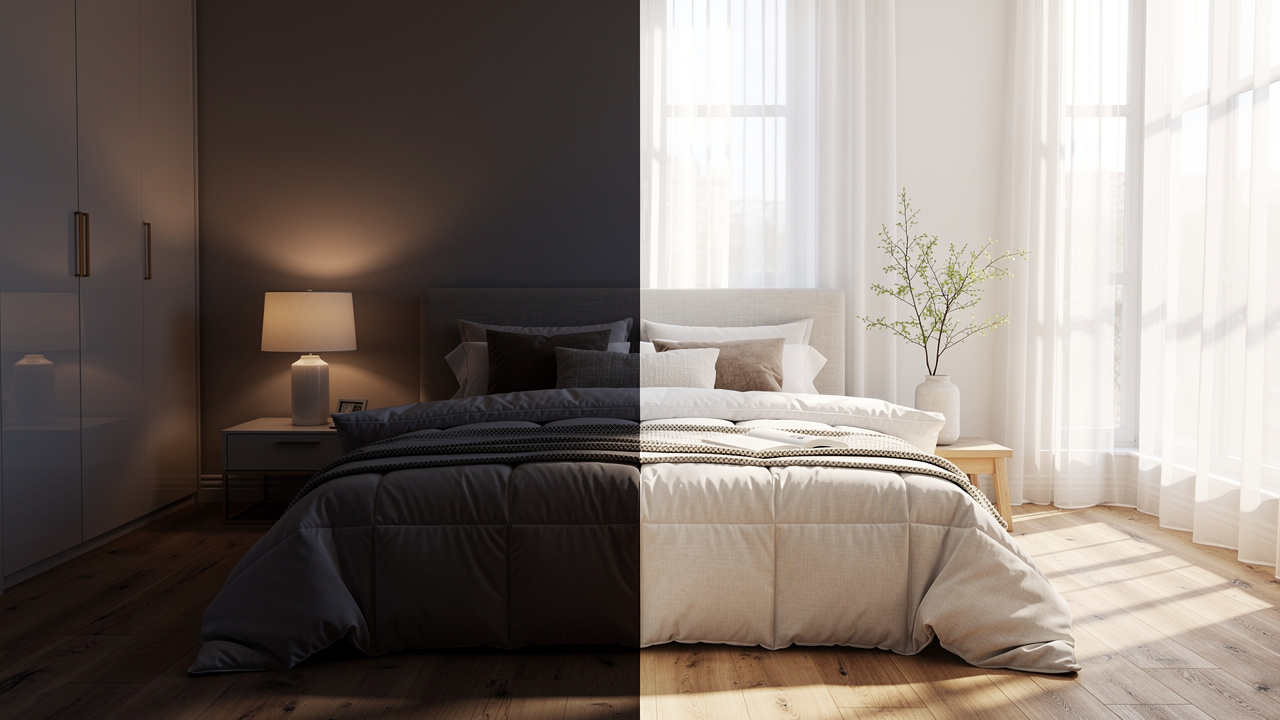
The good news: sleep architecture responds to consistent care. Most people do not need extreme hacks. What works best is:
-
Respecting your body clock
-
Creating a sleep-friendly environment
-
Building steady daytime habits
-
Using targeted, science-backed support when necessary
The goal is not to control exact minute counts for REM sleep vs deep sleep, but to give your brain what it needs so the right mix appears on its own.
Brands like SLP1 build their approach around this idea, aiming to help you fall asleep, stay asleep, and wake clear—without flattening REM or deep sleep.
Sleep Hygiene Fundamentals
Core sleep hygiene practices include:
-
Consistent schedule
-
Go to bed and wake up at the same time every day, including weekends.
-
-
Sleep-friendly bedroom
-
Cool, dark, quiet, and uncluttered
-
Consider blackout curtains, eye masks, or white noise if needed
-
-
Wind-down routine (15–30 minutes)
-
Reading a paper book
-
Gentle stretching
-
Slow breathing or a short relaxation practice
-
Dimming lights in the evening and getting bright light soon after waking strengthens your circadian rhythm, which supports deeper early sleep and longer REM toward morning.
Lifestyle And Timing Considerations
Daytime choices strongly affect deep sleep and REM:
-
Exercise regularly, but finish vigorous workouts several hours before bed.
-
Limit caffeine after early afternoon; its effects can linger for 5–6 hours or more.
-
Avoid alcohol for 3–4 hours before bedtime; it fragments sleep and suppresses REM.
-
Keep late-night meals light; large or spicy meals can disturb sleep.
-
Use short (20–30 minute) early-day naps if needed; avoid long or late naps.
-
Practice ongoing stress management—therapy, journaling, or relaxation skills—to keep nighttime cortisol from spiking.
The Role Of Science-Backed Sleep Support
When habits and environment are not enough—during high stress, travel, or shift changes—thoughtful sleep support can help guide the nervous system instead of overpowering it.
Science-based formulas aim to:
-
Support GABA, serotonin, and melatonin pathways
-
Help align circadian timing
-
Lower excessive nighttime stress signaling
They use meaningful doses and bioavailable forms, not token amounts. SLP1 follows this model, pairing its products with strong education around routines, light, and stress so both deep and REM sleep can normalize rather than be distorted.
Understanding Sleep Disorders: When To Seek Professional Help
Not every sleep issue can be fixed with better habits. Sleep disorders are medical conditions that disturb sleep timing, depth, or quality and often reduce both deep sleep and REM sleep.
Having a sleep disorder is not a personal failure. Many have genetic, structural, or neurological components and require testing and treatment. Good sleep hygiene and high-quality products like SLP1 can support recovery, but they work best as part of a full plan.
If you have worked on your habits and still feel exhausted, it may be time to look deeper.
Common Sleep Disorders Affecting Deep And REM Sleep
Conditions that commonly disturb sleep stages include:
-
Obstructive sleep apnea: Repeated airway blockage and gasping that shatters sleep into fragments and shortens deep and REM stages.
-
Insomnia: Ongoing trouble falling asleep, staying asleep, or waking too early.
-
Restless leg syndrome and periodic limb movement disorder: Uncomfortable sensations or involuntary movements that prevent stable deep sleep.
-
Narcolepsy: Disordered REM regulation, with REM intruding at odd times during day and night.
-
REM sleep behavior disorder: Loss of normal REM paralysis, leading to acting out dreams.
-
Circadian rhythm disorders: Body clock shifts that put sleep at odds with work or social schedules.
Warning Signs You Should Consult A Sleep Specialist
You should talk with a healthcare provider or sleep specialist if you:
-
Sleep 7–9 hours yet never feel rested or alert
-
Snore loudly, gasp, or choke during sleep (often noticed by a partner)
-
Struggle with strong daytime sleepiness, frequent nodding off, or near-misses while driving
-
Have insomnia lasting more than three months
-
Sleepwalk, have night terrors, or physically act out dreams
-
Feel an intense urge to move your legs at night that keeps you from falling asleep
Early diagnosis and treatment protect both deep and REM sleep, improve quality of life, and lower long-term health risks.
The SLP1 Approach: Supporting Your Complete Sleep Architecture
SLP1 was created for people who care about sleep quality and want more than quick sedative fixes. Its core idea is simple: support the body’s natural sleep patterns instead of trying to overpower them.
Many supplement brands rely on generic blends with trendy ingredients and little thought for how they affect the full night. SLP1 takes a different path:
-
Formulas developed in-house
-
Intentional ingredient choices
-
Clinically relevant doses
-
Delivery methods chosen to match human biology
The goal is not just falling asleep faster once, but building steadier sleep with benefits that add up over weeks and months.
Why Forcing One Sleep Stage Backfires
Conventional “knockout” approaches focus on unconsciousness, not on how the night unfolds. Strong sedatives may increase total sleep time yet:
-
Suppress REM sleep
-
Distort the normal order of light, deep, and REM stages
-
Lead to rebound insomnia, tolerance, and dependence
Chasing only one side of REM sleep vs deep sleep—for example, “more deep sleep at any cost”—often leads to grogginess, low mood, and unrefreshing sleep.
SLP1’s philosophy is to support the nervous system so it can cycle smoothly through all stages. That means calming excess nighttime cortisol, supporting GABA and serotonin activity, and aligning with circadian cues rather than fighting them.
The Three-Part SLP1 Protocol Explained
The SLP1 Protocol is a three-part system designed to support the whole arc of sleep:
-
Get To Sleep
-
A melatonin nasal spray for fast sleep-onset support
-
Nasal delivery helps melatonin enter the system quickly with modest dosing
-
Aims to nudge the body clock so the first 90-minute cycle can start on time
-
-
Deeper Sleep
-
A natural sleep powder focused on nervous system calm and richer sleep depth
-
Uses magnesium glycinate for muscle and nervous system relaxation
-
Includes nervine herbs like lemon balm and passionflower to support GABA activity
-
Adds ashwagandha for healthier cortisol rhythms and stress resilience, plus apigenin for mental quiet
-
The aim is to help you reach and maintain deep sleep without forcing or distorting specific stages
-
-
Stay Sleep
-
Designed for people who fall asleep but wake at 1–3 a.m. and cannot drift off again
-
Combines ingredients such as phosphatidylserine to gently reduce excess nighttime cortisol
-
Helps your brain return to a calmer state so deep and REM sleep can continue across multiple cycles
-
Together, these pieces support sleep onset, depth, and continuity, respecting natural sleep architecture instead of flattening it.
The SLP1 Difference: Clean, Transparent, Clinically Dosed
SLP1 stands out by combining:
-
Clean formulas
-
No unnecessary fillers or common allergens
-
No artificial flavors in many products
-
-
Transparent labels
-
Research-backed doses, not tiny “label decoration” amounts
-
Forms chosen for strong absorption and consistent effects
-
-
Third-party testing
-
Batches tested for potency and purity
-
For research-minded sleepers, this combination helps build trust that what they are taking supports real improvements in both deep sleep and REM sleep, while complementing healthy routines and medical care when needed.
Conclusion
The usual REM sleep vs deep sleep question sets up the wrong choice. Deep sleep is where the body works hardest on muscles, bones, immune function, and hormone balance. REM sleep is where the brain organizes memories, processes emotions, and supports creativity and mood. Good health depends on both, woven together across complete 90–120 minute cycles.
Modern life—late screens, high stress, travel, and health issues—can pull these stages out of balance. The cost is far more than feeling a little tired: higher risk of infections, heart disease, diabetes, depression, anxiety, cognitive decline, and weaker daily performance.
The path forward is not a magic pill that simply knocks you out. It is a steady investment in:
-
Regular sleep and wake times
-
Thoughtful light, caffeine, and alcohol habits
-
Stress management skills
-
Smart, science-based support such as the SLP1 Protocol when needed
The key question is not “Which stage is more important?” but “How do I give my body the conditions it needs for full nightly repair?” Answering that question with consistent actions may be one of the most powerful health choices you can make.
FAQs
Question 1: Can You Get Too Much Deep Sleep Or REM Sleep?
In healthy people, the brain is very good at balancing how much time it spends in each stage. It is rare to have truly excessive deep or REM sleep without an underlying medical or medication-related issue.
Some drugs and conditions can skew patterns—for example, lengthening REM while trimming deep sleep, or the reverse. If a tracker shows one stage consistently above 30% of total sleep and you feel unrefreshed, talk with a healthcare provider. For most people, focusing on total sleep time, regular routines, and overall health lets the body manage stage proportions on its own.
Question 2: Does Alcohol Really Prevent REM Sleep?
Alcohol does not erase REM sleep, but it reduces and disrupts it, especially in the first half of the night. After a few drinks, you may fall asleep faster and feel drowsy, which makes alcohol seem like a sleep aid. Underneath, sleep is lighter and more fragmented, with shorter or missing early REM periods.
As alcohol wears off later in the night, REM can rebound, often with vivid or unpleasant dreams and frequent awakenings. Regular drinking near bedtime steadily shifts the REM sleep vs deep sleep balance in unhealthy ways. Avoiding alcohol for 3–4 hours before bed gives REM a better chance to follow its normal pattern.
Question 3: How Do Sleep Trackers Measure Deep And REM Sleep?
Most consumer sleep trackers estimate stages using:
-
Movement (actigraphy)
-
Heart rate and heart rate variability
When you are still and your heart rate slows, the device assumes you are asleep. It then uses changes in movement and heart rhythm to guess whether you are in light, deep, or REM sleep.
The gold standard test, polysomnography, measures brain waves, eye movements, muscle tone, and breathing in a lab. Compared with that, wearables are much less precise for stage breakdowns, though they are usually decent at total sleep time.
Trackers are best used to notice patterns (for example, “my deep sleep improves when I exercise”) rather than to chase perfect nightly REM sleep vs deep sleep numbers.
Question 4: Can You Catch Up On Lost Deep Sleep And REM Sleep?
Your body does try to repay sleep debt. After several short nights, people often:
-
Fall asleep faster
-
Spend a larger share of time in deep sleep and REM during recovery nights
This helps, but it rarely erases all the effects of ongoing sleep loss in a single weekend. Some metabolic and cognitive changes take many nights of solid sleep to improve.
Relying on weekend catch-up sleep as a routine strategy usually leaves a lingering deficit. It is better to aim for consistent 7–9 hour nights, with occasional late nights treated as exceptions, not the rule.
Question 5: Why Do I Wake Up Feeling Tired Even After 8 Hours Of Sleep?
Feeling tired after what looks like a full night can have several causes:
-
Fragmented sleep: Frequent brief awakenings (often from sleep apnea, pain, or noise) can greatly reduce deep and REM sleep, even if you do not remember them.
-
Poor timing: Sleeping eight hours at times that conflict with your circadian rhythm (for example, 3 a.m. to 11 a.m.) can feel less refreshing.
-
Waking from deep sleep: An alarm that fires right in the middle of N3 can trigger strong sleep inertia.
-
Medical conditions: Thyroid disorders, anemia, depression, chronic fatigue, and other issues can all cause heavy tiredness despite decent sleep.
If fatigue persists despite good habits, it is wise to see a clinician. Tracking your schedule and how different wake times feel can offer helpful clues.
Question 6: What Supplements Actually Improve Deep Sleep And REM Sleep?
The most useful supplements support the systems that allow all stages to appear at the right times instead of trying to force one outcome in the REM sleep vs deep sleep balance.
Examples often discussed in research include:
-
Magnesium glycinate: Calms the nervous system and relaxes muscles, supporting deeper stages.
-
Glycine and L-theanine: Promote relaxation and body temperature changes that favor deep sleep.
-
Apigenin: A plant compound that gently supports GABA activity.
-
Low-dose melatonin: Helps align circadian rhythm, especially for jet lag or shift work, when used at the right time.
-
Ashwagandha and phosphatidylserine: May reduce excessive nighttime cortisol and support better continuity.
-
B vitamins: Support production of serotonin and melatonin.
SLP1’s Deeper Sleep powder and the broader SLP1 Protocol integrate several of these ingredients in forms and doses chosen to support natural sleep architecture. As with any supplement plan, discuss options with a healthcare professional, especially if you take medications or manage chronic conditions.

Leave a comment
This site is protected by hCaptcha and the hCaptcha Privacy Policy and Terms of Service apply.