Introduction
Most people think of sleep as a simple switch. You are either awake, or you are out. In reality, the brain moves through a carefully timed set of stages each night, and the stages of REM sleep sit right at the center of how clear, stable, and sharp a person feels the next day.
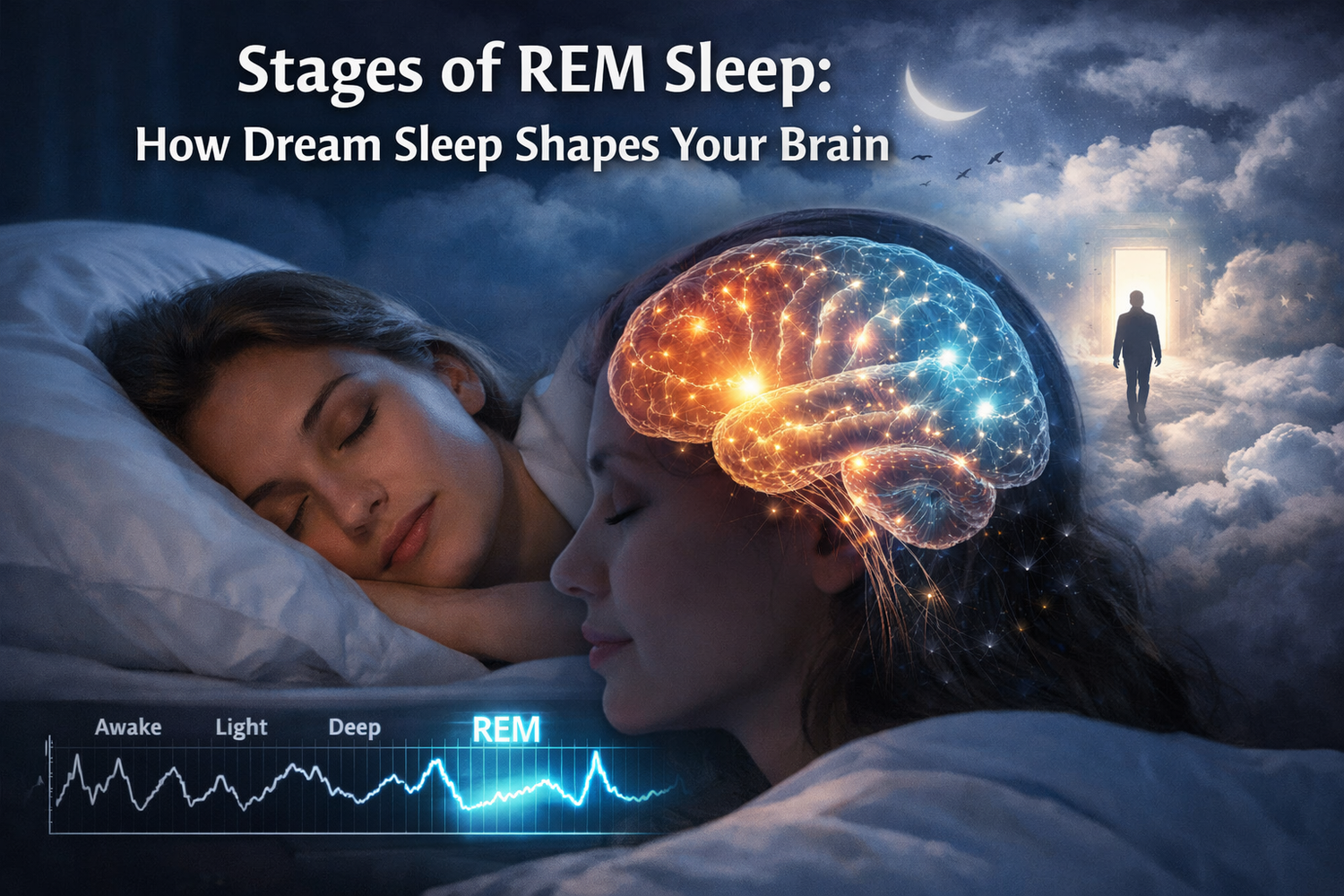
Sleep scientists map out these stages like a repeating loop. The body moves from light non‑REM sleep into deeper stages, then into REM, then back again. Those repeating stages of REM sleep are where vivid dreams, emotional reset, and many forms of memory processing take place. When this part of the cycle is cut short or disturbed, eight hours in bed can still feel like four.
If someone has ever woken up mid‑dream feeling foggy, or dragged through the afternoon even after a “full night,” the shape of their REM sleep may be the missing piece. This guide walks through what happens in each sleep cycle, how the stages of REM sleep change across the night, what common habits interfere, and how to support this system in a natural, science‑backed way. By the end, there will be a clear mental model of REM sleep and a practical set of steps to protect it for long‑term performance and health.
“You’re not healthy unless your sleep is healthy.” — Dr. William Dement, pioneer of modern sleep research
Key Takeaways
-
Sleep cycles are not linear. Sleep does not run in a straight line. It cycles through N1, N2, N3, and REM four to six times each night, and the stages of REM sleep sit inside those loops rather than standing alone. Understanding this pattern helps explain why short nights feel so draining.
-
REM sleep powers emotion and memory. REM sleep combines a very active brain with a still, paralyzed body and vivid dreams. This stage is central for emotional balance, memory, and next‑day thinking speed, which is why gaps in REM often show up as irritability or mental fog before they show up as pure sleepiness.
-
Late‑night REM is most abundant. The stages of REM sleep get longer as morning approaches, so cutting sleep from eight hours to six does not trim REM in a straight line. It can remove a large share of the richest REM time that would have happened toward the end of the night.
-
Common habits quietly block REM. Alcohol, late caffeine, irregular bedtimes, stress, and some medications are powerful disruptors of REM sleep. Protecting REM means focusing on rhythm, environment, and nervous system calm instead of quick sedative tricks.
-
Natural support can steady the cycle. Natural support, including melatonin‑free systems like the SLP1 Protocol, aims to support the brain and body so they can move through all sleep stages, including REM, in a steady and repeatable way rather than forcing unconsciousness.
The Architecture Of Sleep: How The Stages Are Structured

Before zooming in on the stages of REM sleep, it helps to see how they fit into the full picture of a night’s rest. Sleep runs in cycles that last about 90 to 120 minutes. Each cycle starts in light non‑REM sleep, drops into deeper non‑REM, then rises back toward lighter sleep before entering REM.
Non‑REM (often written as NREM) has three stages, called N1, N2, and N3. N1 is the drowsy edge of sleep. N2 is light to moderate sleep and makes up almost half the night. N3 is deep, slow‑wave sleep, where physical repair and immune support are most active. After a stretch in N3, the brain usually rises into N2 again, then shifts into REM.
Across a full seven to nine hours, this pattern repeats four to six times. The early part of the night is heavier on N3 deep sleep. Later in the night, the stages of REM sleep stretch out and take more space inside each cycle. Non‑REM focuses more on the body. REM focuses more on the brain, mood, and memory. All of them are necessary, and the body does not trade one away without a cost.
Seeing sleep this way turns it from a black box into a structure that can be shaped and protected.
The Four Stages Of A Sleep Cycle
At a high level, one sleep cycle moves through four main stages.
|
Stage |
Approx Share Of Night |
Key Characteristics |
Primary Focus |
|---|---|---|---|
|
N1 (Light Sleep) |
About 5 percent |
Very light, drifting in and out, easy to wake, may feel like dozing |
Transition from wake to sleep |
|
N2 (Light To Moderate Sleep) |
About 45 percent |
Slower heart rate, lower body temperature, brain shows sleep spindles and K‑complexes |
Memory maintenance and preparation for deeper sleep |
|
N3 (Deep / Slow‑Wave Sleep) |
About 25 percent |
Very slow delta waves, hard to wake, heavy body, little movement |
Physical repair, immune support, growth hormone release |
|
About 25 percent |
Rapid eye movements, active brain, dream‑rich, muscle paralysis |
Emotional processing, memory consolidation, creative thinking |
The stages of REM sleep sit in that final row. They share the same basic features each time, but the length and impact of each REM period change as the night goes on.
After one full cycle, the brain starts over at lighter non‑REM, then dips and rises again. That looping pattern means a rough night with many awakenings does not just cut hours of sleep; it also scrambles how much time lands in each stage.
REM Sleep In Detail: What Makes It Unique

REM sleep is often called paradoxical sleep because it joins two states that seem to clash. The brain looks almost awake on a scan, with fast, mixed brain waves and high oxygen use. At the same time, the body is almost fully paralyzed, with only the eyes and breathing muscles moving freely. This strange mix is what makes the stages of REM sleep so intriguing to researchers.
The first REM period usually starts about 90 minutes after falling asleep and may last only 10 to 20 minutes. After that, each cycle returns to non‑REM, then swings back into REM again. Across a full night, healthy adults spend about a quarter of their sleep time in these stages of REM sleep, often totaling 90 to 120 minutes.
During REM, breathing becomes more irregular and shallow, heart rate and blood pressure drift up, and the body’s ability to regulate temperature drops. The eyes dart quickly under the eyelids, which is where the name rapid eye movement comes from. This is also when the most vivid, story‑like dreams occur, filled with strong images and emotions.
Behind the scenes, brain chemicals shift: acetylcholine rises, while serotonin and norepinephrine drop. That pattern supports intense internal activity while keeping the body still. These features make REM sleep different from the heavy, quiet feel of deep non‑REM sleep. Yet both are needed. Deep sleep helps a person wake up physically restored. Healthy stages of REM sleep help that same person feel emotionally steady, mentally clear, and able to learn.
Brain Activity And Muscle Atonia During REM
When scientists record brain waves during REM sleep, the patterns look similar to an awake brain. The waves are low in height and fast in frequency, which fits with a state of high internal activity. This is a sharp shift from the slow, tall delta waves of N3 deep sleep, where the brain is much quieter.
At the same time, the brainstem sends strong signals that shut down most movement. These signals silence the motor neurons that normally tell muscles to move. The result is called muscle atonia, a temporary loss of muscle tone in nearly all voluntary muscles. The eyes and the muscles that manage breathing stay active, but arms and legs stay still.
This muscle atonia serves an important safety role. Dreams during the stages of REM sleep can be intense and full of action. Without this built‑in paralysis, people would act out their dreams, which could lead to injury for them or a bed partner. When this safety system misfires, a condition called REM Sleep Behavior Disorder can appear. People with this condition may shout, punch, or move in ways that match their dreams. It is a medical issue that needs expert care, and it also shows just how important atonia is in normal REM sleep.
Some people experience brief sleep paralysis when waking up or falling asleep, where awareness returns before muscle control. This can feel frightening but is usually a short‑lived spillover of the same atonia that keeps REM dreams safely in the mind rather than in the body.
The Critical Functions Of REM Sleep
REM sleep is not just about wild dreams. It carries out several key jobs for the brain and nervous system. One main role is memory consolidation. The stages of REM sleep help lock in procedural memories, such as new skills, and spatial memories, such as routes or layouts. During this time, the brain replays and strengthens patterns built during the day.
REM sleep also supports emotional processing. Stress chemicals like norepinephrine drop during these stages, even as dream content stays rich. This gives the brain a chance to replay hard or intense events in a calmer chemical setting. Over time, that can reduce the emotional sting of those memories and help a person feel more balanced.
Creative problem solving is another area linked with REM sleep. Dreams often mix distant ideas and memories in strange ways. That loose style of thinking can help the brain spot fresh links that did not appear during focused daytime work.
Researchers often group REM benefits into a few broad themes:
-
Learning and skill building – stabilizing new languages, motor skills, and habits
-
Emotional stability – softening the charge around difficult experiences
-
Creativity and insight – combining distant ideas into fresh connections
-
Brain maintenance – resetting neurotransmitter systems after a long waking day
In babies, REM‑like sleep can take up around half of all sleep. That heavy bias shows how vital REM is for building and wiring the brain. Even in adults, many experts think the stages of REM sleep help “reset” neurotransmitter systems that have been busy all day, preparing them for another period of wakefulness.
How REM Sleep Changes Across A Full Night

The stages of REM sleep do not stay the same from bedtime to morning. The architecture of sleep shifts across the night in a predictable pattern. In the first few cycles, deep N3 sleep takes up a large share of time, and REM windows stay short. As the night continues, deep sleep shrinks, and REM periods stretch out.
For someone who sleeps around eight hours, the first REM stage may last only about 10 minutes. The second and third REM stages grow longer. By the final cycle or two, a single REM period can last up to an hour. Most of this extended REM time sits in the last third of the night, just before natural wake time.
This timing has a direct impact on daily life. Cutting sleep from eight hours to six does more than trim total minutes by a quarter. It often slices off the longest and richest stages of REM sleep. That can mean less emotional reset, weaker memory consolidation, and more grogginess, even if total time in bed looks reasonable.
Many people also wake from these late REM stages because of alarms, early light, or morning noise. Waking straight out of REM often comes with sharp dream recall and a short burst of confusion or moodiness. Understanding this pattern explains why protecting the last part of the night can feel so important for mental performance.
Why Your REM Stage Gets Longer As The Night Progresses
Two major forces shape why the stages of REM sleep grow across the night. The first is sleep pressure, driven in part by a chemical called adenosine. As someone stays awake, adenosine builds up and creates a strong drive for deep N3 sleep. Early in the night, the brain spends more time in that deep state to clear this pressure.
Once deep sleep has done much of that work, the balance shifts. The second force, the circadian rhythm, starts to promote REM sleep more strongly. The inner clock in the brain tends to favor REM‑rich sleep during the hours that lead up to natural wake time, often lined up with rising morning light and the body’s normal cortisol rise.
Keeping a steady bedtime and wake time helps both systems stay in sync. When they are aligned, the brain can move through deep sleep early, then settle into longer, more stable stages of REM sleep later, rather than scattering them in a disrupted way.
What Disrupts REM Sleep — And What The Research Says
With so much riding on the stages of REM sleep, it is helpful to know what most often interferes with them. Single late nights or one drink‑heavy evening do not erase long‑term health on their own. Patterns built over weeks and months matter more. Still, many people keep habits that chip away at REM night after night without realizing it.
One major disruptor is obstructive sleep apnea. In this condition, the airway repeatedly collapses during sleep, causing brief pauses in breathing. Each pause often pulls the brain out of deeper stages, including REM, into lighter sleep or full wakes. That repeated break in the stages of REM sleep leads to poor rest, loud snoring, and daytime fatigue, and it needs medical care.
Certain parasomnias can also disturb REM. REM Sleep Behavior Disorder, where muscle atonia fails and people act out vivid dreams, breaks the smooth flow of REM and can cause injury. Nightmare Disorder, where frequent, intense dreams cause repeated awakenings, often hits the second half of the night when REM is most common. Each of these conditions fragments what should be a stable set of REM stages.
If someone notices choking or gasping in sleep, violent movements during dreams, or very frequent nightmares, it is worth bringing those details to a clinician or sleep specialist. A clear description of what nights look like can guide testing and treatment.
The hopeful side is that many of the biggest REM disruptors are changeable. By working on stress, timing, air quality, and nervous system calm, it is possible to give the brain a better chance to move through the full pattern of non‑REM and REM without constant interruption.
Lifestyle Factors That Suppress REM Sleep

Several everyday choices have a direct impact on REM sleep:
-
Alcohol may help a person fall asleep faster, yet it strongly cuts REM sleep in the first part of the night. As the body clears the alcohol, REM can bounce back in a lighter, more broken way that feels restless. People often wake from this rebound with vivid dreams and a sense that sleep did not “count.”
-
Caffeine and other stimulants taken too late in the day can delay sleep onset and push back the timing of deep sleep. This change shortens the full night, which in turn trims the later stages of REM sleep. Even if a person falls asleep, lighter sleep with more awakenings can appear.
-
Chronic stress and high night‑time cortisol keep the brain in a state that is closer to wakefulness. This makes it harder to enter and stay in REM, which needs the nervous system to relax into a safe pattern. People often notice more frequent wakes and fewer remembered dreams in these periods.
-
Inconsistent bed and wake times send mixed signals to the inner clock that helps shape the stages of REM sleep. When circadian cues drift, REM can appear at odd times or in shorter fragments, instead of in the longer blocks that usually build toward morning.
-
Certain medications, including some antidepressants, beta‑blockers, and benzodiazepines, are known to suppress or reshape REM sleep. No one should change medication without medical guidance, yet it can be helpful to ask a clinician how a given drug may interact with the sleep cycle.
-
Room temperatures that are too cold or too warm also play a role. During REM, the body’s temperature control is weaker. When the room is far from a comfortable range, the brain may protect the body by cutting REM time short or pulling it into lighter sleep stages.
Small adjustments add up. Swapping a late coffee for an herbal tea, keeping alcohol away from the last few hours before bed, or setting a more regular lights‑out time can all protect the later REM‑heavy part of the night.
How To Support Healthy REM Sleep Naturally

Supporting healthy stages of REM sleep starts long before thinking about supplements. The base of the pyramid is regular rhythm and a calm, dark, cool sleep space. Going to bed and waking up at consistent times, dimming lights before bed, keeping screens out of the last hour, and keeping the room comfortably cool all make it easier for the brain to cycle through deeper sleep non‑REM and REM in the right order.
Helpful foundations include:
-
Consistent timing – similar bedtime and wake time every day, including weekends
-
Light management – bright light in the morning, dimmer light in the hour before bed
-
Evening habits – lighter dinners, limited late caffeine and alcohol, quieter activities
-
Sleep environment – dark, cool, quiet room with a comfortable mattress and pillow
Stress management is another core piece. Simple breathing work, light stretching, or a short wind‑down routine can lower night‑time cortisol and quiet mental chatter. Because high stress makes REM sleep lighter and more fragile, even small drops in evening arousal can protect those stages of REM sleep.
“Sleep is the single most effective thing we can do to reset our brain and body health each day.” — Dr. Matthew Walker
For many health‑focused people, these habits are in place, yet sleep still feels shaky. This is where thoughtful, natural support can help. SLP1 was built for that layer. The SLP1 Protocol is a three‑part, melatonin‑free system that aims to support the whole arc of sleep, from drifting off to waking steady, by working with natural brain chemistry instead of forcing sedation.
Key ingredients in SLP1 align closely with REM needs:
-
Vitamin B6 helps the body move tryptophan along the serotonin and melatonin pathway, supporting natural sleep‑wake signals.
-
Vitamin B12 plays a role in circadian timing, which guides when the stages of REM sleep are most likely to appear.
-
Ashwagandha and phosphatidylserine help lower excess cortisol at night, giving REM a better chance to unfold without constant stress spikes.
-
Nervine herbs such as lemon balm and passionflower support GABA activity, easing the “wired but tired” feeling without leaving people groggy in the morning.
-
Glycine and magnesium calm the nervous system and muscles, which supports both deep non‑REM sleep and smooth REM cycling.
Because the SLP1 Protocol avoids direct melatonin dosing, it supports the body’s own rhythm rather than replacing it. The goal is simple and steady sleep that holds, so the brain can handle its REM work on its own terms.
Conclusion
Sleep is not a black box. It is a series of repeating stages that move through light non‑REM, deep non‑REM, and the rich stages of REM sleep, where dreams, emotional reset, and key forms of memory work take place. When that structure holds, people tend to wake feeling more like themselves.
The later part of the night is where the longest stages of REM sleep live. Regularly cutting sleep short, loading evenings with alcohol, or living in a constant state of stress chips away at that time. The effects often show up as mood swings, foggy focus, and weaker learning long before full sleep deprivation is obvious.
Protecting REM is less about chasing a perfect night and more about steady habits that respect how the brain is built to rest. Brands like SLP1 share this view, focusing on rhythm, nervous system support, and clean, melatonin‑free formulas rather than on heavy sedation. Sleep that holds, night after night, is not a luxury. It is the foundation everything else is built on.
FAQs
How Many Stages Does REM Sleep Have?
REM sleep is one stage within the four‑stage human sleep cycle, which includes N1, N2, N3, and REM. Scientists do not formally divide REM into smaller stages the way they do with non‑REM sleep. People use the phrase “stages of REM sleep” to describe the multiple REM periods that repeat and lengthen across the night, not separate sub‑phases inside REM itself.
How Much REM Sleep Do Adults Need Per Night?
Most healthy adults spend around a quarter of their sleep time in REM. For someone sleeping seven to nine hours, that usually means about an hour and a half to two hours in the stages of REM sleep spread across the night. There is no hard minimum, yet long‑term patterns with very low REM are linked with mood issues and memory problems.
What Happens If You Do Not Get Enough REM Sleep?
Lack of REM sleep often shows up as trouble handling stress, stronger swings in mood, and a shorter fuse. People may find it harder to learn skills, remember where things are, or think creatively. Over long periods, low REM has been tied with higher rates of certain mood disorders and signs of faster cognitive decline. After short‑term loss, the brain often responds with REM rebound, creating longer or more intense REM on following nights.
Does Alcohol Affect REM Sleep?
Yes, alcohol changes the structure of sleep in a clear way. It can make someone fall asleep more quickly, yet it sharply reduces REM in the first part of the night. Later, as the body clears the alcohol, REM can surge back in a lighter, more broken pattern that leads to frequent wakes. Many people feel tired the next day even if they spent many hours in bed.
Can Supplements Support REM Sleep?
Certain nutrients and herbs can support the brain and body so natural REM stages can appear more easily. B6 and B12 can assist with neurotransmitter balance and circadian timing, adaptogens such as ashwagandha can lower excess cortisol, and calming herbs can steady the nervous system. The key is that good sleep support, like the SLP1 Protocol, works with normal sleep architecture instead of forcing unconsciousness, which helps preserve both non‑REM and REM sleep over the long term.



Leave a comment
This site is protected by hCaptcha and the hCaptcha Privacy Policy and Terms of Service apply.